Reassessing the Narrative: A Look into Environmental Alarmism and Climate Change
An article by Marc Defant, titled “A Skeptic’s Guide to Environmental Alarmism,” questions the urgency of responding to climate change warnings. Defant highlights past instances of environmental alarmism with inaccurate predictions, prompting readers to reconsider current climate crisis narratives.
Defant’s perspective is criticized for exhibiting confirmation bias by selectively focusing on incorrect predictions without acknowledging correct ones. For example, the 1970s global cooling narrative, which Defant cites, was not the scientific consensus. Research from 1965 to 1979 shows that warming predictions outnumbered cooling predictions by more than six to one.
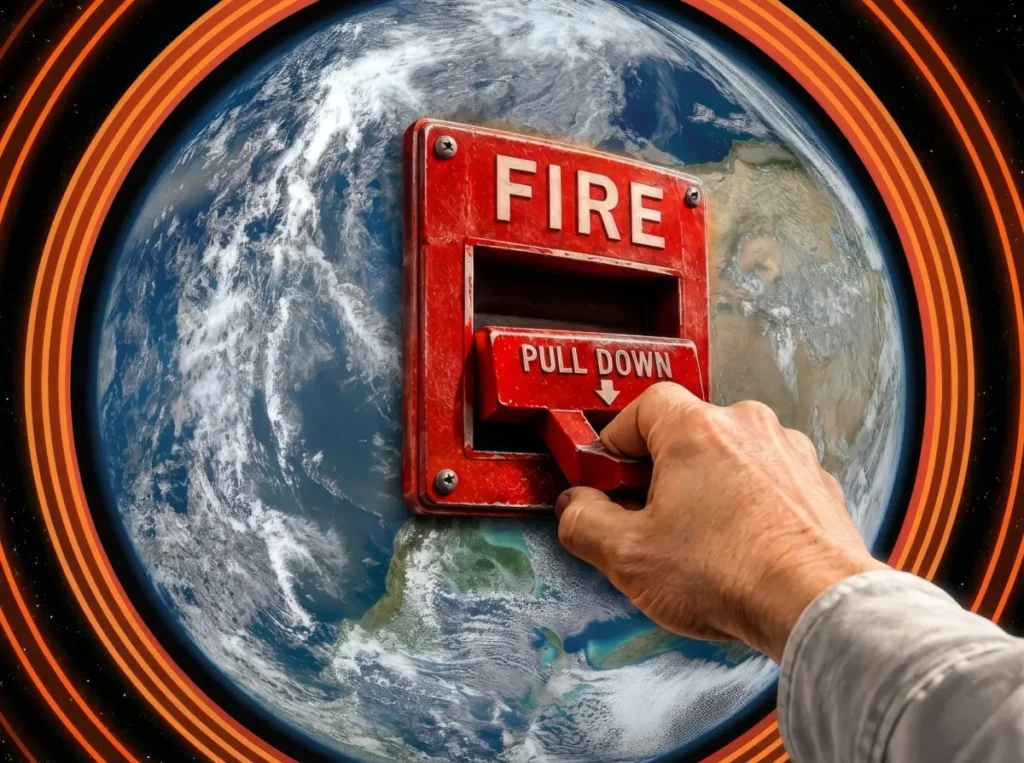
When I pull a fire alarm I am not predicting the building will burn down. I am trying to prevent that from happening.
Environmental warnings aim to prompt preventative measures rather than predict disasters. For instance, alarms about pollution led to bipartisan efforts to reduce emissions. In 1988, NASA’s James Hansen provided evidence of human-caused climate change, sparking early bipartisan initiatives similar to those that curbed sulfur dioxide pollution.
However, the Tea Party movement and fossil-fuel-backed opposition hindered climate legislation, with industry-funded organizations spreading misleading information about climate science and its economic impact.
Defant references Antero Ollila, who suggests minimal human impact on atmospheric carbon. Ollila’s argument, which attributes warming to natural cycles, overlooks the distinction between the rapid exit of individual CO₂ molecules and the steady atmospheric accumulation of CO₂. This can be likened to a bathtub with an open tap and drain where the water level still rises.
Defant also contrasts Michael Mann’s 1999 data with Fredrik Ljungqvist’s 2010 findings, arguing for natural climate variability. However, Ljungqvist endorses Mann’s 2008 data, supporting the view that human activity drives global warming.
The point is to prevent such disasters before they happen to reduce the amount of suffering.
Although not mentioned by Defant, Bjørn Lomborg’s views influence the debate. Lomborg initially questioned the greenhouse effect but now recognizes its reality and partial human causation. He suggests funds for transitioning off fossil fuels might better alleviate poverty. This premise assumes savings would directly fund poverty relief and relies on economic discounting, which raises scientific and ethical questions.
The Intergovernmental Panel on Climate Change (IPCC) estimates future economic harm from climate change but does not specify exact figures due to numerous unknowns. Lomborg’s use of a 5 percent discount rate drastically reduces the perceived economic benefit of preventing climate damage. Yet, the full scope of potential harm remains uncertain, with sea level rise threatening coastal urban areas.
Beyond economy, how do we value the loss of habitats or species extinction? How do we assess the impact of massive displacements and ensuing conflicts over environmental resources?
Climate change differs from past issues like pollution or overpopulation. Once resolved, those problems largely reverted to prior states. Climate change involves potential tipping points where irreversible harm becomes likely if unaddressed.
Climate scientists do not describe scenarios as “end of the world,” aiming instead to mitigate disasters and lessen suffering. Awareness of climate issues dates back to 1896 when Svante Arrhenius calculated the warming effect of carbon emissions. Since then, evidence has solidified, supported by a consensus among climate scientists.
Not all harms are economic. How do you measure the loss of habitat or species extinction economically?
Sustainable energy’s competitiveness with fossil fuels results from strategic investments by countries like China and Germany rather than market forces. Despite increased sustainable energy use, fossil fuel consumption remains high, necessitating continued climate action.
Recent fires during a lengthy drive from San Diego highlight potential climate crisis consequences. Investing in solutions like high-speed rail presents dual benefits, offering both environmental and efficiency gains.
The question is not whether every prediction has been correct, but whether we will act on the overwhelming evidence before the damage becomes irreversible.
Fossil fuel combustion’s overlooked consequence is ocean acidification, altering seawater chemistry and threatening marine life. As oceans absorb more CO₂, their capacity to do so diminishes, raising questions about the economic value of ocean health.
The critical issue remains whether to act on climate evidence to avert irreversible damage. Investing in clean energy and transportation can foster a sustainable future for all.
Original Story at www.skeptic.com