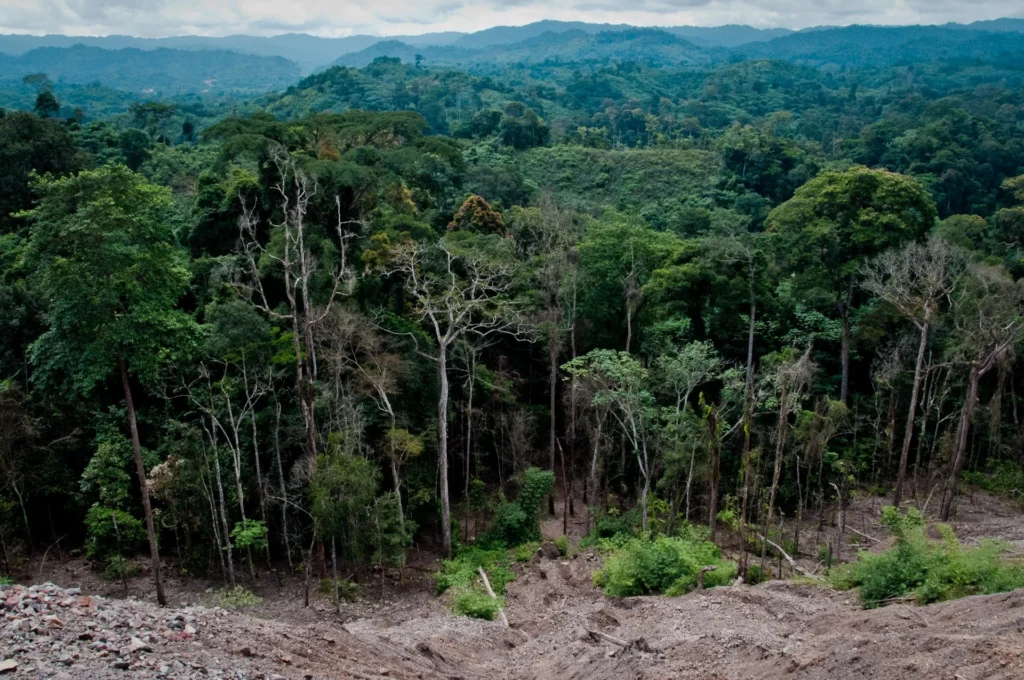
The forests of the Republic of the Congo form a vital part of the Congo Basin, the world’s second-largest tropical rainforest and a major global carbon sink. Photo by Bobulix / Flickr.
Natural Sinks: The Overlooked Climate Guardians
Forests and oceans are critical in absorbing carbon emissions, yet face threats that could limit their effectiveness. As climate policies lean heavily on these natural buffers, the risks to their future capacity are becoming a pressing concern.
Key Challenges Facing Natural Sinks
Forests and oceans collectively absorb about 18 gigatonnes of CO2 annually, equating to 40% of human emissions. Despite their vital role as carbon sinks, deforestation, wildfires, and warming waters are increasingly undermining this capacity. Forest areas have decreased by approximately 1.5 million square kilometers since 1990, with deforestation still accounting for 5-6 GtCO2 emissions each year. The 2023 Canadian wildfires alone resulted in emissions of around 3 GtCO2, significantly surpassing the country’s fossil fuel emissions.
Oceans, on the other hand, are absorbing carbon less efficiently as increased temperatures affect CO2 solubility and mixing. Since 2018, the rate of oceanic carbon uptake has noticeably declined. Moreover, potential climate tipping points, such as permafrost thaw and Amazon dieback, pose additional risks by potentially releasing up to 750 GtCO2e, including methane.
Current Funding and Policy Dynamics
Despite their substantial contribution to carbon mitigation, natural sinks receive disproportionately low funding compared to engineered carbon removal technologies. While compliance carbon markets range from $5 to $90 per tonne, they often fail to adequately reward the conservation of existing natural sinks. In contrast, the United States has invested approximately $43 billion in engineered removals through initiatives like the 45Q tax credits.
The need for a reallocation of resources towards nature-based solutions is evident, as these are among the most cost-effective methods of carbon mitigation, often costing below $50 per tonne. Governments can begin integrating natural sinks more effectively into climate strategies by closely monitoring changes in forest and ocean carbon uptake, updating national emissions projections, and stress-testing net zero pathways against these declining capacities.
Paths to Enhanced Protection and Integration
Protecting existing natural sinks must become a priority, receiving a larger share of climate finance relative to their importance and cost-effectiveness. This includes providing stable, long-term funding for initiatives like forest conservation and marine ecosystem protection. While newer technologies such as enhanced rock weathering and biochar offer potential, they are costlier and should be scaled carefully.
Moreover, existing commitments, such as Redd+ and the High Seas Treaty, need to be reinforced with clear targets, robust monitoring, and transparent reporting practices. Governments should also focus attention on lesser-noticed areas like the Congo Basin and Southeast Asia’s peatlands to ensure a more comprehensive approach to conservation.
Decisions made in this decade will crucially impact how natural sinks can continue to absorb carbon, emphasizing the urgency of integrating and protecting these vital ecosystems within climate policies.
The analysis herein is based on research conducted by the Wood Mackenzie Energy Transition Service, led by Roshna Nazar.
Original Story at greencentralbanking.com