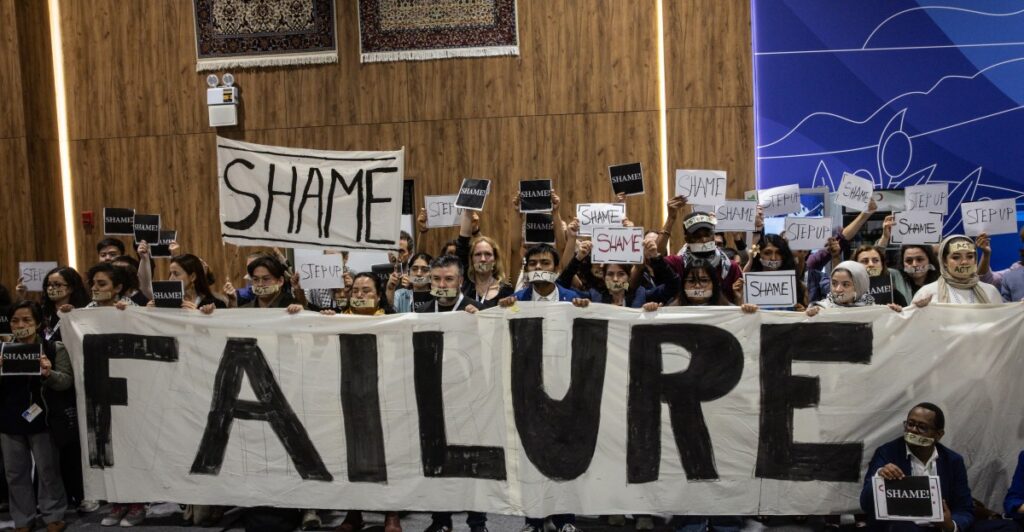
The recent United Nations climate conference in Antalya, Turkey, highlighted a significant challenge for the global clean energy movement: the need to electrify the economy amidst rising electricity demand from data centers. The event, known as COP31, concluded without a satisfying resolution, leaving many nations grappling with how to balance this growing demand with sustainable energy goals.
Annually, COP31 attendees strive to honor the commitments of the 2015 Paris climate accord, which aims to mitigate climate change impacts such as extreme weather and flooding. A crucial part of this effort involves transitioning from fossil fuels to renewable energy sources, like solar and wind, for powering homes and vehicles. However, this transition is complicated by the increasing energy consumption of data centers, which has become a pressing issue.
One of the primary objectives at this year’s conference was to increase electricity’s share of global energy consumption to 35 percent by 2035. Currently, it stands at about 20 percent. Chris Bowen, Australia’s minister for climate change and energy, and president of the COP31 negotiations, emphasized, “Every climate minister in the world is thinking about this.” Bowen’s statement underscores the global concern over this challenge, as expressed in an interview with Politico.
The conference, which became the longest on record due to extended debates, ultimately failed to produce a consensus on a pivotal climate pact. The EU, UK, and other vulnerable nations rejected the proposed deal for its perceived inadequacies, particularly its omission of “fossil fuels” from the text, which many nations wanted to address more firmly. The absence of the United States, following its withdrawal from the Paris accord under the Trump administration, further complicated the negotiations.
Despite the lack of official agreements, about 80 countries have pledged to voluntarily increase the share of electricity in their energy consumption, according to COP31 president Murat Kurum. However, the specifics of which countries have made this commitment remain undisclosed, as reported by Carbon Brief.
In the technology sector, companies like Google, Microsoft, and Meta have made commitments to reduce their carbon footprints. However, the rapid expansion of AI technologies has complicated these efforts. For instance, Meta is “re-evaluating” its timeline for achieving net-zero emissions, as noted in its sustainability report. Google’s and Microsoft’s emissions are also increasing despite their climate promises.
The International Energy Agency forecasts that data centers’ electricity consumption could double by 2030. Bruce Douglas, CEO of the Global Renewables Alliance, expressed concern over this trend, stating, “That is a huge climate risk: rising power demand from data centres is not yet sustainable, and an AI boom cannot be allowed to become a fossil fuel boom.” His organization highlighted these issues during a panel at COP31.
In the United States, the proliferation of data centers poses a significant climate challenge. The Sierra Club warns that power sector emissions could rise by 42 percent by 2030 if reliance on fossil fuels continues to meet energy demands. Harvard researchers have found that U.S. hyperscale data centers already contribute more to climate pollution than Denmark.
Douglas stresses the need for new renewable energy sources to power data centers sustainably. The current competition for grid resources between data centers and essential services like heating, air conditioning, and transportation electrification poses a critical dilemma. Many tech companies purchase renewable energy to offset their consumption, but this approach may not suffice if it doesn’t lead to new green energy development.
Progress was made with some voluntary agreements, such as the Antalya AI pledge, which aims to ensure data centers use less polluting energy. However, environmental groups like the Natural Resources Defense Council argue that these pledges lack enforcement mechanisms and fall short of the robust action needed, as stated in their official statement.
As the world continues to navigate the complexities of climate change and energy demands, the outcomes of COP31 underscore the need for more robust and enforceable commitments to ensure a sustainable future.
Original Story at www.theverge.com