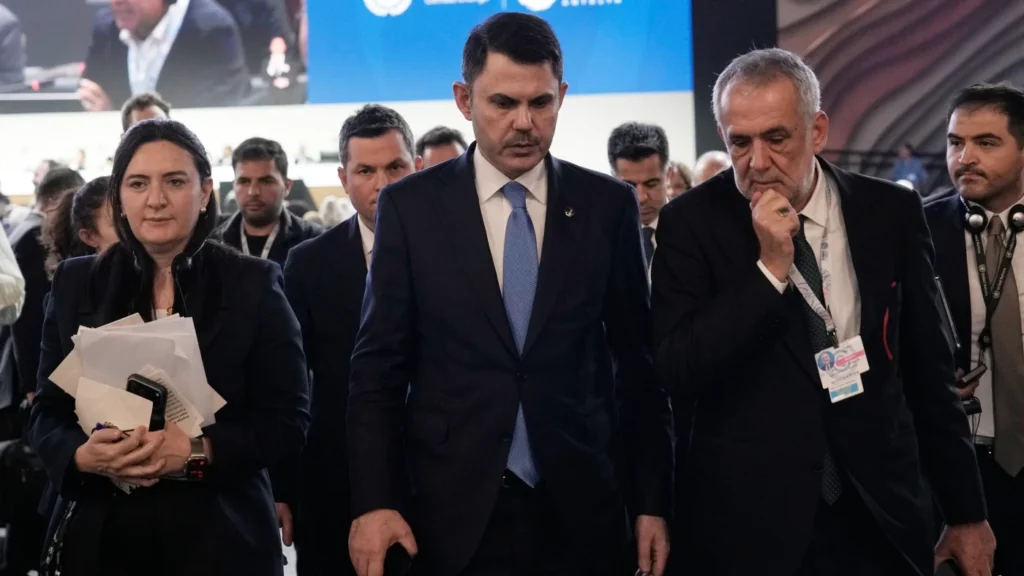
Climate Talks in Antalya End Without Fossil Fuel Agreement
In Antalya, Turkey, the latest U.N. Climate Summit concluded with no consensus on fossil fuel reduction, despite extending the talks by two days. This marks an unprecedented length for such conferences and highlights the growing urgency of climate discussions.
Representatives from nearly 200 nations could not finalize agreements on key issues such as electrification targets, financial aid for developing countries, and strategies to address the imminent breach of a critical global warming threshold. The European Union walked away from the table, refusing any outcome that avoided direct mention of transitioning away from fossil fuels, which are responsible for approximately 73% of global emissions.
Among the dissenters were Ireland’s Minister for Climate, Darragh O’Brien, and EU Commissioner Wopke Hoekstra, who emphasized the necessity of addressing fossil fuels in any agreement. “That is not acceptable,” Hoekstra stated, highlighting the EU’s stance against an agreement that omitted this critical issue.
This summit marked the first official acknowledgment that the planet is set to surpass the 1.5 degrees Celsius warming threshold set in 2015. This breach implies more severe climate events, necessitating immediate emission reductions—specifically, a 45% reduction by 2035, which scientists assert requires a significant cut in fossil fuel usage.
Despite the lack of resolution, Chris Bowen, Australian minister and negotiation leader, noted the global shift away from fossil fuels continues. “The transition away from fossil fuels in the real world is inevitable,” he remarked.
Disagreements on Fossil Fuels
The persistent contention over fossil fuels at climate conferences reflects a history of divided opinions. While some nations, like Norway and Mexico, support a transition, others such as Saudi Arabia and Russia have historically blocked such measures. The first mention of fossil fuels in a final COP agreement occurred only in 2023 at the Dubai summit.
In response to stagnation within the COP framework, over 50 countries have initiated separate conferences focused on fossil fuel reduction, with the “First International Conference for the Transition Away from Fossil Fuels” held in Colombia. The next meeting is scheduled for 2027, co-hosted by Ireland and Tuvalu.
Increasing Electrification
The ongoing conflict involving the U.S., Israel, and Iran, particularly the closure of the Strait of Hormuz, has accelerated the shift toward electrification in Asia and Africa. Countries are increasingly adopting solar energy, batteries, and electric vehicles to reduce dependency on fossil fuels.
The summit, dubbed the “electrification COP,” aimed to elevate global electrification from 23% to 35% by 2035. Though many nations supported this goal, it fell through when the overall agreement failed. “Electrification was collateral damage when the whole decision cratered,” noted Alden Meyer of E3G.
Lack of U.S. Presence
For the second consecutive year, the Trump administration abstained from sending delegates to COP31, having previously withdrawn from the Paris Agreement. Despite this, a group of congressional Democrats attended unofficially, promising to prioritize climate change once they regain control of Congress.
Financial Challenges Persist
Financial assistance for nations most affected by climate change was a central issue at the summit. Although wealthier countries have pledged significant climate finance, only a fraction has been delivered, primarily for emission-reduction projects. The ongoing need for adaptation funding remains critical, with the United Nations estimating a requirement of $305 billion annually by 2035.
Developing countries continue to advocate for more substantial financial commitments, as underscored by Jamaica’s Minister Matthew Samuda, who described climate change as an undeniable reality for his nation.
NPR correspondent Michael Copley and editor Sadie Babits contributed to this report.
Original Story at www.npr.org