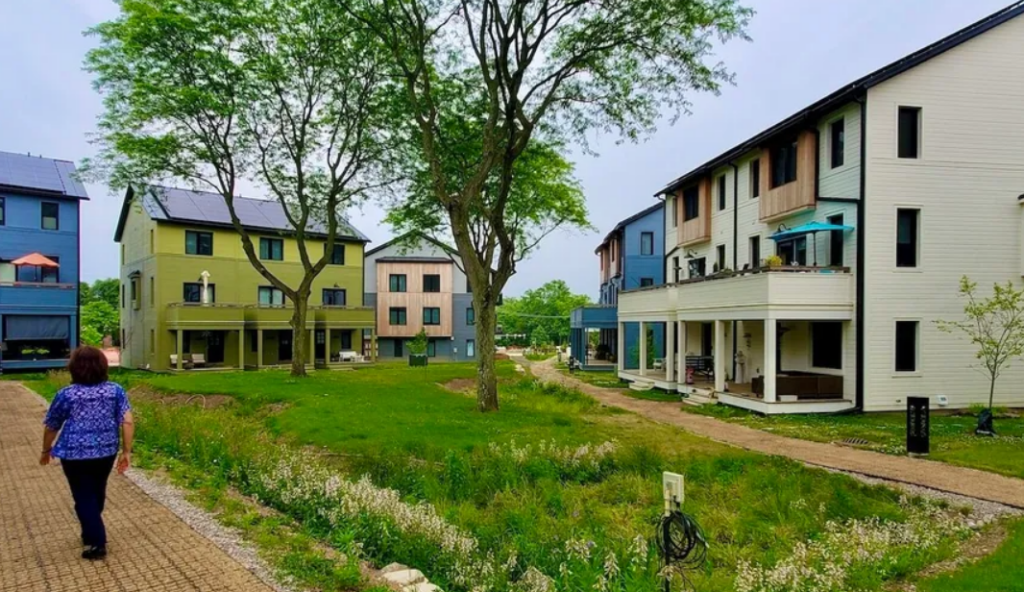
Innovative Energy Community in Ann Arbor Sets Example for Sustainable Living
In Ann Arbor, Michigan, a pioneering residential development is redefining how communities can harness clean energy. Mitch Hall and Lori Hall are residents of Veridian at County Farm, a cutting-edge, fossil-fuel-free community where homes are designed to produce as much solar energy as they use. This is achieved through an integrated system that includes solar panels and home batteries, as detailed on the Veridian at County Farm website.
The Halls, along with their neighbors, are preparing to participate in a novel pilot project. This initiative, Michigan’s first residential virtual power plant (VPP) pilot, is spearheaded by DTE Energy. Through this program, the utility company will remotely manage residents’ home batteries to dispatch stored solar energy to the grid during peak demand periods.
“This pilot is an opportunity to test an approach that could ultimately provide a lower-cost way to meet growing energy needs and strengthen reliability,” stated Joi Harris, president and CEO of DTE Energy. VPPs can mitigate demand peaks, lessening the need for costly grid infrastructure upgrades and fossil-fuel power plants, which would otherwise increase consumer costs.
Mitch Hall is optimistic about the project, noting that “DTE will pay us a little bit to be part of this project.” He appreciates the convenience of the system, which automatically optimizes battery use, saying, “DTE will manage that battery for you.”
Despite the promise of VPPs, widespread adoption has been slow due to challenges such as utility incentives and the high costs of home solar and battery systems. However, increasing energy demands from electrification and data centers are making VPPs an attractive solution. The Brattle Group recently projected that by 2050, VPPs could help households save an average of $122 annually, utilizing 524 gigawatts of distributed energy resources.
Kevin Brehm from the clean energy think tank RMI highlights the untapped potential in VPPs. This sentiment is echoed by Matt Grocoff, founder of Thrive Collaborative, who envisioned Veridian as a self-sustaining ecosystem. Grocoff compares the VPP to a forest, where trees share nutrients through an underground network, describing it as a mutually beneficial energy network.
DTE anticipates nearly 100 Veridian homes will join the pilot. Currently, 44 market-rate homes equipped with solar and batteries are complete, alongside 50 affordable housing units still awaiting battery installation. Sonnen USA, the battery manufacturer, is collaborating with DTE using its proprietary software to manage the pilot.
“Veridian is a test bed,” says Geoff Ferrell of Sonnen USA. The pilot aims to deliver about 300 kilowatts for three hours, providing valuable insights into the potential of home battery networks. Sonnen’s successful VPP in Utah, which expanded rapidly from a pilot to a large-scale program, serves as a model for this initiative.
The Utah program, known as Wattsmart Battery, now includes approximately 7,900 participants across Utah, Wyoming, and Idaho. Brehm suggests that cautious utilities could learn from Rocky Mountain Power’s methodical approach, which allowed for seamless integration of battery resources.
The Veridian pilot is already attracting interest from other developers and utilities, such as the Peace Hill project in Washington, according to Grocoff. “We’re getting calls from all over the country,” he remarked, emphasizing the growing excitement around the project.
Original Story at michiganadvance.com