The Rising Threat of Sulfur Hexafluoride in Beijing’s Efforts to Combat Climate Change
In the battle against climate change, Beijing has managed notable reductions in several greenhouse gases, yet a particularly potent climate pollutant, sulfur hexafluoride (SF6), continues to rise. Recent research highlights the dual challenge of balancing economic growth with environmental responsibility in northern China’s capital.
A study published in Environmental Science & Technology reveals that Beijing’s air quality improvements, stemming from policies initiated during the 2008 Summer Olympics, are showing results. However, the surging demand for electricity and the expansion of semiconductor manufacturing are contributing to increased SF6 emissions, a gas significantly more potent than carbon dioxide.
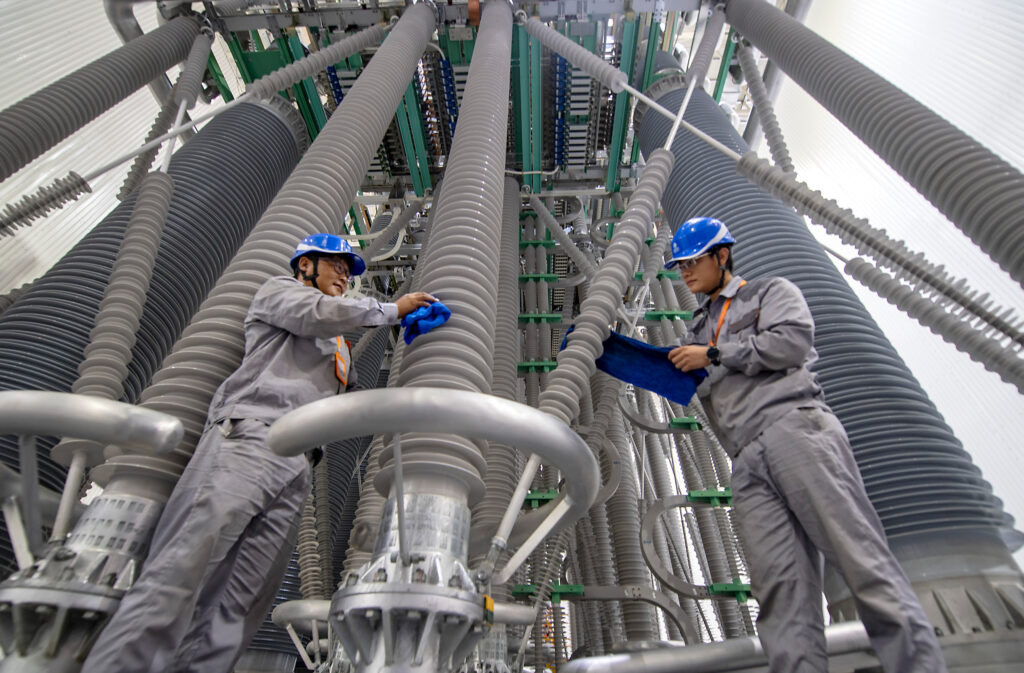
Sulfur hexafluoride is used extensively as an insulator in high-voltage electrical equipment. The study notes that while global SF6 emissions are decreasing, China’s contributions are rising, with the nation responsible for over half of the worldwide releases. Notably, China’s state-owned electric utilities recycle only about 30% of their SF6 waste, as reported by Inside Climate News.
Researchers from the Chinese Academy of Sciences’ Institute of Atmospheric Physics assessed greenhouse gas levels from 1993 to 2024, identifying semiconductor manufacturing as a rapidly growing source of SF6 emissions. The manufacturing process uses SF6 for etching and cleaning, making it a critical area for emissions control.
Despite declining carbon dioxide levels due to increased natural gas use and reduced coal reliance, SF6 concentrations are climbing. “These findings underscore the power and semiconductor sectors as critical domains for targeted SF6 emission control,” the study noted.
While methane and nitrous oxide growth rates have slowed due to improved waste management and vehicle emission standards, SF6 emissions from Beijing’s burgeoning semiconductor industry now surpass those from the electric power sector locally, which remains the dominant national source.
University of Vienna atmospheric scientist Martin Vojta emphasized that while semiconductor manufacturing is linked to rising SF6 emissions, further analysis could clarify additional contributing factors. A recent policy report titled “Beware of Sulfur Hexafluoride Emissions Behind AI Industry Development” has already been adopted by the Beijing Municipal Committee, as detailed in an official release.
The AI industry’s expansion could exacerbate SF6 emissions, with the semiconductor chip production and power-grid development intensifying the issue. The committee’s recent engagement with the Institute of Atmospheric Physics, including discussions led by study co-author Tang Guiqian, highlights the urgency of addressing SF6 emissions.
The semiconductor industry can explore various strategies to mitigate its environmental impact, such as refining production processes, utilizing alternative fluorine sources, and eliminating waste gas. A past initiative by the U.S. Environmental Protection Agency with industry partners successfully reduced SF6 emissions, illustrating potential pathways for China.
The World Semiconductor Council pledged in June to continue reducing the emissions intensity of SF6 across its member regions, including China. Despite these efforts, Avipsa Mahapatra of the Environmental Investigation Agency US, points out that existing measures are insufficient to curb the upward trend in SF6 levels. “Whatever measures currently exist are not yet bending the SF6 curve,” Mahapatra stated.
Original Story at insideclimatenews.org