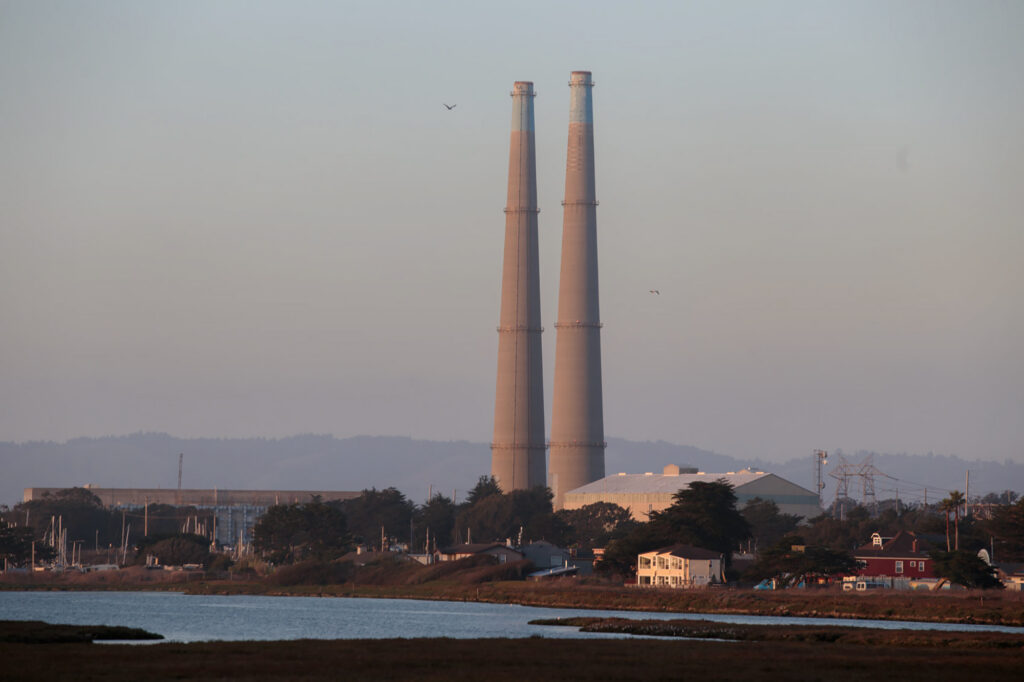
Once again, the Moss Landing Power Plant has become the focal point of battery storage concerns in California. A recent flare-up at the site, less than two years after a massive fire, has reignited debates about the safety and reliability of such facilities as the state pursues its ambitious clean energy goals.
On Friday morning, the remains of the Moss Landing battery storage facility caught fire again. This prompted officials in Monterey County to issue a shelter in place order. This incident occurred less than two years after what was considered one of the largest battery storage facility fires in history.
According to Chief Jess Cortez of the North County Fire Protection District, workers from Vistra, the Texas-based operator of the plant, detected the flare-up early on Friday. The cause was identified as approximately 1,200 inaccessible battery modules that spontaneously ignited. “They’re in the smoldering stage right now,” Cortez explained, noting the potential for future flare-ups.
Although the shelter in place order was lifted later that same day, the incident has raised questions about the safety of energy storage sites, especially as California increasingly depends on them. The California Energy Commission recently announced the state now boasts “the nation’s largest battery energy storage fleet.”
“If we had only known the worst-case scenarios of how not to build batteries, we wouldn’t have built Moss Landing,” said Dustin Mulvaney, a professor at San Jose State University. “Because it keeps coming back to haunt us.”
Fire Rekindled
Back in January 2025, the Moss Landing facility experienced its fourth safety incident, marked by massive smoke plumes. The fire was eventually controlled but reignited a month later. Governor Gavin Newsom called for a state investigation into the blaze, which is still ongoing nearly two years later, according to Terrie Prosper from the California Public Utilities Commission.
Monterey County Supervisor Glenn Church voiced frustration over the lengthy investigation. “Why it takes a year and a half to come up with an answer when everything is just about near the end of being cleaned up, I don’t know,” he said.
Safety Rules, Too Late
The design of the Moss Landing facility has been criticized for its outdated infrastructure. Denise Grab from the Emmett Institute on Climate Change remarked that it does not meet current safety standards. However, she noted that even with risks, battery plants pose fewer dangers than fossil fuel alternatives.
In response to the ongoing issues, California has enacted several safety laws both before and after the January 2025 fire, aiming to improve planning and fire prevention at such facilities.
Environmental Health Controversy
Vistra has stated that the cause of last year’s fire remains undetermined, while a commissioned study concluded there were no significant risks to humans or the environment. However, some scientists and residents have reported health issues and elevated exposure to battery materials, suggesting that the impacts of these fires might be more serious than initially thought.
Local monitors have not detected any harmful levels of particulate matter, but community trust continues to erode. Brian Roeder from Never Again Moss Landing expressed his concerns, stating, “We’ve had 20 months to prepare for this. Here we are again, right back where we were before, knowing this could happen.”
This story has been updated to reflect Vistra’s modified count of 1200 batteries that ignited Friday.
Original Story at calmatters.org