Climate Change: The Catalyst Behind Nepal’s Catastrophic Landslide
Scientific research confirms that the tragic landslide on Langtang Lirung Mountain in Nepal was exacerbated by the warming effect of climate change. Experts assert that global warming created a conducive environment for this disaster, which claimed the lives of at least 1,300 people in August.
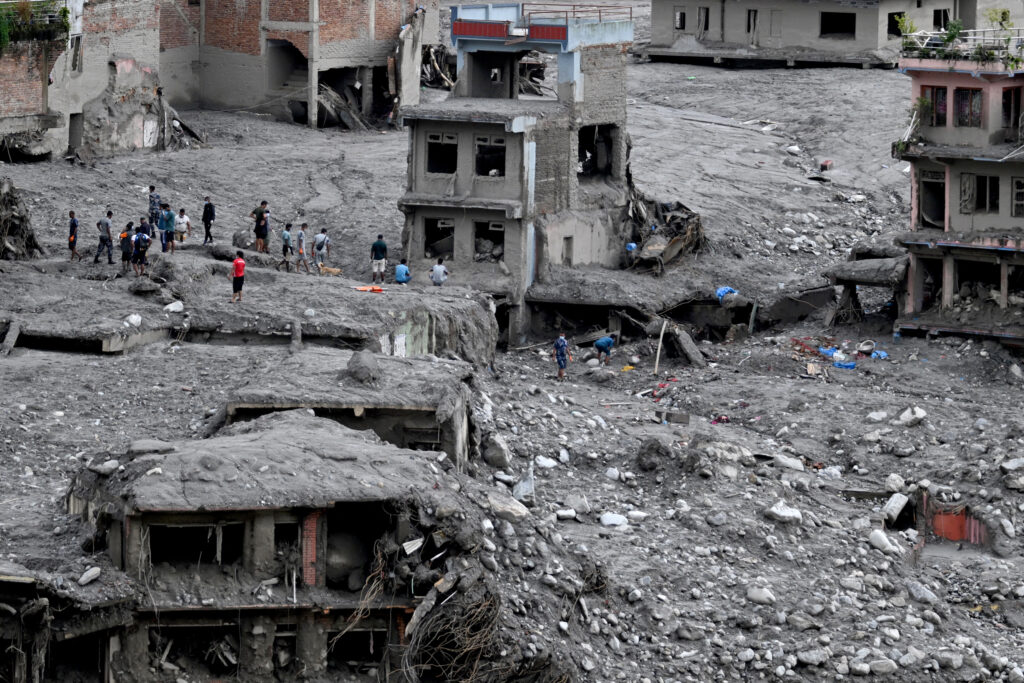
The disaster, characterized by a torrent of semi-frozen debris moving up to 100 mph and reaching heights of 300 feet, left a trail of destruction in its wake. Towns, farms, and vital infrastructure were severely affected, with losses pegged at approximately $5 billion.
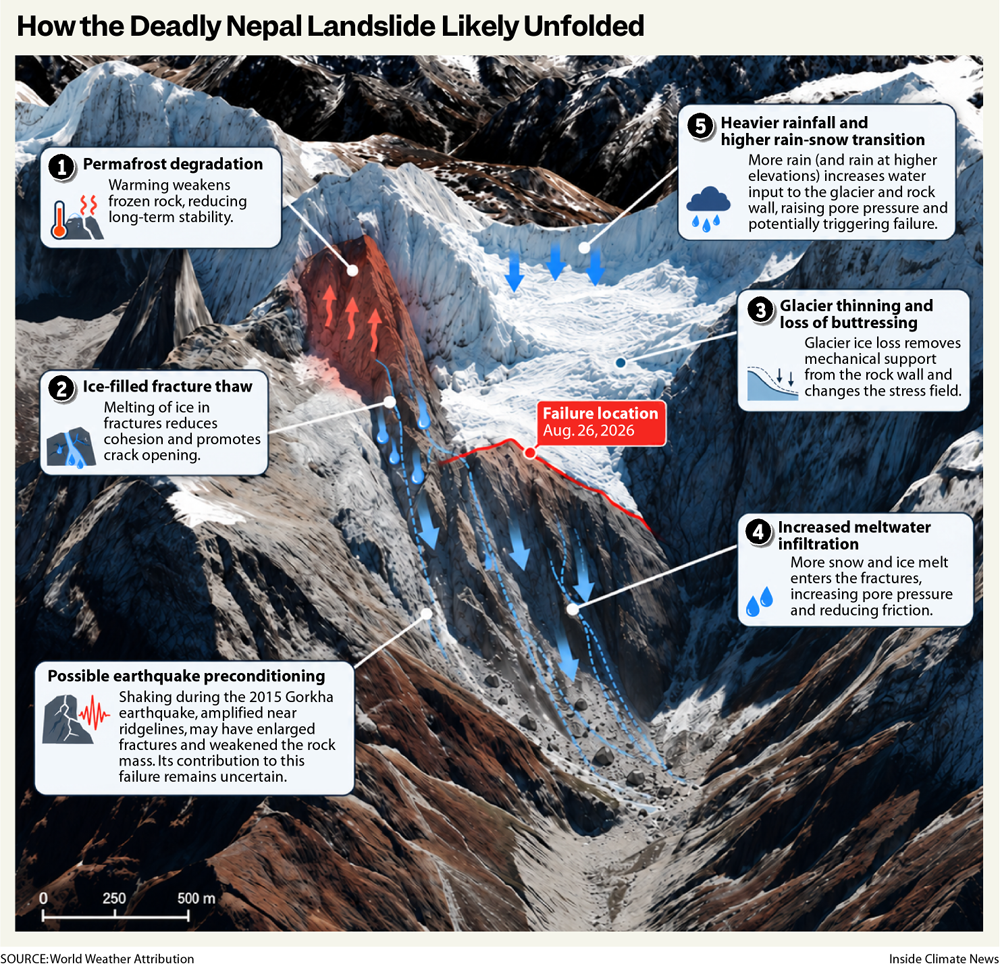
A new study by World Weather Attribution scientists highlights that the months leading up to the incident saw record-high temperatures coupled with unusual snowfall, contributing significantly to the calamity. “Additional meltwater from the snow was probably another element in a complex chain of climate-linked factors contributing to the disaster,” explained Walter Immerzeel, co-author of the study.
Decades of warming have weakened the structural integrity of mountain slopes by melting ancient ice and thawing permafrost, making them prone to collapse. The recent landslide saw an estimated 116 million cubic meters of rock and ice break away, an event unprecedented in the Himalayas, equaling the size of 96 Manhattan city blocks.
This event is five times the scale of the 2021 Chamoli disaster in India and represents “fundamental, irreversible shifts in Himalayan mountain environments,” according to Immerzeel, a mountain hydrologist at Utrecht University.
Nepal is seeking assistance from the UN’s climate loss and damage fund, which has limited resources compared to the scale of the disaster. The flood swept through Rasuwa district, devastating several settlements, and affected the Bhote Koshi and Trishuli river systems. Approximately 5,000 people remain missing.
“When you combine high-elevation permafrost degradation with glacier retreat and record summer heat, the structural integrity of these mountain walls is compromised.”
— Walter Immerzeel, analysis co-author
Climate change, driven by fossil fuel combustion, is causing the freezing line to rise by about 100 meters every decade. This shift is heating ancient bedrock and affecting glaciers. Meltwater, originating from ice frozen for millennia, seeps into rock fissures, increasing hydraulic pressure and prompting collapse.
Fredi Otto from Imperial College London noted that permafrost thawing, glacier thinning, and increased rainfall instead of snow heightened the risk of the collapse. Although more detailed glacier models could quantify human-induced warming’s role, Otto emphasized the broader context of responsibility for climate-induced disasters.
Madhab Uprety from the Red Cross Red Crescent Climate Centre highlighted the need for better preparedness in the face of such unpredictable disasters. Climate change is reshaping hazard profiles, necessitating continuous reassessment of risk and preparedness strategies.
Long-term development trends in Nepal, such as population movements into vulnerable valleys due to drought and agricultural challenges, have further increased risk. As global temperatures rise, scientists advocate for improved safety measures, including identifying vulnerable regions and employing monitoring technologies like radar and drones.
Despite technological advancements, predicting extreme events like the Langtang Lirung collapse remains a formidable challenge, according to Immerzeel.
Original Story at insideclimatenews.org