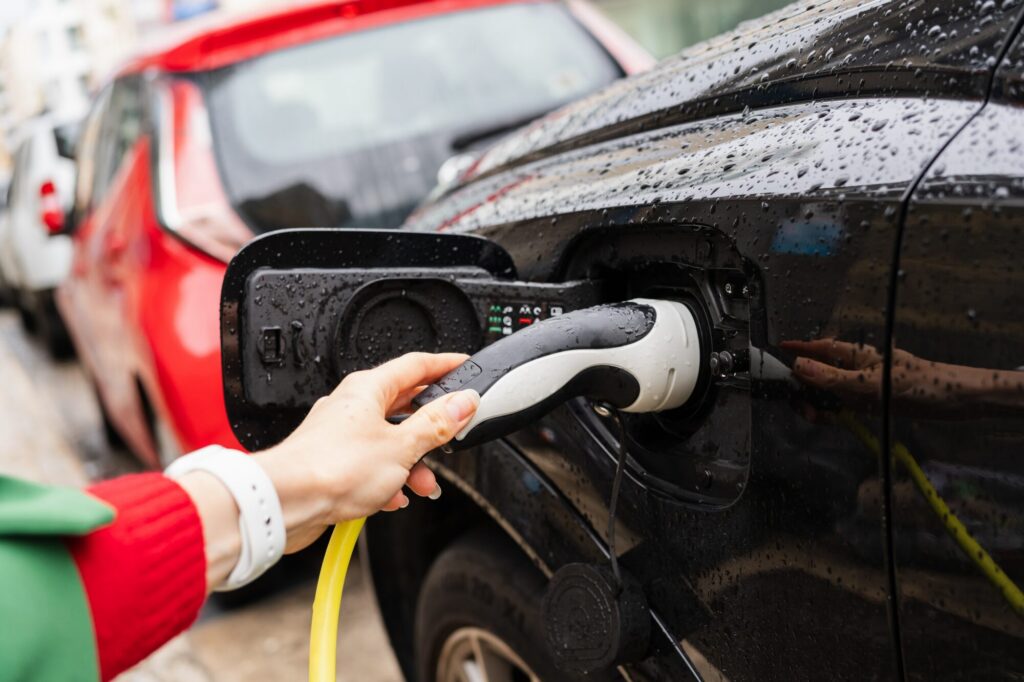
Electric Vehicle Sales Surge Amid Rising Oil Prices
As oil prices continue to rise, the automotive industry in Europe is witnessing a dramatic shift towards electric vehicles, with a notable increase in their sales. This movement is largely driven by consumers seeking alternatives to fossil fuels, as reported by the European Commission’s Directorate-General for Climate Action (source).
The term “electric vehicles” encompasses both battery electric vehicles (BEVs) and plug-in hybrid electric vehicles (PHEVs)2. The surge in sales is primarily attributed to zero-emission vehicles, which are predominantly battery electric vehicles, although minimal contributions come from technologies like fuel-cell electric vehicles, accounting for less than 0.5% of new registrations4.
Analysts from the International Council on Clean Transportation have documented significant growth in the EU heavy-duty vehicle market, particularly in the first half of 2026 (source), while a separate study outlines the pricing and market trends of both battery electric and internal combustion engine vehicles in Germany from 2020 to 2025 (source).
Efforts to expedite zero-emission truck adoption are being bolstered by the Eurovignette Directive, which suggests road toll exemptions as a means to accelerate the transition (source).
The health benefits of zero-emission transport are underscored in a study projecting advantages through 2050 (source), while a separate analysis delves into the real-world CO2 values from 2021 to 2023 in the European passenger car market (source).
Infrastructure readiness for electric vehicles remains a crucial topic, with a white paper from Milence calling for targeted action to accelerate progress (source).
The Trans-European Network for Transport (TEN-T) is integral to the road network, covering areas with chargers located within 1 km every 60 km or less1213. The European Car Market Monitor also highlights developments in June 2026 (source), and Eurostat provides insights into electricity price statistics as of April 2026 (source).
Demand-side flexibility in Europe, along with the growth in tariffs and services, is elaborated in a March 2025 report by the Regulatory Assistance Project (source).
The International Council on Clean Transportation continues to provide comprehensive analyses of market trends, infrastructure, and the economic impact of the transition to electric vehicles across the EU and beyond2122.
Original Story at theicct.org