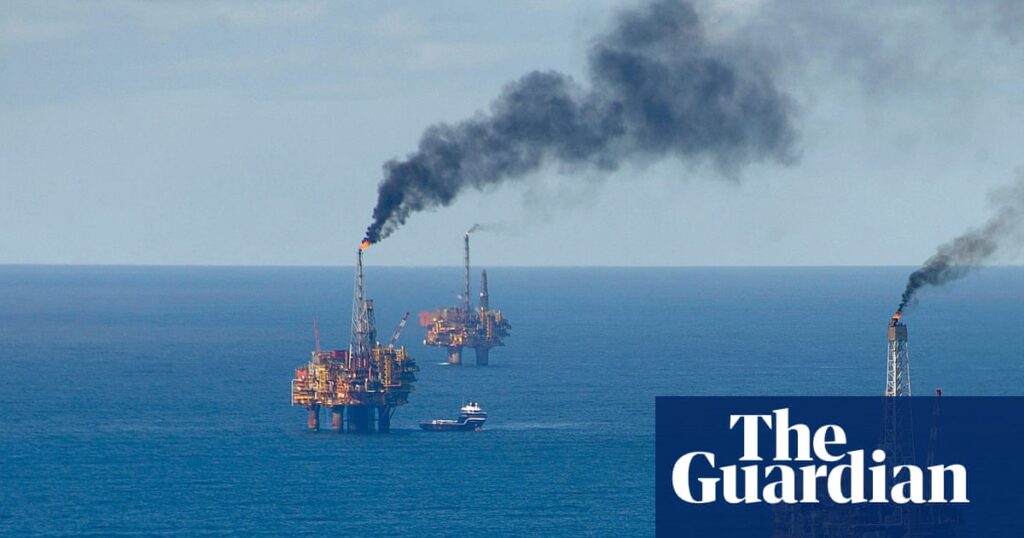
North Sea Oil: A Legacy of Power, Decline, and Political Debate
In 1969, a pivotal moment in energy history occurred off the north-east coast of Scotland when oil was discovered, leading to a transformation in the British economy. Initially, the discovery was modest, marked by an anecdote where oil was poured into a pickle jar. Yet, it quickly catapulted into a significant economic force, symbolizing national strength as the UK navigated the Opec oil crisis.
By the late 1970s, North Sea oil had become central to Britain’s economic aspirations, with then-Labour Prime Minister Jim Callaghan proclaiming it as a divine opportunity for national advancement. The revenues from this oil, at times contributing nearly 10% of the UK’s tax intake, played a crucial role in Margaret Thatcher’s era of fiscal reforms, including tax cuts and privatisation.
Despite reaching a peak output of 4.4 million barrels of oil equivalent per day at the turn of the century, the basin’s influence has waned. Once bustling with activity, Aberdeen emerged as the headquarters for oil companies due to its minimal trade union ties, fostering a prosperous era of offshore employment.
According to Ewan Gibbs, an energy history expert from the University of Glasgow, North Sea oil was not just about wealth but also about power and international prestige. “At its peak, oil was associated not only with immense wealth but also with power and international prestige,” he stated.
Fast forward to today, the North Sea’s output is projected to drop to just 15% of its peak by 2030. Major corporations, including BP, have exited as resources dwindle, and employment has sharply declined from 120,000 direct jobs to about 27,000.
Political and Economic Impacts
Despite its declining economic significance, North Sea oil retains symbolic importance in political discourse, often used as a tool in climate debates. Labour’s decision not to issue new exploratory licences in the North Sea marked a significant shift towards renewable energy, aligning with the International Energy Agency‘s call to halt new fossil fuel investments.
Former energy secretary Ed Miliband argued for a transition to renewable energy, envisioning the UK as a “clean energy superpower.” He suggested that this shift could revitalize communities in north-east Scotland affected by the oil industry’s decline.
Yet, political leaders like Nigel Farage and Kemi Badenoch have advocated for renewed drilling efforts, while Donald Trump has exaggerated the basin’s potential. However, experts like Steve Pye from University College London counter these claims, stating, “The North Sea basin has been in decline since 2000. There are no credible prospects of reversing this.”
Amidst a cost-of-living crisis, some argue for exploiting existing licences to generate revenue. Yet, energy prices are globally determined, and the North Sea’s resources are insufficient to impact UK energy costs significantly.
Transition to Renewables
The UK government has announced plans to create 400,000 new jobs in the green economy, aiming to double employment in green industries by 2030. This shift is supported by unions like Unite and the GMB, although they emphasize the need for a detailed transition plan.
Renewable energy is gaining momentum, with significant wind farms in the North Sea contributing 18% of the UK’s total electricity. However, concerns persist that benefits are not reaching workers and local communities. Connor Watt from Platform advocates for community ownership and nationalization to ensure equitable distribution.
Lessons from Norway’s sovereign wealth fund highlight missed opportunities for the UK, which could have amassed a fund worth £850bn. Watt criticizes the market-led approach that has favored corporate profits over local benefits.
As the debate over North Sea oil endures, the focus must shift to harnessing the potential of renewable energy. The question remains: can the UK capitalize on this transition, ensuring that workers and communities benefit, rather than just corporate interests?
Original Story at www.theguardian.com