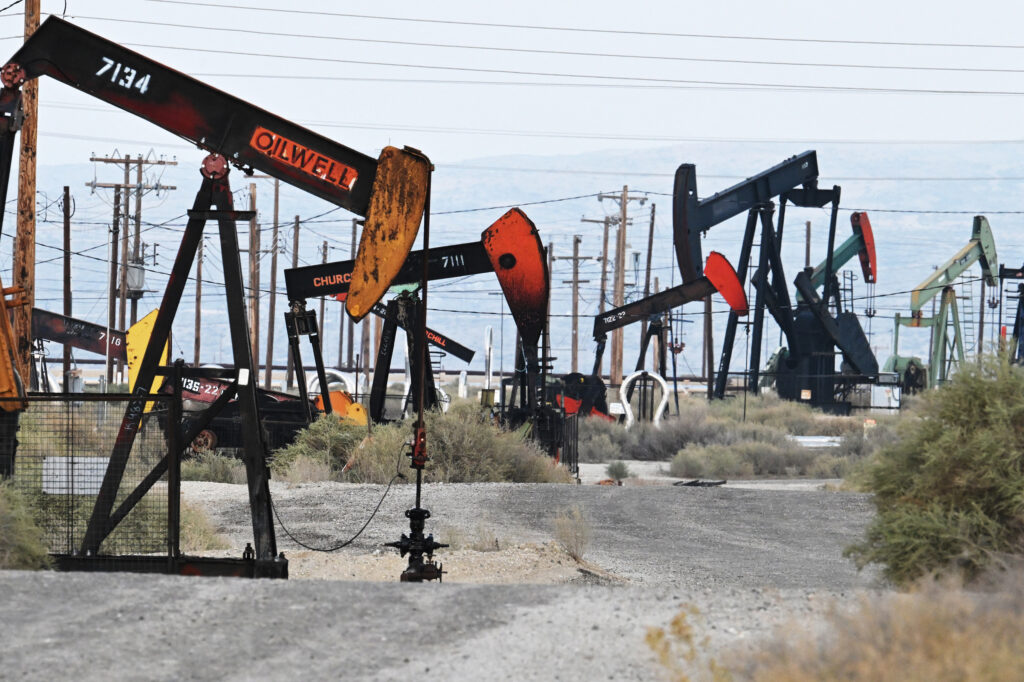
Artificial intelligence used by oil and gas companies to locate and develop new energy reserves results in significantly higher emissions than those from data centers powering AI platforms, according to a recent study by former Microsoft employees. The study emphasizes the environmental impact of AI-driven fossil fuel exploration.
Will and Holly Alpine, who previously developed AI platforms, created the Enabled Emissions Campaign to hold technology firms accountable for the expansion of fossil fuel production. Their study, published in Nature, reveals that AI tools utilized by oil and gas industries have increased production efficiency, leading to a rise in output.
The study estimates that AI-driven production augments global emissions by 0.47 to 1.8 gigatonnes of carbon dioxide annually, accounting for 1.2 to 4.8 percent of global energy-related emissions in 2024. This is up to 13 times the emissions the International Energy Agency attributes to data centers in 2025.
The Alpines used economic simulations to model the economy’s response to technological changes. They analyzed AI’s impact on fossil fuels and renewable energy, converting results into “productivity shocks” to measure AI’s influence on industry speed and adoption levels, aligning findings with the International Energy Agency’s 2035 projections.
Will Alpine stated that AI accelerates any application, including renewable energy and fossil fuel productivity. The effects are asymmetric, with AI bolstering the fossil fuel industry’s dominance.
Holly Alpine noted that AI’s climate impact assessments often compare data center energy use with emissions reductions, such as improving flight path efficiency or reducing vehicle idle time through synchronized traffic lights.
Another study in the same journal by London-based researchers from the Grantham Research Institute and Systemiq found AI can mitigate emissions in industries like food, power, and mobility, which contribute nearly half of global greenhouse gases. AI is positioned to enhance the transition from fossil fuels, though combined effects on low-carbon transitions need more research.
Google’s machine learning technology, DeepMind, has improved data center efficiency, reducing cooling energy use by 40%. Microsoft aims to integrate carbon-free electricity, and in 2025, matched its global electricity consumption with renewable energy.
Despite progress, Holly Alpine argued AI’s impact on oil and gas profitability is under-assessed, emphasizing the need for recognizing and governing “enabled emissions” to fully address AI’s climate impact.
Clara Vondrich from Public Citizen highlighted the tech industry’s role in advancing fossil fuel production, accusing AI developers of collaborating with oil firms to accelerate production processes.
At the CERAWeek conference, Chevron CEO Mike Wirth discussed AI collaborations between tech and energy sectors to enhance operations. The Boston Consulting Group reported AI helps oil and gas firms predict equipment failures, reducing data analysis time from months to weeks.
Consultancy Wood Mackenzie estimates AI could unlock 470 billion additional barrels of oil from current fields. The Alpines concluded that AI must significantly enhance renewable energy more than it currently benefits fossil fuels to maintain emissions levels.
Original Story at insideclimatenews.org