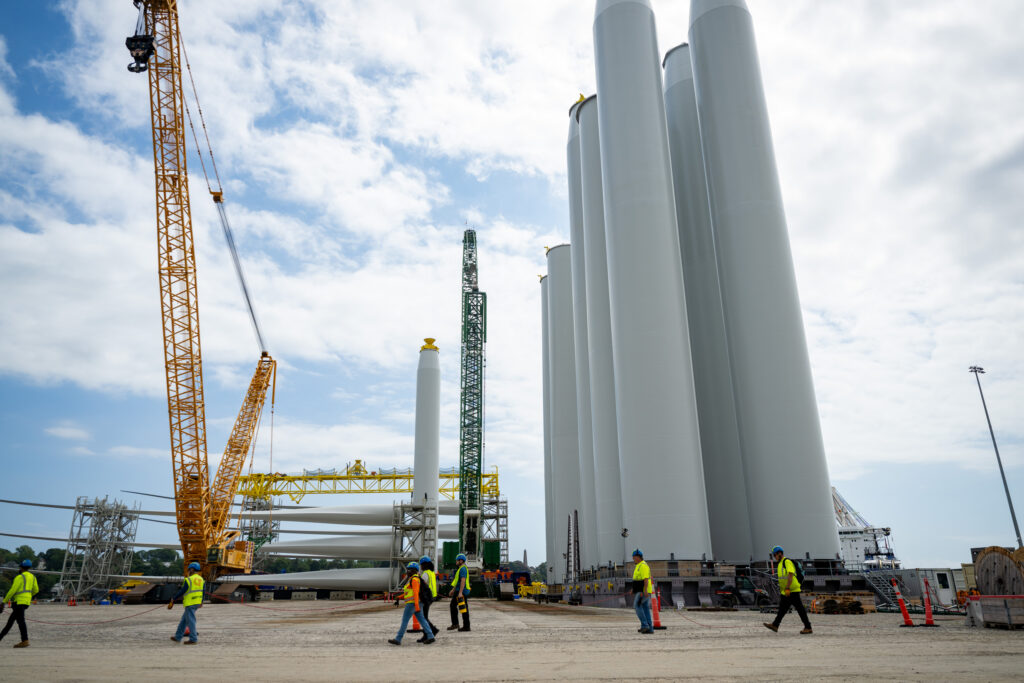
As the offshore wind industry faces unprecedented challenges, workers who once thrived on the promise of stable, well-paying careers are now grappling with uncertainty. The abrupt changes in the political landscape have left many in the industry, like Gerard Mullin, navigating a turbulent job market.
Gerard Mullin experienced a significant financial boost during his initial offshore wind project in Massachusetts, earning more in eight weeks than he had saved in the previous five years. “I thought it was the best thing in the world,” Mullin remarked about his experience. However, the stability he enjoyed was short-lived. A stop-work order from the Trump administration halted his plans to work on a five-week offshore project with Empire Wind in New York.
The Trump administration’s decision to halt future permitting and cancel 12 offshore wind leases has left thousands of workers scrambling for remaining positions or returning to previous jobs. Elizabeth Wilson, a professor at Dartmouth College, noted, “All of the promises of economic development that offshore wind was supposed to help support have evaporated.”
For many, like Mullin, the political decisions have been a shocking turn of events. “Now there are things completely outside of my control, changing how I make a living,” he said. The administration’s stance on offshore wind reflects a broader strategy to prioritize traditional energy sources over renewables, with Taylor Rogers, a White House spokeswoman, stating that this approach is intended to “strengthen our country’s energy security.”
Despite the setback, the offshore wind industry had initially projected a robust market with thousands of new jobs annually. Workers like Anthony Hibbard and Joshua Grigsby enjoyed financial freedom and improved their quality of life during the industry’s heyday. However, the recent political shifts have forced many back to lower-paying onshore jobs.
Even as some projects, like Revolution Wind, remain on track, the overall pipeline is drying up, leaving workers like Zaheer Razi uncertain about the future. “It is very frustrating, but it’s out of our control,” Razi said. The lack of investor confidence due to political uncertainty is a major factor, according to Kris Ohleth, director of the Special Initiative on Offshore Wind.
The industry once promised a significant economic boost, with BloombergNEF initially forecasting 39 gigawatts of offshore wind by 2035, now downgraded to just 6 gigawatts. The decline in offshore wind opportunities has also affected training programs, with unions investing heavily in preparing a workforce that now faces an uncertain future. Andy Benedetto of Millwrights Local 1121 expressed disappointment over the situation, stating, “We built this whole workforce, and we sold this dream to our members.”
Despite the setbacks, many workers remain hopeful for a return to offshore work, valuing the unique experiences and camaraderie it offered. As Mullin reflected on his own journey, he emphasized the importance of these jobs, stating, “It really was just a fair day’s work for a fair day’s pay.”
Original Story at insideclimatenews.org