Controversial Solar Project in Simsbury Faces Local Opposition
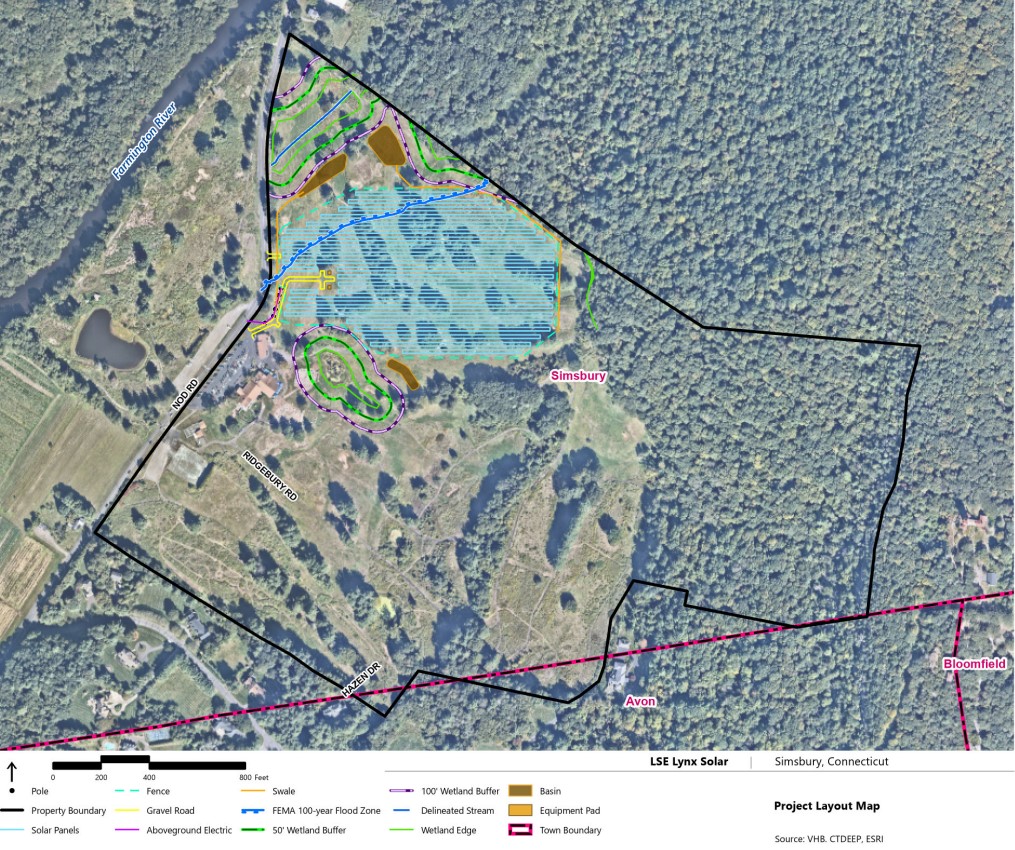
As Connecticut Siting Council’s preliminary approval of an $11 million solar array project along Nod Road approaches final voting, resistance from local authorities and businesses intensifies. Simsbury has filed a formal challenge to the council’s decision, seeking to halt the approval process.
The proposed solar development, spearheaded by Lodestar Energy, has stirred significant controversy. A prominent opposer, the owner of a disc golf course situated on the prospective site, has expressed concerns that the business may have to shut down if the project proceeds.
State Representative Melissa Osborne, representing Simsbury, has actively joined the opposition by urging the council to consider the voices of local residents. In a pointed statement, Osborne emphasized, “Local voices are especially important to that judgment. Statewide siting authority exists to prevent legitimate statewide needs from being defeated solely by parochial interests.” Her letter underscores the importance of local input in state-level decisions, challenging the notion that local interests should always take a backseat.
The core argument, as articulated by Osborne, is that the rapid growth of solar farms and affordable housing projects is perceived as a threat to the autonomy of suburban and rural communities. The Connecticut Siting Council, established over 50 years ago, aims to balance statewide utility service needs with local environmental and historical preservation efforts. However, recent complaints from towns like East Windsor, which filed a lawsuit in April, have highlighted a growing discontent with how decisions are perceived to favor development over local interests.
In her critique, Osborne asserts that the statute does not inherently favor renewable energy projects over legitimate local interests. “The statute does not contemplate that renewable-energy development should automatically prevail wherever a developer has obtained site control and demonstrated technical feasibility,” she remarked, emphasizing the need for careful judgment of public benefits versus local impacts.
The town’s Sustainability Committee acknowledged potential benefits of the solar array in its July newsletter. The project is expected to occupy 19 acres and produce enough electricity to power 450 homes, contributing approximately $50,000 annually in tax revenue. Additionally, it would support low- and moderate-income residents by providing reduced electricity rates through the Statewide Shared Clean Energy Facility program.
Currently, Simsbury generates about 25% of its electricity from solar sources, and the new project could increase that to 30%. Despite the environmental benefits, Simsbury’s memo argues that Lodestar’s application is incomplete and lacks promised supplementary information.
Tower Ridge Disc Golf, which currently leases the land intended for the solar panels, expressed concerns about the potential closure of its business if the project moves forward. “In the likelihood the CT Siting Council votes yes on November 9th, it will leave us with no other option than to close the course,” the business stated on its Facebook page.
Osborne’s letter further critiques the project’s location, stressing that it is not a mere case of NIMBYism. She notes the proximity to significant natural and cultural sites, such as the Farmington River Valley and Talcott Mountain State Park, emphasizing that these resources are integral to Simsbury’s identity and economy. “These are not incidental or interchangeable scenic resources. The historic, scenic, and rural character of Simsbury is at the root of the community’s identity,” she wrote.
Original Story at www.courant.com