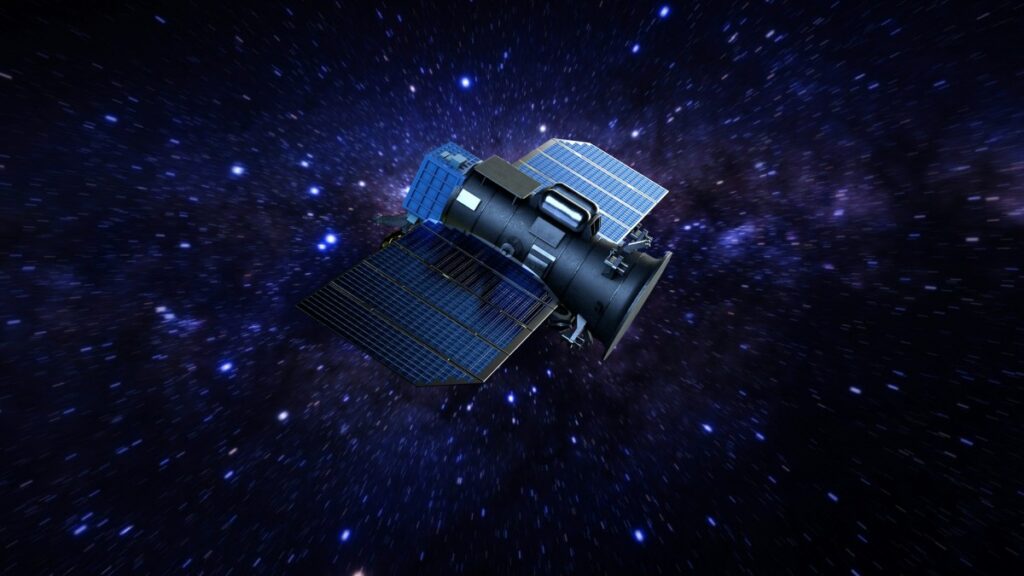
As the world shifts toward cleaner energy solutions, innovative technologies are emerging to enhance renewable energy production. A notable example is Reflect Orbital, a startup in California, which has gained approval from the U.S. Federal Communications Commission (FCC) to test a satellite equipped with a large mirror designed to reflect sunlight to Earth, potentially aiding solar farms and providing illumination during nighttime.
Reflect Orbital secured $20 million in Series A funding in May 2025 to advance its satellite technology. The company plans to launch its Eärendil-1 demo satellite into low Earth orbit by the end of the year. The FCC has acknowledged the project as a “potentially groundbreaking technology” that could bolster American space leadership. For more information, visit the official press release and the FCC statement.
Once in orbit, the satellite will deploy an expansive thin-film reflector intended to redirect sunlight to Earth’s darkened regions, adjusting brightness levels from “full moon to full noon.” If successful, Reflect Orbital intends to sell this reflected sunlight for up to $5,000 an hour, assisting in street lighting and powering solar farms at night.
Despite the potential benefits, the project has drawn criticism from scientists who fear disruptions to aviation safety, astronomy, and ecological systems, including plant growth and animal behavior. Roohi Dalal, director of public policy at the American Astronomical Society, stated, “It is clear that the activities that Reflect Orbital is proposing will have an impact on the Earth environment, including on human health, agriculture and wildlife, in addition to astronomy.”
More than 1,800 individuals have expressed concerns to the FCC, and presidents from four global scientific societies, representing 2,500 researchers, have urged the FCC to conduct a comprehensive environmental review. Charalambos Kyriacou, president of the European Biological Rhythms Society, cautioned, “We’re saying, please think before you go through with this, because this could have global implications for things like food security. Plants need the night. You can’t just get rid of it.” Further details are available in the Guardian article.
The FCC has clarified that space activities are not bound by terrestrial environmental laws. Reflect Orbital’s CEO, Ben Nowack, emphasized the necessity of the pilot project for data collection and validation of light beam control measures. “We’re grateful to the FCC for recognising the importance of testing novel technologies in space,” Nowack remarked. For additional context, visit the Dezeen article.
If the pilot proves effective, Reflect Orbital plans to deploy 1,000 satellite mirrors by 2028, expanding to 50,000 by 2035, with future mirrors potentially reaching 55 meters in diameter. The European Southern Observatory estimates the sunlight beam would be four times brighter than the full Moon in regions it illuminates. View the ESO’s findings for more details.
While the startup touts the promise of providing clean energy, environmentalists raise concerns about the carbon emissions from rocket launches necessary for satellite deployment. Reflect Orbital is not alone in this pursuit; SpaceX, led by Elon Musk, has proposed launching up to 1 million satellites to create an orbital solar-powered computing network, potentially reducing the energy demands of ground-based data centers.
Musk has addressed concerns about space congestion, stating, “The satellites will actually be so far apart that it will be hard to see from one to another. Space is so vast as to be beyond comprehension.” More information can be found in the BBC article.
As innovative satellite projects emerge, they offer new insights into space-based solar power and its applications on Earth. Nevertheless, there are ongoing concerns about light pollution and its potential harm to ecosystems and human health.
Original Story at oilprice.com