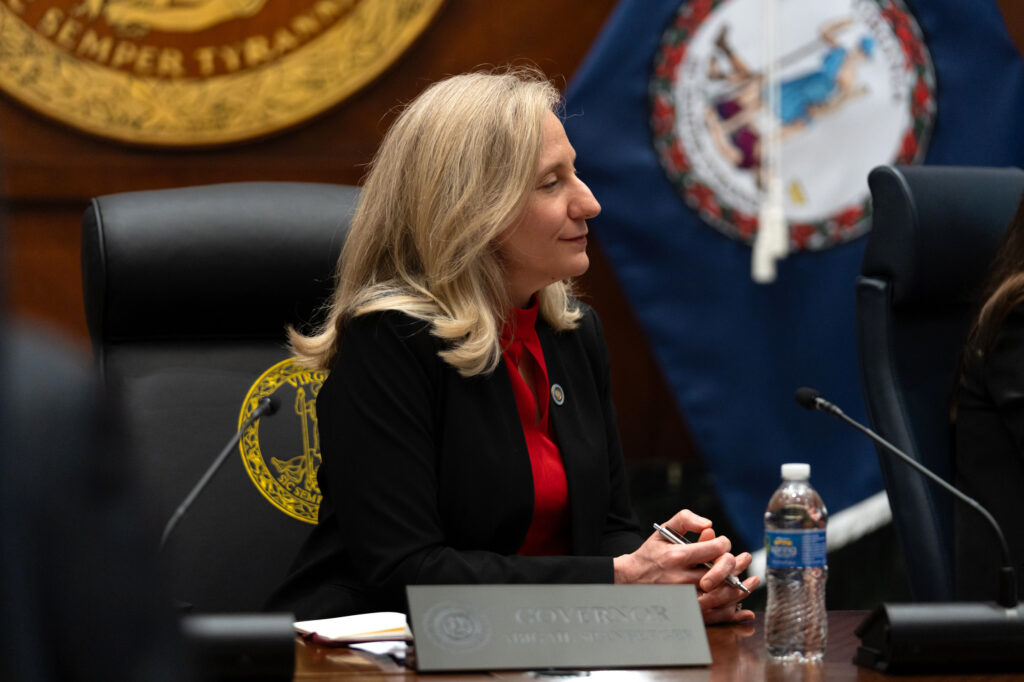
Virginia’s Governor Pushes for Data Centers to Shoulder Transmission Costs
In a rare move, Virginia Governor Abigail Spanberger is actively participating in an electricity utility case, advocating for data centers to cover the costs of transmission projects necessitated by their substantial energy demands. This involvement comes through a filing by her chief energy officer, Josephus Allmond, to the State Corporation Commission. The governor’s direct engagement in such cases is atypical, as typically only agencies under her purview, like the Virginia Department of Environmental Quality, are involved.
Data centers, with their high energy consumption, are major contributors to the need for costly new transmission lines in Northern Virginia, known as the “data center capital of the world.” The steel cables, connecting various substations and the larger grid, are integral to delivering power over large distances. PJM Interconnection, the regional grid operator for Virginia and several other states, has approved projects like the Valley Link to meet these demands.
Governor Spanberger’s administration has taken a definitive stance, advocating for data centers to bear the financial burden of transmission lines and substations required by their operations. The administration also supports a “but for” standard, where these facilities would be responsible for costs directly related to their projects. Allmond articulated this policy in his filing, stating, “It is a core policy of the Administration of Governor Abigail Spanberger… to foster an affordable, reliable and clean energy system.”
This policy direction aligns with recent developments in other states, such as Pennsylvania, and has garnered support from organizations like the Old Dominion Electric Cooperative and the Piedmont Environmental Council. These groups are keen on protecting Virginia’s countryside and ensuring fair cost allocation.
Dominion Energy’s current “Rider T-1” case is pivotal, as it seeks to recover $1.58 billion for transmission projects, initially estimated to increase the typical residential customer’s bill by $2.90 monthly. However, the new rate class approved for data centers could reduce this increase to $0.94. Dominion’s director of regulation for customer rates, Robert Hines, stated, “It would be prudent for the Commission to allow these mechanisms to mature before directing any further substantial changes to the transmission cost recovery framework.”
Governor Spanberger also advocates for a shift in cost allocation methodology from peak demand periods to a Summer and Winter Peaking Average, reflecting more consistent energy consumption by data centers. This change could significantly reduce the financial impact on residential customers, with estimates suggesting a decrease in the monthly bill increase from $2.90 to $1.14.
Moreover, Spanberger’s administration supports requiring Contributions in Aid of Construction payments from data centers to protect residential customers from transmission-related costs. This proposal mirrors recent legislation for cooperatives and is backed by major data center operators like Google, which argue it could lead to more realistic project forecasts and reduce the need for new infrastructure.
Michael Barber, a senior energy infrastructure policy analyst at the Piedmont Environmental Council, recognizes the significance of the governor’s involvement, stating, “PEC appreciates that the administration is paying attention to this and trying to align cost allocation in a way that protects the wider body of ratepayers.”
Original Story at insideclimatenews.org