Pennsylvania’s natural gas, coal, and petrochemical industries are taxed minimally and are now declining, making them unreliable for addressing the state’s budget deficits, according to a new analysis.
A report titled “Valuing the Future” by the Institute for Energy Economics and Financial Analysis argues that Pennsylvania taxes its fossil fuel industry less compared to states like Texas and North Dakota. State lawmakers feared higher taxes would deter industry growth.
Two decades after hydraulic fracturing boosted Pennsylvania to the second-largest natural gas producer after Texas, it appears low industry taxes have not significantly benefited the state’s economy, according to the report.
“Pennsylvania set its natural gas taxes low to avoid suppressing production,” said Trey Cowan, a report author. “Data now shows this approach had limited impact on production behaviors.”
The Marcellus Shale Coalition, representing the natural gas industry, dismissed the report as biased, emphasizing the industry’s role in job creation and providing low-cost energy, according to MSC President Jim Welty.
According to federal data, residential electricity rates in Pennsylvania rose nearly 14% in the past year.
“The natural gas industry supports jobs, competitive energy costs, economic activity, and energy security,” Welty said in a statement.
The report draws on a February bulletin by Pennsylvania’s Independent Fiscal Office, which forecasts a $6.06 billion deficit for 2026-27, later revised to $5.56 billion for the next fiscal year.
Pennsylvania balances its budget using methods such as borrowing or deferring spending. The report criticizes the state’s use of “impact fees” for taxing the industry, which underperforms compared to “severance fees” used in other states.
Impact fees contributed $164.5 million in 2024, significantly less than what other states collect. Texas, for example, gathered $8.1 billion from severance fees.
Despite a 26% drop in revenue from the natural gas industry between 2014 and 2024, production increased by 80%, driven by advanced technology, the report noted.
Revenue from impact fees supports local communities in areas like environmental protection and emergency response. In 2025, the proceeds totaled $244 million.
The inspection and permitting costs for natural gas wells exceed revenue from operator fees. Gov. Josh Shapiro’s 2026-27 budget proposal includes a $16 million allocation to cover this shortfall.
Employment in Pennsylvania’s oil and gas sector has nearly halved in the past decade, with technological advancements reducing the workforce needed for production.
David Hess, former secretary of Pennsylvania’s Department of Environmental Protection, supports a severance tax but doubts its implementation due to industry influence.
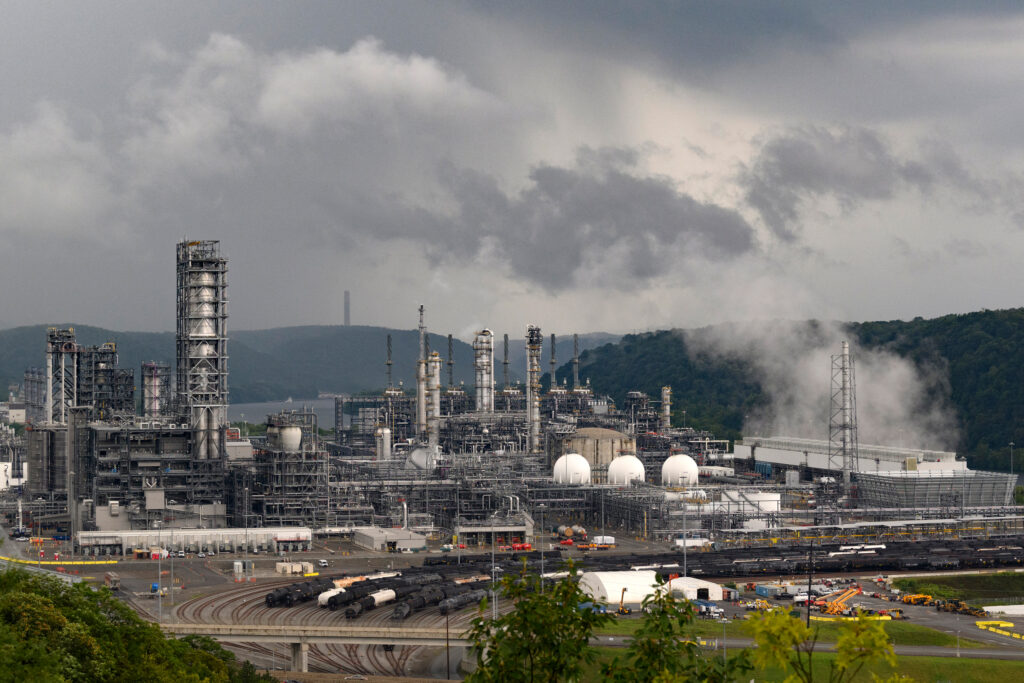
The report highlights significant tax breaks given to Shell for its ethane “cracker” plant, which opened in 2022. Hess is skeptical about lawmakers withdrawing these tax breaks.
As coal and natural gas industries contract, the report urges policymakers to engage with the energy transition.
“Fossil fuel contributions do not excuse addressing the industry’s decline,” it stated. “Ensuring a just transition should be central to policy agendas.”
Republican caucus spokespeople did not comment on the severance tax rejection.
Original Story at insideclimatenews.org