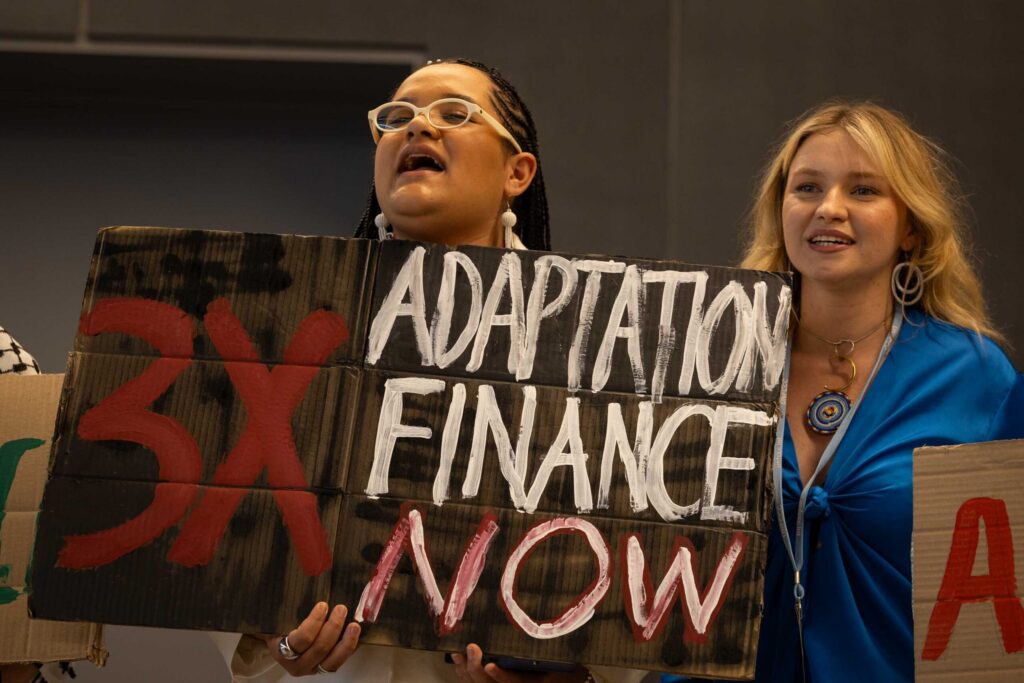
Adaptation Finance and Governance Debates at Bonn Climate Talks
As nations gather in Bonn, the spotlight is on translating the Global Goal on Adaptation into actionable indicators, a challenge remaining unresolved since they were hastily revised post-COP30. The task involves developing metadata and methodologies for various metrics, such as the percentage of populations covered by early warning systems and those with access to mental health support.
Discussions have been contentious, with debates on whether government negotiators or technical experts should lead the work, and if Indigenous Peoples should have representation. However, the central issue hindering progress is financial commitments. Developing countries insist that the COP30 pledge to triple adaptation finance by 2035 be integrated into the current agreements, a move resisted by many developed nations preferring to separate adaptation goals from financial discussions.
Bethan Laughlin from the Zoological Society of London emphasized that reaffirming the tripling goal in the GGA text would “send an important political signal” and maintain pressure on developed countries. Nevertheless, concerns persist among developing nations about being held accountable if adaptation targets are unmet, while richer countries fear liability should financial goals fall short.
Negotiations continue, but with no consensus on even a new draft text as of Wednesday night, the likelihood of resolving differences appears slim.
Debate Over Adaptation Fund Board Composition
Disagreements in Bonn have also stalled the transition of the UN’s Adaptation Fund to exclusively serve the Paris Agreement. The failure to reach consensus on the categorization of nations—whether to maintain the Annex 1 and non-Annex 1 division or shift to “developed” and “developing” labels—has kept necessary funds out of reach.
This impasse delays the potential for the fund to access revenues from a new UN carbon trading mechanism, potentially leaving millions unutilized while adaptation needs grow. “This will lead to loss and damage,” warned Mikko Ollikainen, head of the fund, highlighting the impact on vulnerable populations without adequate support networks.
US Withdrawal from UNFCCC and Financial Implications
The United States’ decision to exit the UN Climate Convention (UNFCCC) casts a shadow over Bonn talks, with significant budgetary repercussions expected. The departure will reduce core contributions by 21% or EUR16.9 million for the 2028-2029 budget cycle, a gap that philanthropy cannot fill as it pertains to core budget needs.
Despite previous interventions by figures like Michael Bloomberg, who helped offset the shortfall from the US’s Paris Agreement withdrawal through supplementary funding, the core budget remains reliant on governmental contributions. The potential redistribution of this financial burden among other major contributors could see an increase in their contributions by around 27%.
The UNFCCC plans to propose its 2028-2029 budget by April 2027, with ongoing consultations to address the impending financial challenge.
Original Story at www.climatechangenews.com