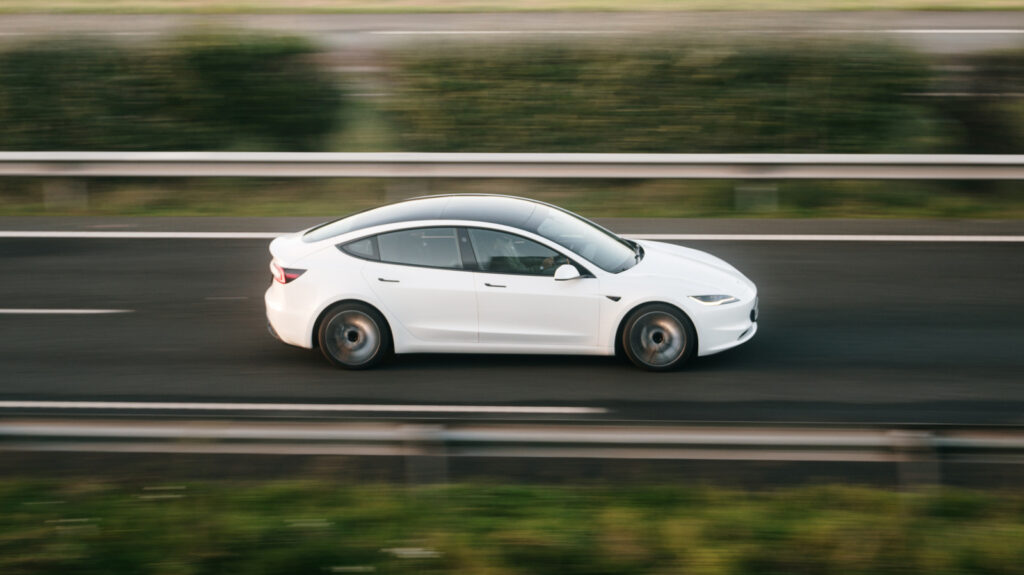
Electric vehicle enthusiasts have long admired the Tesla Model 3 for making EV ownership accessible to many Americans. Since its 2017 debut, the Model 3 has set a benchmark with its appealing price and impressive features. Starting at $36,990, the Model 3 is still touted by Consumer Reports as one of the most affordable electric vehicles worth buying.
The standard version of the Model 3 offers a 0-60 mph acceleration in 5.8 seconds, advanced interior tech, and a sleek design. Its practical advantages include a cargo space of 24 cubic feet and an EPA-estimated range of 321 miles per charge, rivaling many traditional gasoline vehicles.
Despite these features, new competitors have emerged, challenging the Model 3’s dominance. Luxury brands like Mercedes-Benz and BMW offer electric models with superior range. Additionally, several other EVs now surpass the Model 3 in terms of range on a single charge.
Lucid Air Pure
The Lucid Air surpasses many electric vehicles in range, including the Model 3, because it is the longest-range vehicle available. The Air Pure base model offers up to 420 miles per charge, with higher trims like the Air Touring and Air Grand Touring achieving 431 and 512 miles, respectively. Notably, the Air Pure can fast-charge to 200 miles in just 16 minutes.
However, with a starting price of $70,900, the Lucid Air is considerably more expensive than the Model 3. The top-tier Lucid Air Sapphire can even reach $249,000. Despite being listed among the least reliable EVs for 2026 by Consumer Reports, the Air Pure’s 100-mile range advantage over the Model 3 is enticing for range-focused buyers.
Mercedes-Benz EQS 450+
Priced at $99,900, the Mercedes-Benz EQS 450+ stands apart from the Model 3 with its luxury sedan appeal and a range of up to 390 miles per charge. Other models, like the EQS 450 4MATIC and EQS 580 4MATIC, achieve 367 and 371 miles, respectively. The EQS also features fast-charging, reaching 80% from 10% in just 31 minutes.
Although the EQS offers a 70-mile range advantage over the Model 3, its luxury features, such as a spacious rear cabin, ambient lighting, and advanced technology like face recognition, make it more appealing to those seeking more than just range.
Hyundai Ioniq 6 SE
The Hyundai Ioniq 6 aims for mass appeal similarly to the Tesla Model 3. With pricing close to the Model 3, the Ioniq 6 SE Standard Range starts at $37,850, while the Limited trim goes up to $51,100. Praised by U.S. News & World Report as the best electric car for 2025, the Ioniq 6 is also favored by Consumer Reports as an EV that owners love.
The Ioniq 6 SE offers a range of 342 miles, surpassing the Model 3’s 321 miles. Priced at $42,800, it aligns closely with the Model 3 Premium, which offers a 346-mile range, highlighting their competitive positioning in the market.
BMW i4 eDrive40
The BMW i4 eDrive40, with its range of up to 333 miles, is a formidable competitor to the Model 3. Recognized by Consumer Reports and Car and Driver, the i4 offers advanced features like a multi-camera parking assistant and smartphone-based keyless operation.
Starting at $57,900, the i4 eDrive40 is not as steeply priced as other luxury EVs. It provides a slightly quicker 0-60 mph time of 5.5 seconds compared to the Model 3, making it an attractive choice for those seeking performance and range.
How we selected these electric cars
The Tesla Model 3 is widely regarded as a value-packed EV, offering significant features for its price. Our comparison starts with the Model 3’s 321-mile range, focusing on cars that match or exceed this benchmark.
Our selection excludes non-car EVs like the Chevrolet Silverado EV and Cadillac Escalade IQ, which, while boasting impressive ranges of 478 and 380 miles, respectively, cater to different market segments such as trucks and luxury SUVs.
We aimed for an apples-to-apples comparison, choosing electric cars that are similar to the Model 3 and can exceed its range without requiring a premium model upgrade.
Original Story at www.bgr.com