The U.S. nuclear sector is on the brink of a significant transformation, with the successful activation of Antares’ Mark-0 microreactor marking a new era in nuclear technology. This development comes as part of a broader initiative under the Trump administration to foster the next generation of reactors, aligning with the July 4th deadline for achieving criticality.
Amidst a booming AI industry and increasing energy demands, the U.S. is facing a precarious situation in its nuclear fuel supply chain. Currently, the majority of the uranium used by American reactors is imported, with domestic production lagging significantly. This challenge is exacerbated by an impending Congressional ban on enriched uranium imports from Russia, set to take effect in 2028, a nation that significantly influences the global uranium market.
AI giants are currently entering contracts with nuclear developers to implement advanced reactor technologies, but they have yet to invest in the uranium supply chain. Christo Liebenberg, president of LIS Technologies, emphasized the urgency of developing this supply chain, stating, “The nuclear industry is in a total renaissance,” yet all reactors depend on a steady supply of nuclear fuel.
In response to these challenges, several initiatives are underway. Bill Gates-backed TerraPower has begun construction on a new commercial nuclear plant in Wyoming, and Kairos Power is constructing a demonstration plant in Tennessee. Additionally, dormant nuclear plants in Michigan, Iowa, and Pennsylvania are being reactivated, with Pennsylvania’s Three Mile Island now functioning as the Crane Clean Energy Center to power Microsoft’s data centers.
The demand for electricity in the U.S. is projected to rise between 50% and 80% by 2050. To meet these demands, the White House aims to quadruple nuclear capacity to 400 gigawatts, which would be enough to power nearly 300 million homes. This growth will necessitate a substantial increase in nuclear fuel consumption.
The Uranium Supply Dilemma
Canada-based Cameco, North America’s leading uranium miner, is advocating for increased investments to boost mining operations. The company’s president, Grant Isaac, expressed concerns about the current underinvestment in uranium production, warning that if supply cannot keep up with reactor demand, uranium and power prices will rise significantly.
Currently, approximately 30% of Cameco’s mining capacity is idle, as uranium conversion prices have recovered from historic lows. However, without adequate investment in the supply chain, the industry risks falling short of meeting future energy needs.
The Expansion of Enrichment Facilities
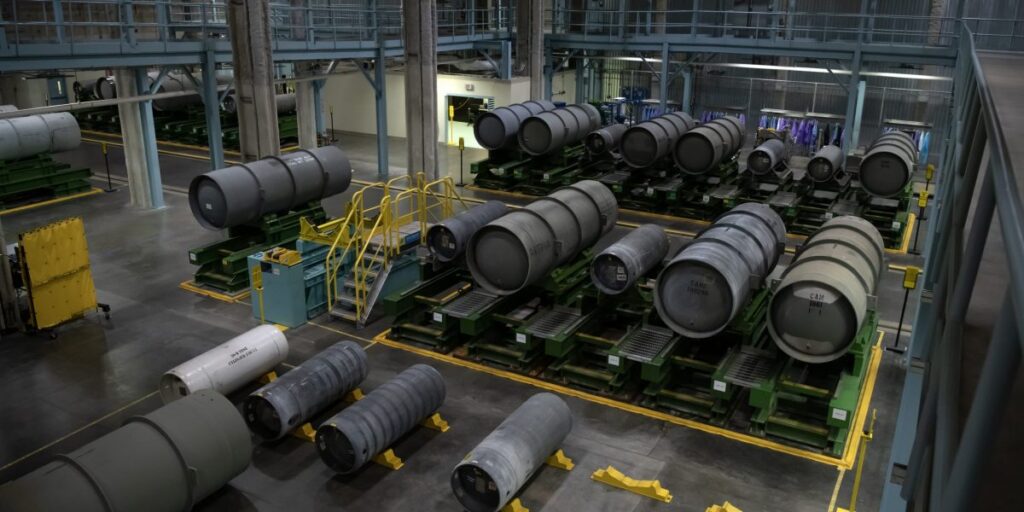
There is only one active uranium enrichment facility in North America, the Urenco National Enrichment Facility in New Mexico, which plans to expand its capacity by 50% by 2036. This expansion is crucial for producing high-assay low-enriched uranium (HALEU), required by next-generation reactors.
Despite these efforts, as Liebenberg noted, “It’s a small drop in the ocean of what’s needed.” The federal government and private sectors must invest significantly more to ensure a robust domestic nuclear fuel supply chain.
The Impact of Geopolitical Tensions
The U.S.’s reliance on Russian uranium has decreased in recent years due to geopolitical tensions, particularly following the Russian invasion of Ukraine. U.S. companies have received temporary waivers to continue purchasing Russian uranium, but the future remains uncertain as the 2028 deadline approaches.
Isaac stressed the importance of clear policies to ensure Western investment in energy production, warning that uncertainty could deter companies from investing in the necessary infrastructure.
Meanwhile, the U.S. is exploring the use of surplus weapons-grade plutonium as reactor fuel, a move that has sparked controversy among environmentalists and nuclear energy critics due to its potential risks. However, companies like SHINE Technologies see this as an opportunity to address fuel shortages with innovative solutions.
The race to build new nuclear reactors is intensifying, with projects like TerraPower’s Kemmerer power plant in Wyoming and the ongoing expansion of Urenco’s facility in New Mexico leading the charge. These developments signal a significant shift in the U.S. nuclear sector as it seeks to reduce its dependence on foreign uranium and enhance its energy security.
Original Story at fortune.com