Exploring Tesla’s Evolving Full Self-Driving Technology: A User’s Journey
The journey of Tesla’s Full Self-Driving (FSD) technology has been a winding road, marked by advancements and setbacks. For one Tesla Model 3 owner, the evolution from FSD V12 to the latest FSD V14 in a new Model Y has highlighted both progress and persistent challenges in autonomous driving technology.
From the promise of Level 4 autonomy—where the car could navigate without human intervention—to the reality of incremental updates, Tesla’s FSD has been a story of anticipation. In 2019, Tesla’s Hardware 3 was introduced, accompanying the FSD V12, but the leap to Level 4 autonomy remained elusive. By 2023, the release of Hardware 4 brought significant improvements, yet only the latest models could fully utilize FSD V14.
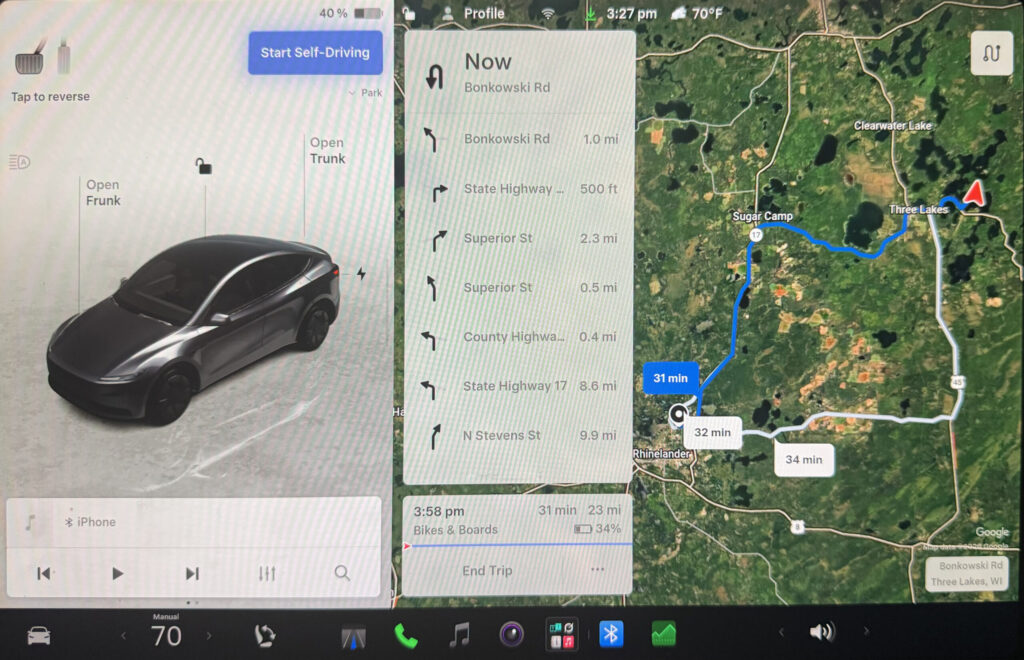
After an accident in 2026, a Tesla Model Y with Hardware 4 and FSD V14 became the new vehicle of choice. The advanced system now allows the car to handle complex driving tasks with minimal intervention, though human supervision remains necessary. FSD V14 tracks the usage percentage, a feature that encourages engagement with the autonomous system.
What capabilities does the new FSD V14 offer?
- FSD V14 can independently drive to destinations with high precision, offering modes like Sloth, Chill, Standard, Hurry, and Mad Max to match driver preferences.
- The system can manage the start and end of trips, including parking maneuvers, though challenges remain in public parking scenarios.
- Notably, FSD V14 functions even with rear cameras obstructed, a limitation that hindered its predecessor, FSD V12.
Despite these advancements, FSD V14 is not without its faults. The reliance on GPS and Google Maps introduces errors, such as incorrect routing and imprecise parking. Instances of misnavigation due to outdated map data have been reported, highlighting areas for improvement.
Moreover, Tesla’s decision to charge $99 monthly for steering assist has sparked debate among users, especially those accustomed to this feature in other vehicles. This fee does not deter dedicated FSD users, but raises accessibility concerns for others.
Looking forward, Tesla aims to enhance FSD with features like school zone speed adjustments and precise parking capabilities. However, the holy grail remains achieving a level of safety surpassing human drivers, a milestone that would revolutionize autonomous driving.


Ultimately, Tesla’s FSD journey reflects broader trends in autonomous vehicle technology, where advancements continue to be tempered by the complexities of real-world driving conditions and technological limitations.
If you find any of my articles helpful to you, please use my referral link when buying a new Tesla: https://ts.la/arthur73734
Tesla keeps changing the program but here’s the latest: If you are buying a new Tesla Model 3 or Y and use my link, you will get 2 months of free Full Self Driving (a ~$200 value) on top of the one month that comes free with every new Tesla. For a Cybertruck, you will get $1,000 off your purchase price.
Original Story at cleantechnica.com