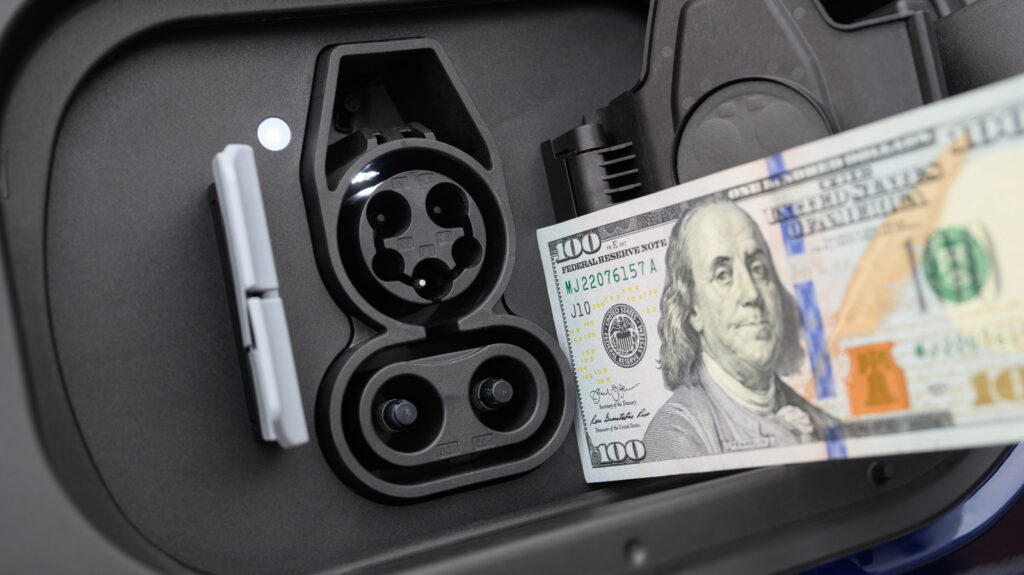
Electric cars lose value faster than you think — that’s just the reality of buying an EV these days. If you are the one buying it new, you are exposing yourself to a very steep depreciation curve. Recharged aggregated the results of a few studies on how quickly EVs lose value, and the data suggests that the average EV drops 59% in value after five years.
Compare that to an ICE car, whose average five-year depreciation sits at 40–50%, and the difference becomes hard to ignore. However, some EVs lose value even quicker than that — so much so that buying them new can feel like throwing money into the wind. If the EV in question is also a luxury model that costs upwards of $100,000, it basically means you’ll lose more than $50,000 in the first five years of ownership.
You can, of course, claw back some of those losses through incentives, tax credits, and other money-saving methods. To know what you can save, though, you first need to know what you could lose. Here are five EVs that depreciate over 60% in five years, and what that means for your bank account.
Audi e-tron GT
The Audi e-tron GT is a sibling to the Porsche Taycan, with which it shares many components. However, the depreciation rate of the Audi, which iSeeCars places at 72.3% over five years, is significantly higher than the Taycan’s 59.2%. Though the Taycan isn’t exactly a financial triumph, the e-tron GT’s depreciation is on another level.
CarEdge offers a slightly better outlook with a 60% depreciation rate, while Recharged suggests a 70% loss. Contributing factors include aggressive inventory discounts, rapid EV tech advancements, and the market’s general reluctance to switch to electric. The e-tron GT’s body style, a four-door coupe, is also less in demand, further impacting its value.
While 72.3% is a staggering number, Audi is not alone; other models like the Q8 e-tron and even some gas-powered Audis are facing similar depreciation challenges.
Jaguar I-Pace
Jaguar is transitioning towards an all-electric lineup, raising concerns about the value retention of its models, particularly the Jaguar I-Pace. According to Recharged, the I-Pace depreciates by 72.2% after five years, while CarEdge reports a 70.7% loss.
As Jaguar’s first mass-produced EV, the I-Pace had an MSRP exceeding $75,000, and luxury vehicles typically face higher depreciation. The brand’s recent rebranding and production hiatus since 2024 further exacerbate concerns about long-term value and parts availability.
With a depreciation rate of 72.2% over five years, the I-Pace represents a significant financial risk for potential buyers.
Tesla Model S
Tesla’s flagship sedan, the Model S, is set for discontinuation in 2026, making new models scarce. According to CarEdge, a Model S loses 69% of its value over five years with typical usage.
iSeeCars reports a 62% depreciation over the same period. Like the Audi e-tron GT, the Model S is part of the luxury EV sedan segment with high depreciation rates, partly due to Tesla’s price-cut strategies affecting the resale market.
Additionally, the market shift away from sedans toward SUVs and crossovers impacts resale demand for the Model S, further contributing to its depreciation.
Nissan LEAF
Depreciation isn’t just a luxury EV issue; it affects affordable models like the Nissan LEAF as well. iSeeCars estimates a 62.9% depreciation over five years, while CarEdge reports a 66% drop, and Recharged suggests a 64% loss.
The Nissan LEAF starts at under $30,000, offering a different depreciation narrative compared to luxury EVs. Its value loss is driven by outdated technology, limited range, and slow charging speeds, as well as price cuts.
However, recent updates to the 2026 Nissan Leaf address many of these issues. Only time will reveal whether these improvements reduce its depreciation rate.
Tesla Model X
The Tesla Model X, a premium EV SUV, also faces significant depreciation. iSeeCars estimates a 61.1% value drop over five years, while CarEdge suggests a 67% depreciation rate.
Recharged provides a slightly lower estimate at 57%. This variation highlights how factors like purchase location and maintenance affect depreciation. The Model X’s age and outdated technology impact its second-hand value, as newer EVs promise better range and charging speeds.
Moreover, some experts advise against buying the Tesla Model X due to reliability issues and its discontinuation in 2026.
Original Story at www.slashgear.com