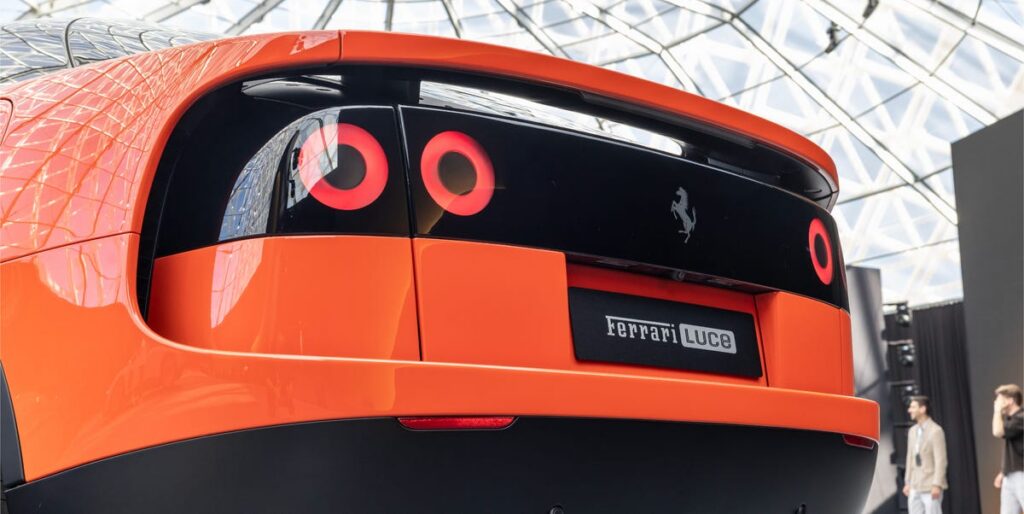
Ferrari Unveils Its First Electric Vehicle: The Luce
Ferrari has ventured into the electric vehicle market with the introduction of the Luce, marking a significant shift from its traditional combustion engines. This new model not only features an electric powertrain but also stands out as the largest and one of the most uniquely styled vehicles in Ferrari’s history. The Luce’s four-door, five-seat configuration was not solely driven by market demands but rather stemmed from Ferrari’s innovative approach to technology.
The Luce was developed in collaboration with Silicon Valley-based firm LoveFrom, making it a radical departure from Ferrari’s classic models in both design and layout. However, the ethos of blending sportiness with comfort is not new to the brand, as seen in previous models like the 400, 412, and GTC4 Lusso. While Ferrari has explored the SUV segment with the Purosangue, the Luce’s development followed a different trajectory.
Ferrari’s product manager, Pietro Virgolin, explained at the Luce debut event, “We didn’t start from the point that we need to have a bigger car. We started to say we would like to have an electric car because we can manage all the technology.” He emphasized the benefits of electric platforms, such as strong acceleration and torque, as well as improvements in noise, vibration, and harshness.
Virgolin highlighted the control afforded by a four-motor powertrain and the enhanced driving experience due to the reduction in noise. “For example, you can have no noise for a long trip… You can have space,” he noted. Ferrari’s approach to new technology always prioritizes performance enhancements and leverages available technology to meet additional objectives.
The electric “skateboard” platform allows Ferrari to optimize interior space, a departure from traditional combustion cars that require engines mounted between the axles and a transaxle for balance. This new design freedom enables Ferrari to offer a genuine five-seater, challenging conventional notions of sporty aesthetics driven by past packaging needs.
Virgolin explained, “The design of the sports car we have in mind, the petrol car, has this kind of design because of the engine. As we say in Ferrari, the design follows the function. Here we do not have this kind of element, so we do not need to follow exactly the same rules that we adopt in the petrol car.”
Despite the potential appeal of a sleek coupe as Ferrari’s first electric vehicle, the brand chose not to sacrifice performance for style. The challenges of battery design in terms of speed and range were pivotal in this decision-making process.
Virgolin expressed, “In terms of performance and technology, this kind of car that is bigger compared to a very compact car, you can shift much more from the electric technology compared to if I adopt this kind of technology, electric technology, to a [smaller] car like this.” He emphasized the balance between battery weight and performance capabilities in a compact supercar.
If Ferrari’s ambitions are realized, the Luce promises to be a formidable performance vehicle. However, its practicality as a daily driver may be more appealing to potential buyers, aside from its substantial $640,000 starting price.
Original Story at www.roadandtrack.com