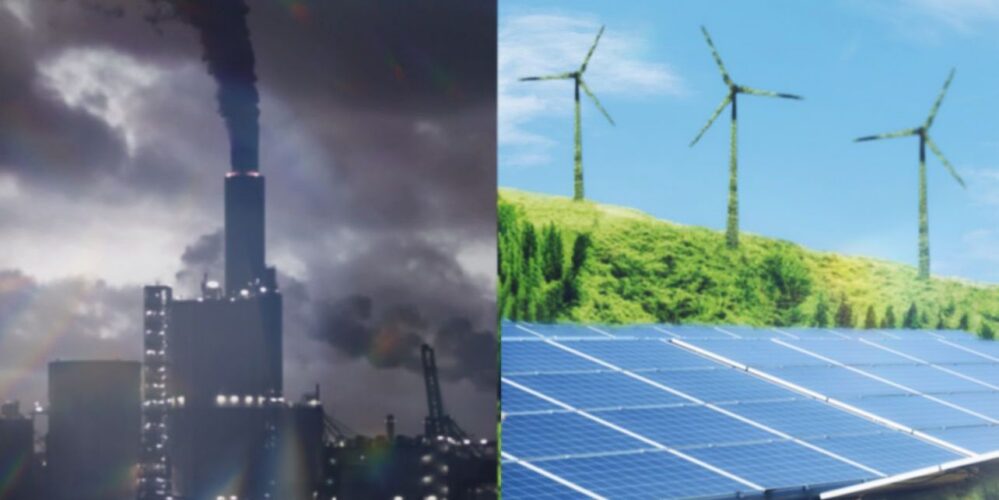
The global energy landscape is undergoing a significant transformation, shifting the focus from the traditional debate between economic growth and environmental protection to a broader range of considerations. Economic factors, industrial competitiveness, national security, and geopolitical strategies are now driving the transition to electrification and advanced energy systems. This shift poses a critical question for the United States: Can it afford to fall behind in investing in the technologies and infrastructures shaping the future of the global energy market?
Under the Trump Administration, the U.S. energy agenda has prioritized fossil fuel expansion and deregulation, reducing federal support for renewable and electrification initiatives. This includes Executive Orders aimed at “reinvigorating” the coal industry and declaring a “national energy emergency.” Additionally, the administration has withdrawn offshore areas from wind leasing, signaling a preference for traditional energy systems.
While the U.S. maintains its focus on legacy energy systems, other global players, particularly in Europe and Asia, are advancing rapidly in electric vehicle (EV) adoption. China has become a leader in battery manufacturing and solar deployment, and it has emerged as the largest exporter of vehicles worldwide since 2023. Chinese automakers benefit from government subsidies, allowing them to innovate quickly and dominate the global EV market. In contrast, U.S. automakers face challenges, including tariffs on Chinese EV imports and a lack of incentives to expand the domestic EV market.
Countries like Mexico and Canada will soon offer Chinese EVs, and in Norway, nearly all new vehicle sales are electric. Norway has effectively met its goal to end fossil fuel car sales by 2025, thanks to stable policies and incentive structures. Meanwhile, U.S. automakers cite slow energy transition and weak consumer demand for the rollback of federal subsidies and tax credits for EV manufacturers.
Chinese automakers like BYD are innovating with charging technologies that rival the refueling speed of gasoline vehicles. The 2026 Beijing International Automotive Exhibition highlighted advancements in affordable Chinese EVs, showcasing the competitive industrial landscape. Trade tensions and tariffs may lead to isolationism, potentially hindering U.S. industries, including the automotive sector.
Recent geopolitical events have highlighted the vulnerabilities of reliance on globally traded fossil fuels. The Russian invasion of Ukraine, Middle East instability, and Red Sea shipping disruptions underscore the importance of energy diversification as a strategy for resilience. Distributed solar generation, battery storage, and electrified transport offer alternatives less susceptible to geopolitical instability and supply chain disruptions.
Countries lacking substantial fossil fuel reserves, like China, are aggressively pursuing electrification strategies to reduce vulnerability to imported energy supplies. While China continues to use fossil fuels, it is also investing in EVs, batteries, and renewable infrastructure. The United States, rich in oil and natural gas, risks complacency, potentially losing industrial leadership in future energy technologies.
During President Trump’s May 2026 state visit to China, discussions focused on trade and tech, particularly critical minerals. The U.S. delegation included business leaders like SpaceX’s Elon Musk and Apple’s Tim Cook. Trump emphasized the need for improved market access for U.S. tech companies in China, stating it as his “first request” to President Xi. While China expressed openness to business, the visit yielded limited tangible outcomes.
Original Story at www.lawbc.com