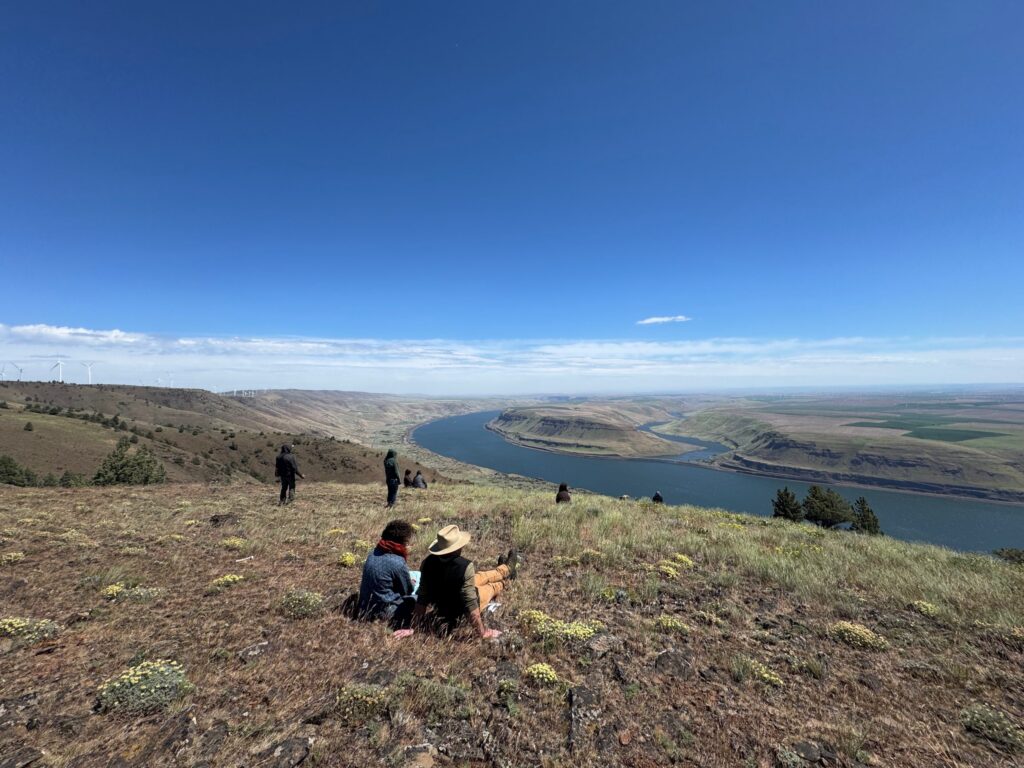
The proposed transformation of a sacred site along the Columbia River into a massive renewable energy project has sparked a contentious debate. For nearly a decade, Yakama Nation and its allies have opposed the $3.3 billion plan, originally approved by the Trump administration, which aims to convert the area into a renewable energy hub to support a planned hyperscale data center by the landowner.
Elaine Harvey, a conservation scientist from the Yakama’s Ḱamíłpa Band, expressed concern: “We’re not going green for Washington and Oregon state mandates. We’re going green for data centers. And it’s putting pressure on our sacred areas, our food gathering.”
This controversy highlights a recurring issue in the Pacific Northwest, where energy infrastructure projects often encroach on Native lands, jeopardizing traditional foods, homes, and sacred sites. As demand for energy rises, largely due to the growth of data centers needed for the AI revolution, Oregon and Washington’s clean energy goals are at risk.
The proposed Goldendale Energy Storage Project by Rye Development would convert a sacred gathering site into a hydropower battery. The project promises enough electricity to power “500,000 homes” for 12 hours by using water from a man-made reservoir. The water would be cycled back to the top when power demand is low, ready to generate energy again during peak times.
However, government documents and statements suggest that the energy might instead support a significant data center project. The Washington Ecology Department has indicated that STACK Infrastructure is negotiating to establish a “data center campus” on the site, as reported by Northwest Public Broadcasting.
Landowner Scott Tillman, collaborating with STACK and Blue Owl Digital Infrastructure, aims to develop a hyperscale data center touted as the world’s greenest. Despite declining to comment, Tillman’s LinkedIn confirms his involvement with both the energy and data center projects.
Rye Development, represented by Erik Steimle, has stated, “We do not propose projects on lands where we’re not invited to do so.” Yet, concerns persist over the proposed developments’ impact on sacred lands.
Hundreds gathered at the site for a May 8 event organized by Yakama Nation and Columbia RiverKeeper, highlighting the region’s cultural and ecological significance. Known as Pushpum, or “Mother of all roots,” it hosts numerous vital plants for Native people. “Our season starts at the foot of this hill,” Chief Bronsco Jim Jr. explained, reflecting on the region’s importance to the Yakama people.
Historically, the area has faced displacements due to hydropower projects, with the construction of dams forcing Native families from their homes. Harvey’s family, for instance, was twice displaced by such developments.
At the event, Yakama Nation Youth Council co-chair Helen Sekaquaptewa emphasized the importance of protecting Pushpum from the “quote-unquote green energy project.” The gathering also celebrated a new agreement allowing Yakama members to gather on land surrounding the Tuolumne Wind Project.
As legal battles continue, Columbia Riverkeeper attorney Simone Anter noted, “It’s not built yet. There’s no shovels in the ground, and so there’s a real possibility that there won’t be, and we can all use our collective power to stop the project.”
William Ray Jr. of the Klamath Tribes shared similar struggles against Rye’s Swan Lake project in Oregon, underscoring the pattern of development against Native interests.
For Yakama members like Harvey, the struggle is about preserving traditions for future generations. “As tribes, we’re not just thinking about ourselves, we’re thinking about the future,” she said, advocating for the protection of the land, water, and ecosystem.
In the face of modern infrastructure, the clash between development and tradition remains a poignant reminder of the region’s deep-rooted history and the resilience of its people.
Related
Original Story at www.streetroots.org