Europe Faces New Challenges Amid Rising Dependence on Chinese Imports
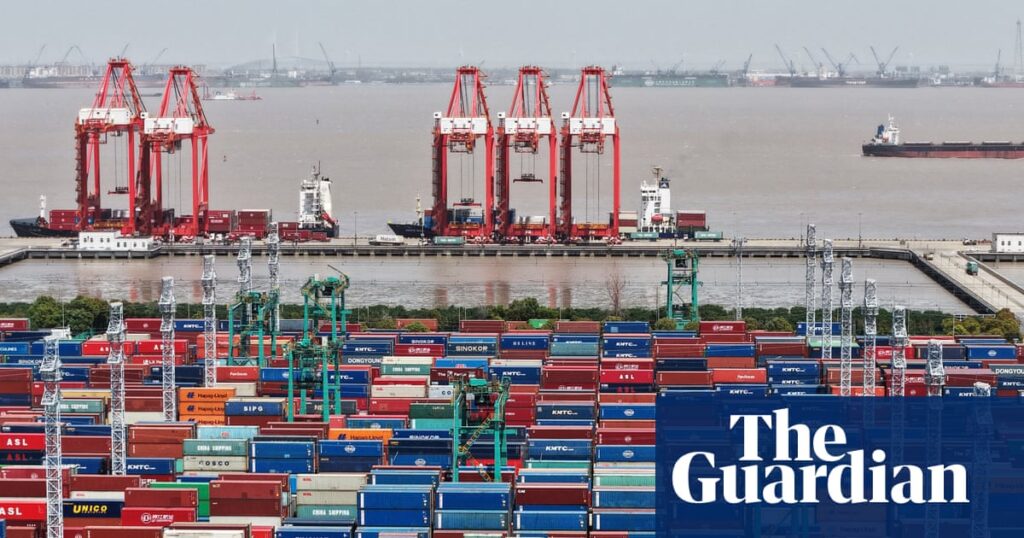
As Europe grapples with a surge in imports from China, concerns are mounting over the potential impact on local industries and employment. Trade analysts and industry representatives warn that this could lead to significant losses in the manufacturing sector and increased reliance on Chinese components, drawing parallels to the “China shock” experienced by the U.S. over two decades ago.
The term “China shock” originally described the disruption caused when China joined the World Trade Organization, resulting in a flood of imports that displaced domestic industries and caused massive job losses. Today, a similar pattern is emerging in Europe, with a plunging exchange rate and state support for Chinese companies exacerbating the issue. Jens Eskelund, president of the European Chamber of Commerce in Beijing, noted the growing dependence, saying, “If anything, Europe is getting more dependent on China.”
Europe’s predicament is underscored by the deep integration of Chinese components into the EU’s industrial supply chain. As highlighted in a Financial Times report, the EU is contemplating measures to mandate that European companies diversify their suppliers for critical components. Upcoming talks among European commissioners aim to address these challenges.
Oliver Richtberg, from VDMA, expressed his appreciation for Brussels’ proactive approach, though he criticized Berlin for its lack of engagement. The disparity in exchange rates over recent years has heavily favored Chinese imports, with economist Jürgen Matthes noting that the yuan may be undervalued by as much as 40% against the euro. This makes Chinese products significantly cheaper, which Richtberg describes as an unfair advantage.
“We are losing market share, our industry is under significant pressure,” Richtberg stated, highlighting the loss of 22,000 jobs in Germany’s machinery industry last year alone. The impact of cheap Chinese components is evident across various sectors, with the EU importing a staggering 88% of amino acids and 96% of polyhydric alcohols from China by volume.
Insights from Soapbox, a China trade monitoring site, indicate a troubling trend of EU industries becoming uneconomical due to low-cost Chinese inputs. The anonymous author of Soapbox emphasized the hidden risks of this dependency, which could render EU production unsustainable.
Trade statistics reveal that China’s trade surplus with the EU is expanding rapidly. The 2024 tariffs on Chinese electric vehicles, intended to curb this surplus, have been offset by unfavorable exchange rates. Andrew Small from the European Council on Foreign Relations pointed out that existing EU measures are insufficient against the current level of imports.
China’s position as Germany’s leading trade partner underscores this trend. China overtook the U.S. in this regard, with its surplus with Germany doubling to $25 billion between 2024 and 2025. The car manufacturing sector alone lost about 51,000 jobs in Germany during this period.
Jens Eskelund expressed concerns over Europe’s increasing reliance on China, warning of potential security implications. He noted that “Germany losing something like 10,000 to 15,000 jobs a month” could escalate beyond economic challenges to security issues.
As the EU proposes new legislative measures like the Industrial Accelerator Act and updates to the Cyber Security Act, these are not expected to be implemented until 2027 or later. Meanwhile, the EU faces pressure to take immediate action to support its industries. Small remarked that tariffs are unlikely to be revisited, given the political effort required to establish them.
While any EU response must consider China’s potential backlash, Beijing is perceived as holding the upper hand. Small concluded, “China doesn’t need to stop all the new countermeasures the EU has at its disposal, it just needs to snarl up the process with the aim of keeping their exports flowing.”
Original Story at www.theguardian.com