As the Pacific Ocean undergoes significant changes, scientists are observing what could potentially become one of the most intense climate phenomena ever recorded. This event, known as El Niño, is a warming of the tropical Pacific Ocean that influences global weather patterns.
The National Oceanic and Atmospheric Administration (NOAA) forecasts a 61% probability of El Niño developing by July. While El Niño occurs every few years, NOAA suggests a 25% chance of this event reaching “very strong” intensity, categorizing it as a ‘super’ El Niño. Such occurrences are rare and often lead to extreme weather events globally.
Scientists warn that this El Niño, combined with the effects of human-induced climate change, could be unprecedented. “I would suggest there is roughly a 50 per cent chance of the event becoming the strongest in the historical record right now,” stated Paul Roundy, a professor of atmospheric science at the University at Albany, US, in an interview with BBC Science Focus. “A few weeks ago, I was suggesting maybe 20 per cent.”
What is El Niño, and why is this one different?
El Niño is characterized by the warming of surface waters in the tropical Pacific. It disrupts the usual trade winds, which typically push warm water westward, causing the accumulated heat to spread eastward.
A super El Niño is defined by a rise in sea surface temperatures more than 2°C above normal in the central Pacific. Historical records show only three such events: in 1982/83, 1997/98, and 2015/16. An 1876 super El Niño is believed to have contributed to a global famine.
According to Roundy, this year has seen strong westerly wind bursts over the Pacific, pushing a large volume of warm water eastward. The scenario mirrors the conditions preceding the strong 1997 El Niño.
Roundy pointed out that the warm water east of this year’s westerly wind burst is warmer by half a degree compared to 1997, suggesting the potential for a stronger event. However, future wind shifts could alter the outcome. “It would take an event well beyond the 99th percentile in intense trade winds to render the developing El Niño event just strong and not extremely strong,” Roundy noted.
What does a super El Niño actually do?
The impact of El Niño is global. It affects fish stocks off Peru, alters monsoon patterns in Asia, and changes weather patterns worldwide. “Normally wet places become dry and suffer fires,” Roundy explained. “Normally dry places become wet.”
In the United States, El Niño typically brings more rain to the Midwest and West in summer, with drier conditions from the Gulf Coast to the East Coast. As it becomes more established in winter, it strengthens the southern storm track, leading to heavy rain across the southern U.S.
Roundy described 1982 and 1997 as “incredible flood years” in the U.S., with warmer winter conditions in the northern regions. A strong El Niño might also suppress the Atlantic hurricane season by increasing wind shear.

Into uncharted territory
Global temperatures are already 1.4°C above pre-industrial levels, and a strong El Niño could push the climate system into unknown territory. Dr. Daniel Swain, a climate scientist at the University of California Agriculture and Natural Resources (UCANR), stated, “We’ve never experienced a strong or very strong El Niño event amid pre-existing conditions that were this warm globally.” He added that “it would not be surprising to see some unprecedented global impacts by later in 2026 into 2027 in terms of flood, drought, and wildfire-related extremes.”
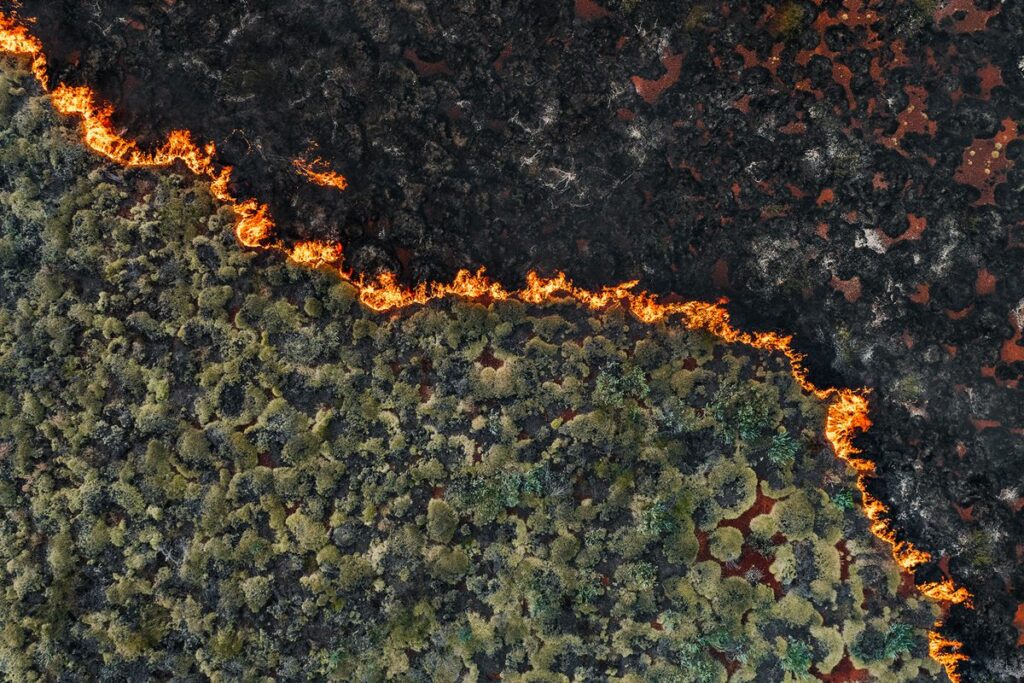
A strong El Niño could set new global temperature records and increase wildfire risks, especially in regions like the Amazon and parts of Oceania. A December 2025 study in Nature Communications suggested that super El Niños could lead to “climate regime shifts” with long-lasting changes in temperature and sea surface conditions.
Roundy cautioned against overconfidence in predictions, given the limited number of super El Niños in the historical record. “Scientists who are basing their conclusions on what is likely to happen this time, based on a small sample of past events, should not have as much confidence in whether we are going to have supercharged global warming for the next 10 years, or whether it is just enhanced for the next year or so,” he said.
As the climate system runs hotter than ever, the scale and trajectory of this developing El Niño are unprecedented, with potentially significant impacts on ecosystems and human societies. “Ecosystems have evolved with El Niño for millions of years, and they need some of these extreme events in order to renew those ecosystems,” Roundy noted. The exact consequences and duration of these impacts remain uncertain.
Original Story at www.sciencefocus.com