The Trump administration defended its authority on Friday to keep coal plants operational, asserting before federal judges that it holds the sole power to identify energy emergencies. Read more on the legal authority here.
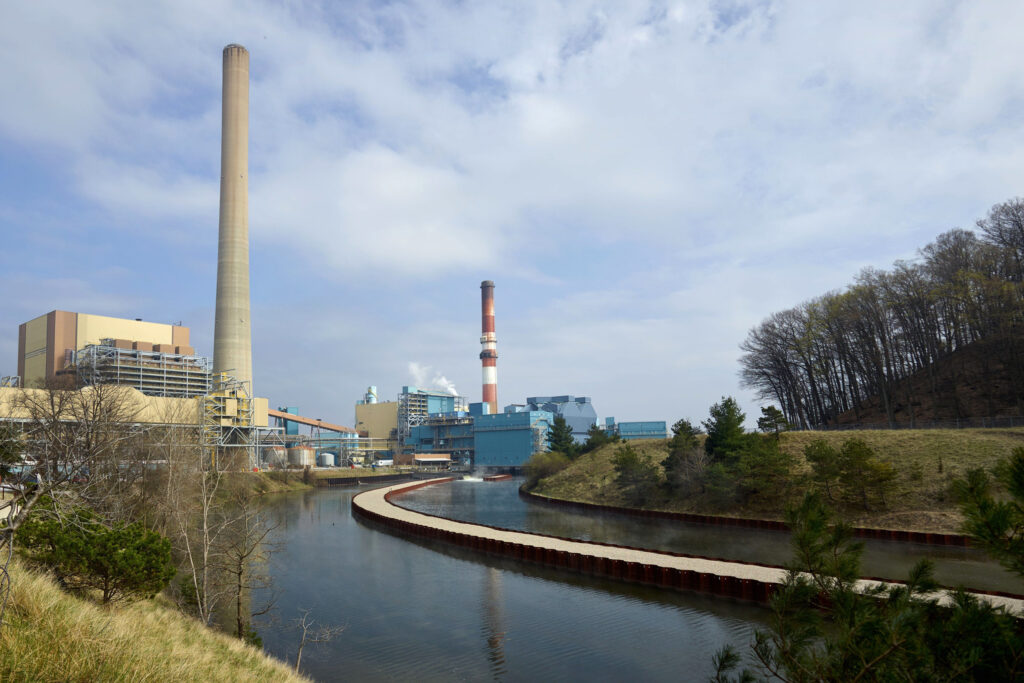
The case, which appeared before the U.S. Court of Appeals for the D.C. Circuit, focuses on Michigan’s J.H. Campbell power plant, one of several coal and oil plants Energy Secretary Chris Wright has prevented from retiring. The decision could have significant implications for energy policy.
Michigan and environmental groups contend that the Department of Energy under President Trump bypassed established procedures in the Federal Power Act, a law that allows utilities, states, and regional authorities to assess electricity resources.
“This claim of authority is unprecedented,” said Lucas Wollenzien, Michigan’s assistant attorney general. “If unchecked, it could alter the regulatory structure understood for decades.”
The Trump administration’s lawyer argued that emergency authority granted by Congress allows the energy secretary broad discretion for immediate action. According to Robert Stander of the Department of Justice, “the secretary need not wait for a blackout to utilize emergency powers.”
Wright’s orders have prevented the retirement of several power plants, citing increased demand on the energy system from new data centers. He claims this is necessary to both mitigate blackouts and maintain affordable, reliable electricity.
Environmental groups, represented by Earthjustice, argued that the energy department misinterpreted assessments by the North American Electric Reliability Corporation (NERC). “The reduced surplus means mitigation measures are needed,” said Benjamin Chagnon, Earthjustice’s senior counsel, suggesting the risk of actual blackouts is minor.
Historically, energy secretaries have used section 202(c) orders, part of the Federal Power Act, sparingly during disruptions like storms. However, Wright has issued 13 orders in the past year, affecting plants in several states.
Critics say these orders led to significant environmental impacts, including increased air pollution and carbon emissions. Michael Lenoff from Earthjustice stated, “These orders have caused millions of pounds of harmful pollutants and increased the carbon footprint equivalent to 1.3 million cars annually.”
The D.C. Circuit’s ruling on the Campbell plant case is anticipated later this year and could be appealed, potentially reaching the Supreme Court. The ruling will hinge on the definition of an emergency under law.
For further insights, explore this statement from the state of Michigan on energy costs and impacts.
Original Story at insideclimatenews.org