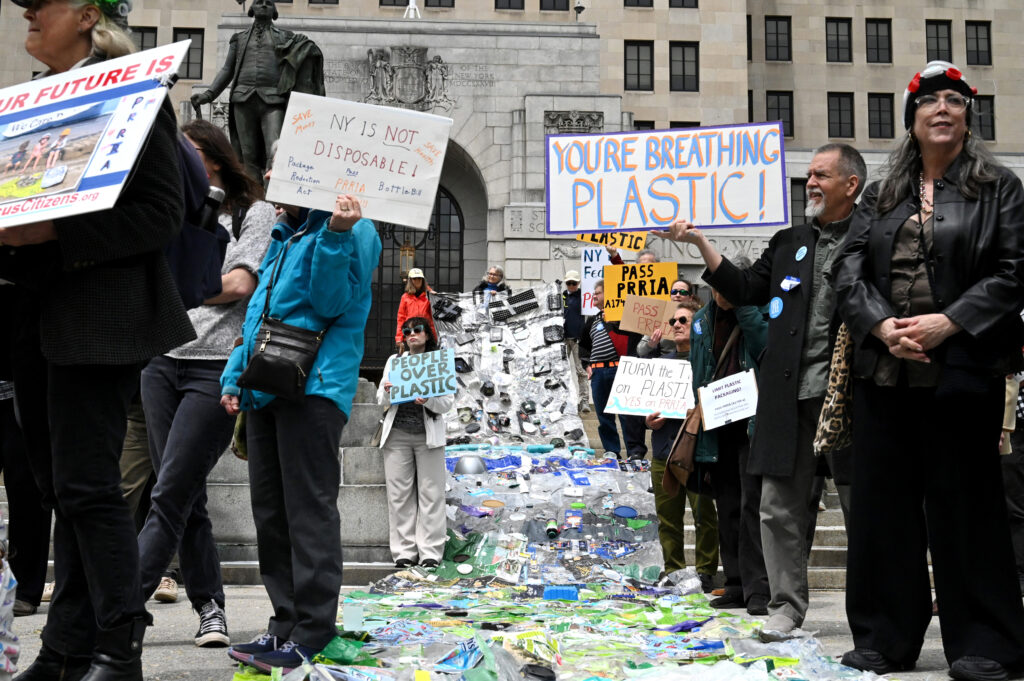
New York’s state Legislature is considering legislation aimed at reducing plastic waste, with significant debate surrounding chemical recycling. If enacted, the state would have some of the strictest controls on plastic packaging in the U.S. and could cut non-recyclable packaging by 30% over 12 years. The proposed law mandates that packaging producers finance recycling and disposal efforts.
The Packaging Reduction and Recycling Infrastructure Act has faced delays in previous sessions. A primary contention is the classification of chemical recycling, a technique using heat, pressure, and chemicals to decompose plastics. The bill does not consider chemical recycling as a legitimate recycling method, to the dissatisfaction of groups like the American Chemistry Council.
State Sen. Pete Harckham, a bill co-sponsor, criticized chemical recycling, calling it a “polluting behemoth.” In a 2025 memo, the American Chemistry Council and companies such as ExxonMobil argued that mandatory packaging reductions are excessive and opposed the exclusion of chemical recycling.
Chemical recycling, often involving pyrolysis, differs from mechanical recycling. Pyrolysis is an energy-heavy process that yields oil and other components, while producing what the Environmental Protection Agency (EPA) calls “hazardous waste.” Judith Enck, president of Beyond Plastics and a former EPA administrator, stated this method produces minimal new plastic.
Is It Recycling?
Approximately 15% of New York’s municipal waste is plastic, and less than 10% of plastic waste is recycled, according to 2022 research. Helene Wiesinger, a chemist with the Food Packaging Forum, noted the complexity of recycling plastics, emphasizing limitations in the chemical recycling process.
U.S. chemical recycling facilities primarily use pyrolysis. Veena Singla from the Natural Resources Defense Council highlighted the inefficiency of pyrolysis, which requires significant energy and results in few usable materials. Pyrolysis can produce oil used as fuel, often diluted with fossil fuels.
A 2024 lawsuit in California alleges only 8% of plastic waste at a pyrolysis facility is converted to feedstock for new plastic. EPA documents classify such facilities as “large quantity hazardous waste generators,” with hazardous waste often including benzene, linked to cancer and bone marrow issues.
Alterra Energy, a chemical recycling facility in Akron, Ohio, reported releasing 130 pounds of benzene into the air in 2024 and shipped 60 tons off site for incineration the previous year, according to EPA records.
Such facilities fall under the Clean Air Act as incineration plants, though the Trump administration proposed reclassifying them as manufacturing to reduce pollution regulations. EPA Administrator Lee Zeldin noted this potential reclassification in The Hill.
While the New York bill passed the state Senate previously, the Assembly did not vote on it. If it passes both houses this year, Gov. Kathy Hochul could veto or amend it. The bill also prohibits certain toxic chemicals, like PFAS, in packaging. Harckham emphasized the bill’s importance to New York’s waste and climate strategy.
Original Story at insideclimatenews.org