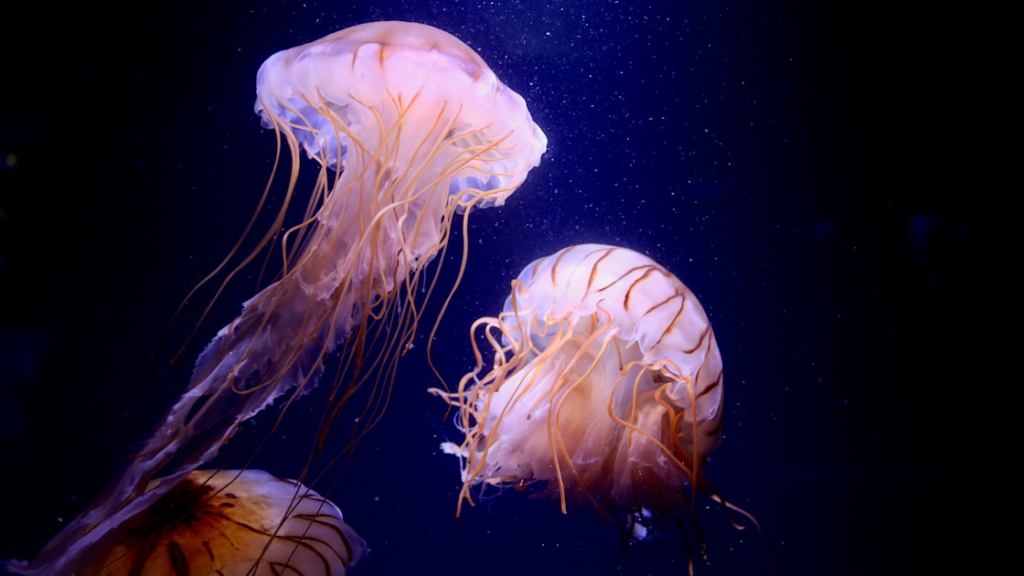
Transforming Jellyfish Bycatch: A Sustainable Marine Resource Solution
Amid the challenges faced by the fishing industry, a promising new study suggests that jellyfish bycatch, often seen as a nuisance, could hold significant value. Dr. Ainara Ballesteros and her team at the Institute of Environment and Marine Science Research at the Catholic University of Valencia are at the forefront of this research, focusing on sustainable marine resource utilization.
Ballesteros, alongside PhD student Raquel Torres, co-authored a Frontiers in Marine Science article that explores the potential of jellyfish bycatch from small-scale fishers in Spain as a source of high-quality collagen. Their research aims to shift perspectives on jellyfish as waste to recognizing their value within the circular bioeconomy.
Exploring Jellyfish’s Potential
Driven by a fascination with marine ecosystems, Ballesteros explains, “The sea is dynamic, complex, and full of interactions that are still not fully understood.” This curiosity led them to study species like the Rhizostoma pulmo, which could offer sustainable solutions in marine science.
Their research aligns with zero-waste strategies, aiming to reduce waste and find new value in overlooked marine organisms. Torres notes, “Environmental challenges can sometimes become opportunities when approached creatively and collaboratively.”
Collaboration with Fishers
The research team worked closely with fishers, gathering insights into their experiences with jellyfish bycatch. Torres highlights the fishers’ willingness to collaborate, emphasizing their practical knowledge and commitment to the project.
Many fishers recognized the potential benefits of transforming jellyfish bycatch into a valuable resource, despite challenges like limited infrastructure and market demand. Their involvement was vital in assessing the viability of this sustainable approach.
Laboratory Findings
In the lab, the team compared collagen from jellyfish caught accidentally and those collected carefully to preserve structure. The results were promising, showing that bycatch jellyfish collagen maintained similar quality to carefully collected specimens.
This finding supports the use of jellyfish bycatch as a sustainable raw material, highlighting its potential as a biomaterial in various applications, from cosmetics to biomedical fields.
Potential Applications
Jellyfish collagen’s potential spans several industries, including cosmetics, medicine, and food technology. Torres expresses excitement about its use in regenerative medicine as an alternative to mammalian collagen, which could address concerns related to zoonotic diseases and consumer preferences.
Original Story at www.frontiersin.org