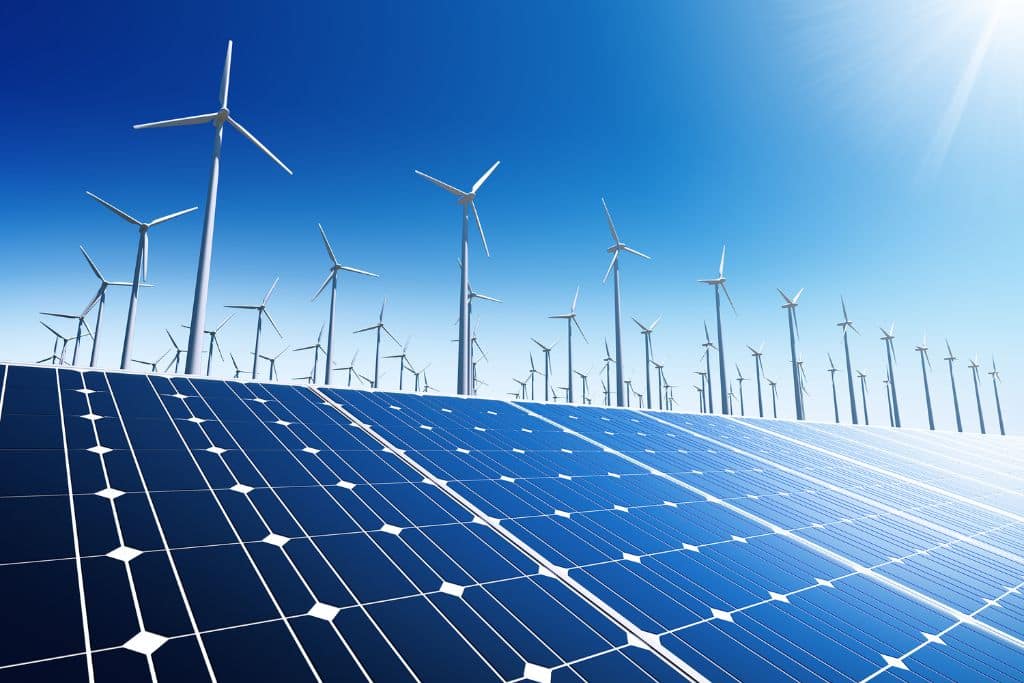
The global energy landscape is undergoing a remarkable transformation as renewable energy increasingly takes center stage. Once criticized for being costly and unreliable, renewable sources like solar and wind are now proving to be not only economically viable but also crucial in the fight against climate change.
—
For years, renewable energy faced criticism for its supposed high costs, unreliability, and hidden environmental impacts. However, recent developments have upended these perceptions, showcasing renewables as a key component of the modern energy mix.
In 2025, the world added 692 gigawatts of new renewable capacity, elevating the total global renewable power to over 5,149 gigawatts, which constitutes nearly half of the planet’s installed power capacity.
Amidst this shifting landscape, Earth.Org addresses five enduring myths about clean energy, clarifying what current data reveals.
Myth 1: High Costs of Renewable Energy
Critics of renewable energy often argue that it cannot compete with fossil fuels without substantial subsidies. Yet, a 2024 report by the International Renewable Energy Agency (IRENA) indicates that 91% of newly commissioned renewable power projects were more cost-effective than the cheapest fossil fuel options. Since 2010, the cost of solar PV has dropped significantly, becoming 41% cheaper than fossil fuels, with onshore wind now available at a 53% discount compared to coal and gas. In 2024 alone, this shift saved an estimated US$467 billion in global fuel expenses.
Unlike fossil fuels, renewable energy sources offer price stability. Wind and solar energy, once installed, incur no fuel costs, shielding economies from fluctuating fossil fuel prices and geopolitical tensions.
Myth 2: Unreliable Supply of Renewable Energy
Intermittency has long been a concern for renewable energy, especially wind and solar. However, advancements in battery storage have transformed this narrative. According to IRENA, battery storage costs fell 93% from 2010 to 2024, providing a rapid-response buffer that balances supply and demand. In the US, the Energy Information Administration (EIA) projects a record 24 gigawatts of new utility-scale storage in 2026, with renewables and storage making up 93% of new capacity.
Renewables also enhance energy security. As highlighted by IRENA, domestic solar and wind energy are immune to export embargoes and price shocks, offering a stable energy source amidst global tensions.
More on the topic: Iran War Drives Massive Surge in Planet-Heating Emissions Amid Calls to Accelerate Transition to Renewables
Myth 3: Environmental Impact of Renewable Infrastructure
While renewable energy production involves some environmental costs, these are often overstated. The National Renewable Energy Laboratory finds that wind turbines emit just 13 grams of CO2 per kilowatt-hour, while solar emits 43 grams. In contrast, natural gas and coal produce 486 and 1,001 grams, respectively. Thus, coal is nearly 80 times more carbon-intensive than wind energy.
Solar and wind technologies quickly offset their carbon production costs and operate with minimal emissions for decades. Research supports that these technologies are significantly less damaging than fossil fuels over their lifecycle.

Myth 4: Job Losses Due to Clean Energy
While the energy transition affects workers in fossil fuel sectors, clean energy is not a net job destroyer. Global clean energy jobs rose from 30 million in 2019 to 35 million in 2023, surpassing fossil fuel employment. The sector is expected to create an additional 10 million jobs by 2030, even as fossil fuel jobs decline by 3 million.
In the US, clean energy jobs expanded three times faster than the overall workforce in 2024, as reported by the Clean Jobs America 2024 report. The IEA estimates that about half of fossil fuel workers have skills transferable to renewable energy roles.
Myth 5: Slow Transition to Renewable Energy
Recent data shows that the transition to renewable energy is happening faster than anticipated. In May 2025, China added a record 93 gigawatts of solar capacity in just one month. By early 2025, China’s wind and solar capacity surpassed its thermal power capacity, achieving its 2030 targets six years early.
Globally, the IEA predicts that renewables will overtake coal as the leading electricity source by mid-2026. Renewable electricity output is expected to reach 16,200 TWh by 2030, a 60% increase from 2024. This surge suggests that claims of a sluggish transition are outdated.

Adoption of Clean Energy Around the World
Asia leads the renewable energy charge, with 74% of 2025’s global capacity additions occurring in the region, driven by China’s significant contributions. India invested around $100 billion in clean energy in 2024, achieving substantial capacity from non‑fossil fuel sources ahead of schedule. Southeast Asia is also advancing, though facing challenges in grid and financing.
Europe has significantly restructured its energy mix post-Russian gas disruption, with renewables generating half of the EU’s electricity in 2024. The region faces hurdles in grid permitting and reliance on liquefied natural gas.

In the US, clean energy comprised over 90% of new electricity capacity in 2025, with renewables temporarily becoming the top power source in March. However, policy uncertainties under the Trump administration threaten this progress, with project delays and cancellations totaling over $14 billion.
Latin America boasts 65% clean electricity, with solar and wind making up a significant portion in countries like Chile and Brazil. The region sets ambitious targets with the RELAC initiative aiming for 70% renewable electricity by 2030, although grid and financial barriers persist.
Africa holds immense untapped potential, with 60% of the world’s best solar capabilities. Despite accounting for just 1% of global solar PV, Africa achieved a record 11.3 GW increase in 2025, led by Ethiopia, South Africa, and Egypt. Overcoming structural challenges is crucial for tapping the continent’s renewable opportunities.
What’s Next For Clean Energy?
The renewable energy transition is gaining momentum, but challenges remain. Fossil fuel consumption still rises, and grid infrastructure struggles to keep up with renewable capacity. Investment in developing nations lags behind potential opportunities. Still, renewable energy has proven cheaper, more consistent, and more reliable than fossil fuels.
In 2025, global investment in clean energy reached $2.2 trillion, more than double fossil fuel investments. The question is no longer about viability but rather how swiftly financing, policies, and grid investments can support the transition.
This story is funded by readers like you
Our non-profit newsroom provides climate coverage free of charge and advertising. Your one-off or monthly donations play a crucial role in supporting our operations, expanding our reach, and maintaining our editorial independence.
About EO | Mission Statement | Impact & Reach | Write for us
Free, non-profit and independent environmental journalism.
Original Story at earth.org