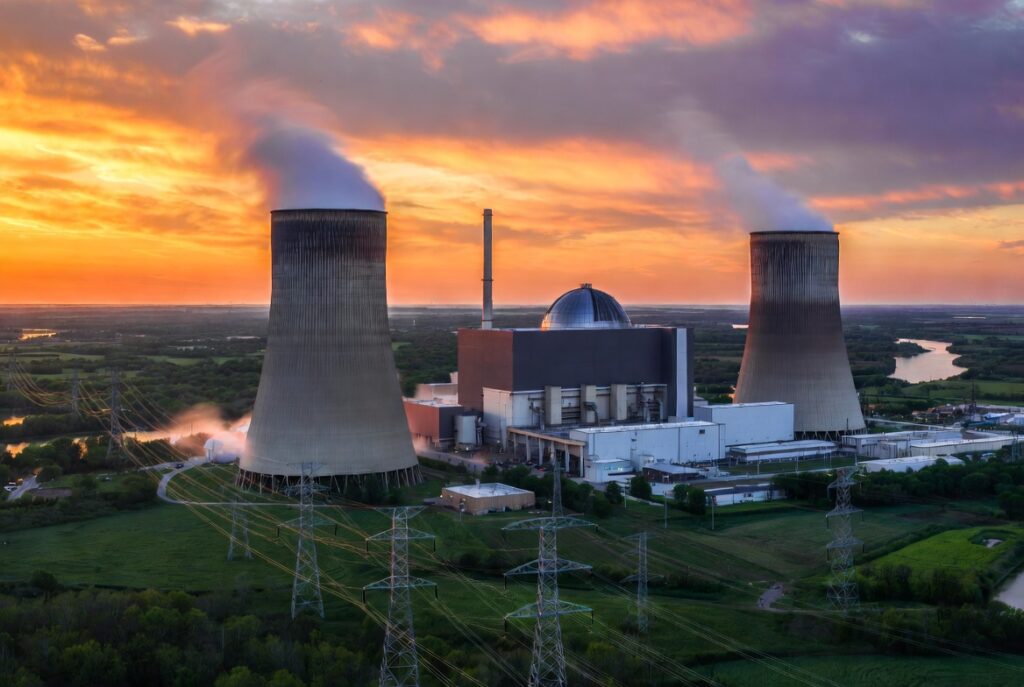
The United States, once home to a burgeoning fleet of nuclear reactors, now faces a pivotal moment in its energy landscape. With electricity demand rising due to advancements in technology and increased electrification, the potential revival of recently shuttered nuclear plants has become a topic of interest. This development could significantly impact the country’s energy output and carbon footprint.
The U.S. currently operates about 94 commercial reactors with a net capacity of approximately 97 GW. Over time, economic challenges, aging infrastructure, and incidents like the 1979 Three Mile Island accident have led to the decommissioning of over 40 commercial reactors, representing more than 20 GW of historical capacity. As the nation seeks to meet growing energy needs, the idea of restarting certain recently closed plants is gaining traction. Notably, three reactors—Palisades in Michigan, Three Mile Island Unit 1 (now known as the Crane Clean Energy Center) in Pennsylvania, and Duane Arnold in Iowa—are being considered for potential restart.
State-by-State Overview of Decommissioned Reactors
Decommissioned reactors are spread across various states, each with unique statuses ranging from complete dismantlement (DECON) to delayed decontamination (SAFSTOR) or simply serving as storage for spent fuel (ISFSI Only). Below is a summary of notable decommissioned reactors by state, primarily those exceeding 10 MW of net capacity:
California is home to several significant decommissioned reactors such as GE Valecitos (24 MW), Humboldt Bay 3 (63 MW), and Rancho Seco 1 (873 MW), among others. The total decommissioned capacity here is about 3.5 GW, with most reactors in advanced decommissioning stages.
In Connecticut, Haddam Neck (560 MW) and Millstone 1 (641 MW) have been shut down, with the latter in SAFSTOR status. Meanwhile, states like Iowa and Michigan are considering the restart of their respective reactors, Duane Arnold (615 MW) and Palisades (805 MW), as potential sources of renewed energy.
Reviving Nuclear Energy: Potential Reactor Restarts
Restarting decommissioned reactors is unprecedented in the U.S., yet technically possible for plants closed recently with intact reactor vessels and systems. The Nuclear Regulatory Commission (NRC) has developed guidance, such as Inspection Manual Chapter 2562, to facilitate transitions from decommissioning back to operations. As of 2026, three plants are preparing for or actively pursuing restart:
Palisades Nuclear Plant (Michigan, ~805 MW PWR): Initially shut down in 2022 due to economic factors, this plant is being refurbished by Holtec International, with plans to resume operations by early 2026. State and federal support have been instrumental in this effort.
Three Mile Island Unit 1 / Crane Clean Energy Center (Pennsylvania, ~835 MW PWR): Having ceased operations in 2019, this reactor is undergoing upgrades by Constellation Energy. A notable $1.6 billion investment and a 20-year power purchase agreement with Microsoft aim for a restart by 2027.
Duane Arnold Energy Center (Iowa, ~615 MW BWR): Damaged by a derecho in 2020, this plant is also on the path to reopening. NextEra Energy, in partnership with Google, is working towards a restart by early 2029, promising job creation and economic benefits.
Impact on Electrical Generation
The successful restart of these reactors could collectively add about 2.25 GW of clean, baseload power to the grid, equating to approximately 2–3% of the current U.S. nuclear capacity. This contribution is significant enough to power over 2 million homes and reduce reliance on fossil fuels. Moreover, it aligns with the Department of Energy’s goals to expand nuclear capacity by more than 5 GW by 2030.
Despite these prospects, challenges remain, including NRC licensing hurdles, refurbishment expenses, and potential opposition. However, the success of these projects could herald a shift towards leveraging existing nuclear assets to meet future energy demands.
Original Story at energynewsbeat.co