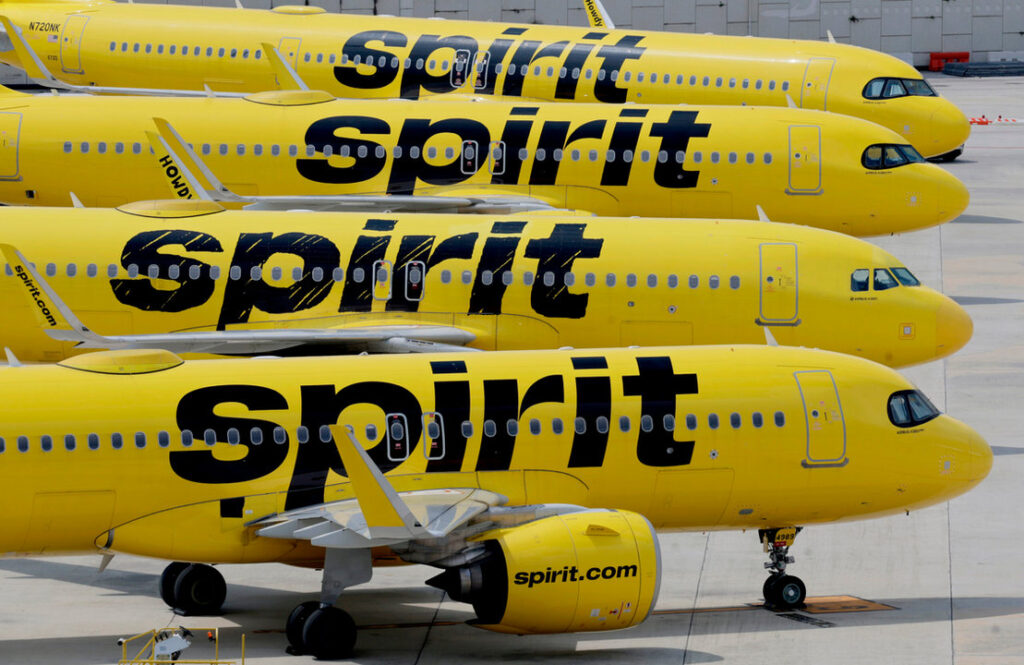
Travelers across the United States woke up to unexpected cancellations as Spirit Airlines halted operations without warning. The budget carrier’s bright yellow planes, once synonymous with low fares, are now grounded, and thousands of staffers face an uncertain future.
Immediate Shutdown and Workforce Impact
This week, Spirit Airlines initiated an “orderly wind-down” that canceled every flight and closed customer service channels. With roughly 17,000 positions at stake, the carrier’s abrupt move marked the end of its 34-year run.
Soaring Fuel Bills and a Collapsed Bailout
Spirit’s financial woes were driven by a spike in jet fuel costs after tensions in the Strait of Hormuz, officials said. Chief Financial Officer Fred Cromer reported nearly $100 million in extra fuel expenses between March and April 30. A proposed $500 million rescue package, supported by White House discussions, fell apart amid creditor and congressional opposition. Cromer confirmed that the offer “was no longer an available option.”
Policy analyst Tad DeHaven of the Cato Institute criticized the administration’s foreign policy moves, noting they had “a compounding effect in terms of policy.” He argued that previous conflicts had already strained Spirit’s finances before fuel prices surged.
Passengers and Crew Left Stranded
Spirit ceased flights around 3 a.m. Saturday to ensure no aircraft remained in mid-route, with the final plane arriving from Detroit at Dallas Fort Worth International Airport. Despite the shutdown, departure boards at Atlanta’s airport still showed five Spirit departures as “on time.”
Taylor Nantang, traveling with her husband and four children, was stunned: “What!?” she exclaimed. “So the whole airline at every airport is out of business? Oh my, that’s crazy.” Another passenger, Joshua Sigler, who bought his ticket just a day earlier, summed up his experience: “They get you there. It was cheap.”
Employees learned of the closure through social media and canceled alarms. Former flight attendant Freddy Peterson, after landing in Newark late Friday, set his alarm for 3 a.m. to check the company website and discovered the shutdown. Reflecting on his return to Atlanta courtesy of Delta Air Lines, he admitted, “I’ll probably do the boo-hoo crying and all that other stuff once I get in my car.”
Refunds, Rebookings, and Industry Response
Transportation Secretary Pete Buttigieg assured customers that those who booked directly through Spirit would receive refunds from a dedicated reserve fund. Travelers who purchased tickets via third-party agents must seek reimbursement from those vendors.
Major carriers United, Delta, JetBlue, and Southwest have temporarily offered $200 one-way fares to passengers holding Spirit confirmation numbers and proof of purchase. Airlines are also extending expedited hiring processes to displaced Spirit employees.
Long-Term Consequences for Budget Travel
Spirit’s exit leaves a void in markets such as Las Vegas, Fort Lauderdale, and Orlando, where it held significant market share. Labor unions warn the reduction in competition could drive airfares higher. Data from Cirium shows Spirit flew about 1.7 million domestic passengers in February—half a million fewer than the prior year—and had cut seat capacity by half compared with May 2024.
Under court supervision, Spirit plans to sell aircraft, engines, and other assets while retaining around 150 employees to manage the process before reducing staff to 40. Costs for this team are projected at a minimum of $10.7 million.
In its final public statement, Spirit said, “We are proud of the impact of our ultra-low-cost model on the industry over the last 34 years and had hoped to serve our guests for many years to come.”