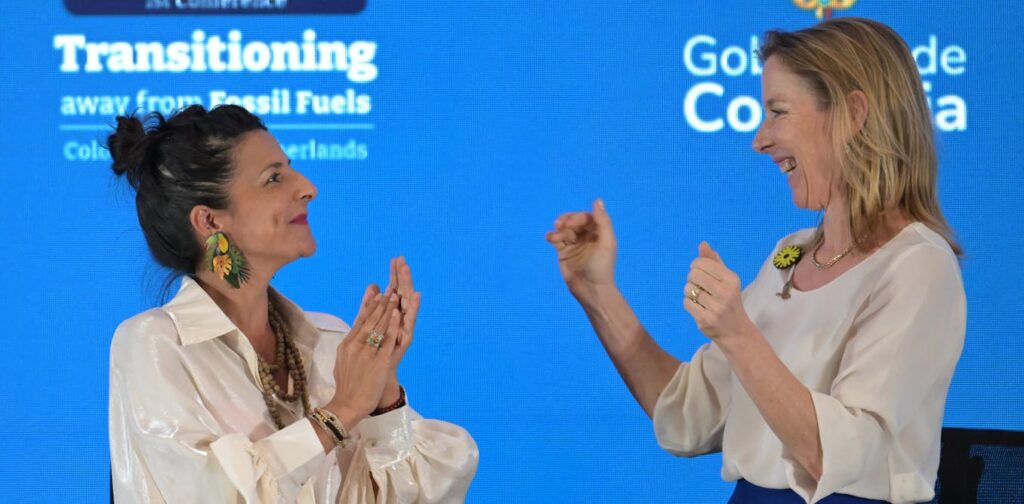
In a significant move towards global environmental reform, nearly 60 nations gathered in Santa Marta, Colombia, with the ambitious goal of phasing out reliance on fossil fuels. This congregation, representing about a third of the world economy, signifies a united step toward sustainable energy futures.
During this pioneering summit, 57 countries, including major players like Australia, Canada, Norway, and Brazil, initiated a collaborative effort to systematically reduce the use of coal, oil, and gas. This initiative marks a historical pivot towards clean energy. Colombia’s environment minister, Irene Vélez Torres, emphasized the urgency, stating, “We decided that the transition away from fossil fuels could no longer remain a slogan but must become a concrete, political and collective endeavour.”
Below are five significant outcomes from the Santa Marta summit.
Moving Beyond Negotiation Stagnation
Unlike the traditional UN climate meetings that require unanimous consent, this summit allowed for more fluid discussions, free from the influence of major fossil fuel producers like Saudi Arabia and Russia. This format enabled practical dialogues on how to legally and economically transition away from fossil fuels. The insights gained are expected to influence the upcoming UN climate talks in Turkey, where countries may be urged to include phase-out timelines in their national climate plans.
Defining the Path Away from Fossil Fuels
Santa Marta saw the formation of working groups tasked with assisting nations in creating actionable plans to phase out fossil fuels. France, for instance, revealed its comprehensive roadmap, aiming to eliminate coal by 2030, oil by 2045, and gas by 2050. The ongoing conflict between the US and Iran has intensified the urgency, highlighting the necessity of reducing fossil fuel dependency amid the most severe energy crisis in history.
Abstract Aerial Art/Getty
Establishing a Science Panel
A new scientific panel was introduced to offer guidance on transitioning from fossil fuels. Comprising experts across various fields, the panel will provide insights into the most effective policies and financial strategies for adopting clean energy. Led by Professor Johan Rockstrom from the Potsdam Institute for Climate Impact Research, this initiative is a crucial step towards informed, science-driven climate policies.
Future Summits on the Horizon
Looking ahead, Tuvalu is set to host the next summit in 2027, with support from Ireland. As a nation vulnerable to rising sea levels, Tuvalu has been at the forefront of climate diplomacy. “If we are to address the climate change issue, we have to address the root cause, and the root cause is the fossil fuel industry,” voiced Maina Talia, Tuvalu’s climate change minister. This ongoing series of summits signals a sustained international effort to phase out fossil fuels.
The Push for a Fossil Fuel Treaty
Many countries, led by Pacific island nations, are advocating for a formal treaty to cease fossil fuel production. Such a treaty would involve halting expansion, reducing current production, and ensuring a fair transition to renewable energy. This initiative draws parallels to international agreements on weapons, harmful substances, and hazardous waste.
Dual-Speed Climate Diplomacy
The Santa Marta summit has highlighted a new dual-speed approach to climate diplomacy. While the UN talks provide a slower, more inclusive framework, meetings like Santa Marta offer a faster track for nations eager to advance fossil fuel phase-out initiatives. This “two-tier multilateralism,” as described by André Corrêa do Lago, ensures both comprehensive international cooperation and rapid, decisive action.
Original Story at theconversation.com