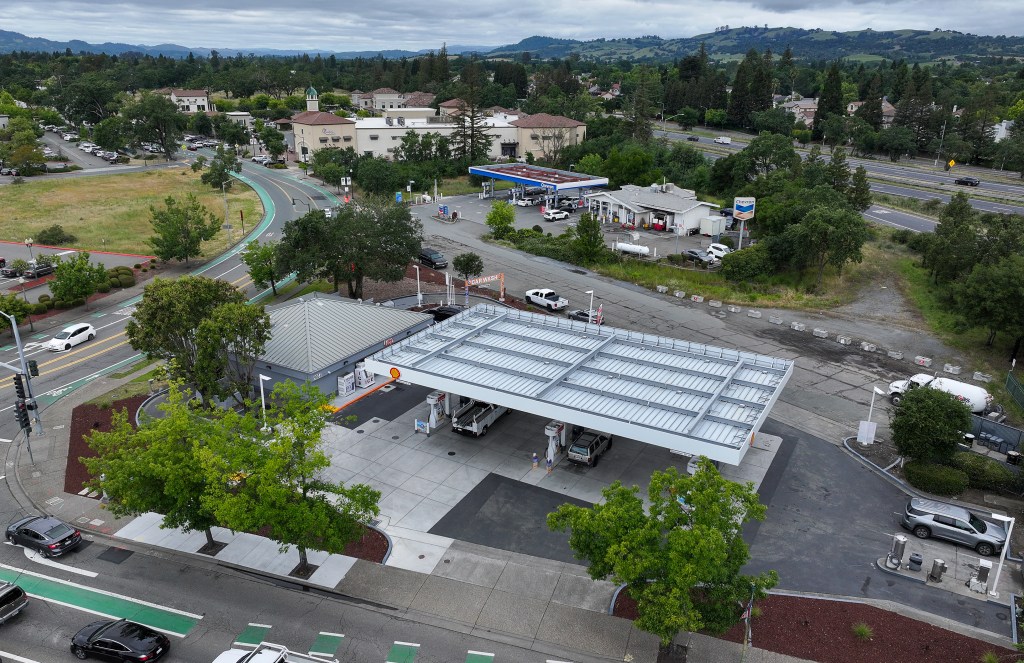
As the town of Windsor in Sonoma County considers retracting a key environmental policy, it may become the first in the region to reverse its ban on new gas stations. This potential policy shift comes amid economic pressures and a changing landscape for electric vehicle incentives.
The Windsor Town Council is set to discuss the repeal of the nearly four-year-old ban on new gas stations. The proposal was brought to the table by Mayor Rosa Reynoza, with the majority of council members open to the discussion. However, council member Sam Salmon opposes the repeal.
This debate surfaces during a period of escalating gas prices across the nation, exacerbated by geopolitical tensions with Iran. Additionally, the decline in new electric vehicle purchases in California and the U.S., following the cessation of state and federal tax incentives, adds complexity to the issue.
Windsor’s financial health is also under scrutiny, with its general fund struggling. Local revenue from gas taxes showed an increase until 2024, yet the ban and a broader shift to clean-fuel vehicles were expected to eventually reduce revenue. Gas taxes are a crucial source for municipal road work funding in California.
Initially, when the gas station ban was unanimously approved by the Windsor council in September 2022, it was seen as a vital step in a regional strategy to address climate change. Transportation, accounting for 60% of the region’s greenhouse gas emissions, was targeted by this and similar bans across Sonoma and Napa counties.
Sonoma and Napa Counties Embrace Gas Station Bans
Windsor was part of a collective effort by 11 municipalities to prohibit new gas stations between 2021 and 2025. These jurisdictions include:
- Santa Rosa
- Petaluma
- Rohnert Park
- Cotati
- Sebastopol
- Sonoma County
- Napa
- Calistoga
- Yountville
- St. Helena
- American Canyon
Additional North Bay areas with similar bans include Novato, San Anselmo, and Fairfax.
Under Windsor’s code, existing gas stations were permitted to operate as non-conforming businesses and could remodel for electric vehicles but were restricted from expanding fuel storage or adding pumps. This policy was enacted when electric vehicle incentives peaked, with state and federal programs offering substantial rebates and tax credits.
However, these incentives have since ended, with the state’s Clean Vehicle Rebate Project concluding in November 2023, and federal tax credits ceasing in September 2025. These changes have led to a notable decline in new electric vehicle sales.
Despite a nationwide increase in used electric vehicle purchases, new EV sales are declining, with California experiencing a significant drop. In the first quarter of this year, only 63,461 new electric vehicles were sold in the state, including 1,001 in Sonoma County.
The impact of these changes on Windsor’s budget remains uncertain, according to town staff reports. They suggest reconsidering the gas station ban as a potential revenue source to counteract financial challenges. Windsor’s budget shortfall is projected to reach $19 million over the 2025-27 cycle, necessitating spending cuts and deferred maintenance.
The gas tax contributes about 8% of Windsor’s total sales tax revenue, which grew from $292,000 in 2020 to $442,000 in 2024. However, staff cautioned that more gas stations may not necessarily increase sales tax revenue, as consumer behavior could simply redistribute existing purchases.
The Windsor Town Council will meet to deliberate on this issue on Wednesday, May 6, at 6 p.m. at the Windsor Town Council Chambers, 9291 Old Redwood Hwy, Building 400. The meeting is also accessible via Zoom, though online public comments are not permitted.
Original Story at www.pressdemocrat.com