Ford’s Electric Revolution: A Sneak Peek into the Future
In a bold move to redefine its electric vehicle strategy, Ford is turning heads with its ambitious Universal Electric Vehicle Platform. Designed to revitalize the American EV market, this initiative promises budget-friendly, high-tech vehicles, starting with a sub-$30,000 pickup slated for 2027. At the center of this innovation is Ford’s Electric Vehicle Development Center in Long Beach, where a select group of journalists, including myself, got an exclusive behind-the-scenes tour.
Set up like a miniature car company within Ford, the EVDC is a hub of innovation, featuring a Skunkworks team dedicated to reimagining electric vehicles. As we entered the facility, greeted by a towering lobby and Ford’s illuminated script, it was clear that this was no ordinary office space. Instead, it was a bustling hive of creativity and engineering excellence.
A New Approach to EV Design
During the visit, journalists were welcomed with a note explaining Ford’s mission to radically rethink EVs. “For the past two years, a small, hand-picked Ford team has been operating in secret in California with the mission to radically rethink electric vehicles from the ground up,” the note read. The team’s approach is all about speed and innovation, breaking down silos and encouraging a startup-like culture.
In the Visualization Studio, Ford showcased its cutting-edge design techniques. Engineers demonstrated the use of “unicastings” in vehicle structures, reducing manufacturing complexity and cost. “The best part is no part,” they emphasized, highlighting the efficiency of building large car sections as single castings.
Revolutionizing Manufacturing and Design
Ford’s commitment to rapid prototyping was evident in the Trim Shop. Scott Anderson, formerly of Tesla, explained, “What we are trying to do is iterate really quickly,” as his team showcased their ability to create and test new seat designs in-house within weeks. This in-house capability allows for greater control over design and cost efficiency.
The fabrication process is equally impressive, featuring a sophisticated five-axis gantry mill used for milling various materials, including full-size vehicle models for aerodynamic testing. Engineers also demonstrated rapid prototyping and 3D printing techniques, crucial for fast-paced development.
Advanced Battery and Thermal Management
Our tour extended to EVDC #2, a facility under construction, where Ford’s advanced battery testing and thermal management systems are developed. Here, we met Eric Kooinga, who showcased an enormous chassis dyno capable of simulating various driving conditions. This technology is pivotal for ensuring the robustness of the vehicle’s propulsion and charging systems.
In the High Voltage & Thermal Lab, engineers are dedicated to optimizing battery performance under extreme conditions. The lab buzzed with activity as teams tested battery cells across a wide temperature range to ensure durability and efficiency.
Innovative Power Electronics and Wiring Solutions
Ford’s engineers proudly presented the power electronics of the Universal EV Platform, including the inverter and the innovative E-box, which integrates multiple functions into a single module. This compact design allows for a streamlined, efficient system that reduces wiring complexity.
The Harness Lab exemplifies Ford’s commitment to innovation, utilizing a simple yet effective method for developing wire harnesses. This approach mirrors techniques used by supercar manufacturer Koenigsegg, emphasizing functionality over formality.
Precision and Testing Excellence
The tour concluded with a visit to the Metrology Lab, where precise measurements ensure the quality and reliability of Ford’s designs. From blue light scanners to CT imaging, Ford employs state-of-the-art technology to maintain high standards in its manufacturing process.
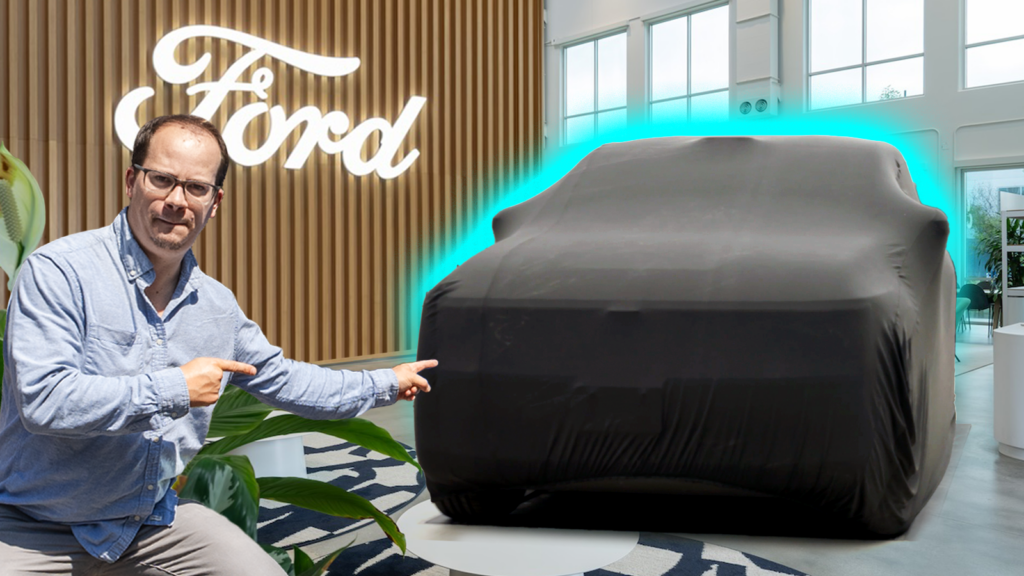
As the tour wrapped up, a camouflaged prototype truck made a brief appearance, hinting at the exciting developments to come. With a focus on speed, innovation, and affordability, Ford is poised to make significant strides in the EV market. “There’s tons of pressure,” admitted Alan Clarke, VP of Advanced Development Projects, “You can’t make diamonds without pressure.”
Original Story at www.theautopian.com