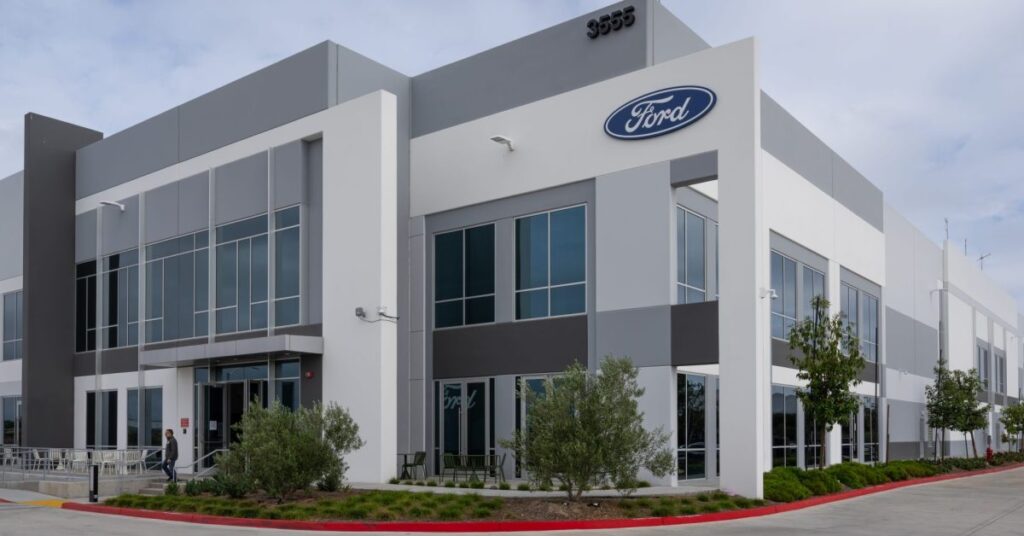
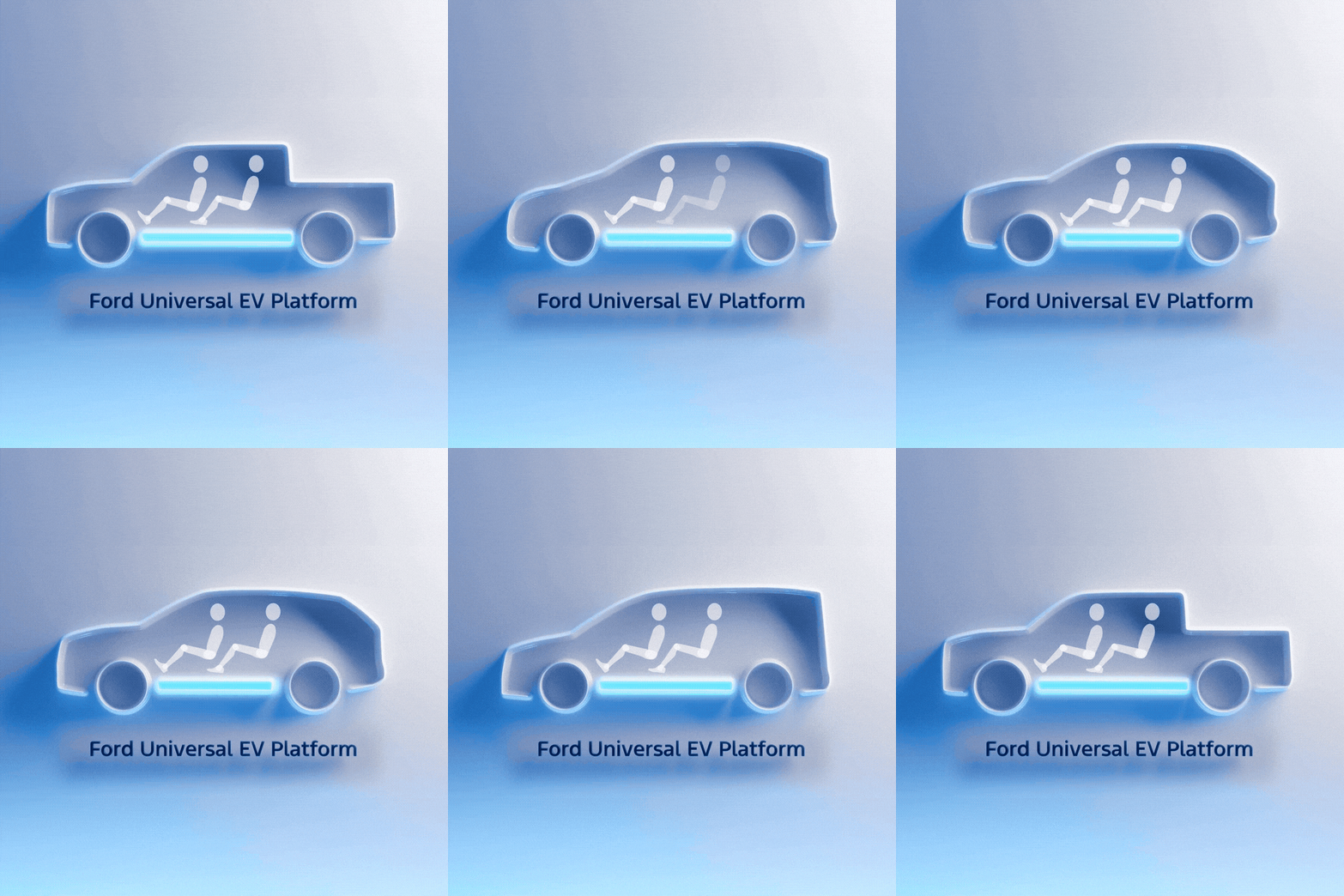
In an ambitious move to keep pace with the rapidly advancing Chinese electric vehicle (EV) sector, Ford has inaugurated a new facility aimed at hastening its EV development. This “skunkworks” initiative, known as the EV Design Center (EVDC), is set to play a pivotal role in the creation of Ford’s “Universal EV.”
China’s dominance in the global auto industry is clear, a fact that Ford CEO Jim Farley is acutely aware of. Having test-driven Chinese vehicles and visited the country, Farley expressed being “humbled” by China’s advancements. To counter this, Ford announced a substantial $5 billion investment in EV production, with plans to introduce a mid-size pickup priced around $30,000 by 2027.
The new EV Design Center, located in Long Beach, California, aims to consolidate various aspects of EV design under one roof, thus expediting the development process. This facility employs a mix of seasoned Ford personnel and experts from the EV startup landscape, drawn by Long Beach’s proximity to aerospace industry resources.
The EVDC is headed by Alan Clarke, who brings 12 years of experience from Tesla. Other notable mentions include employees from an unnamed “electric adventure vehicle company” and Doug Field, who contributed to the project until his recent departure.
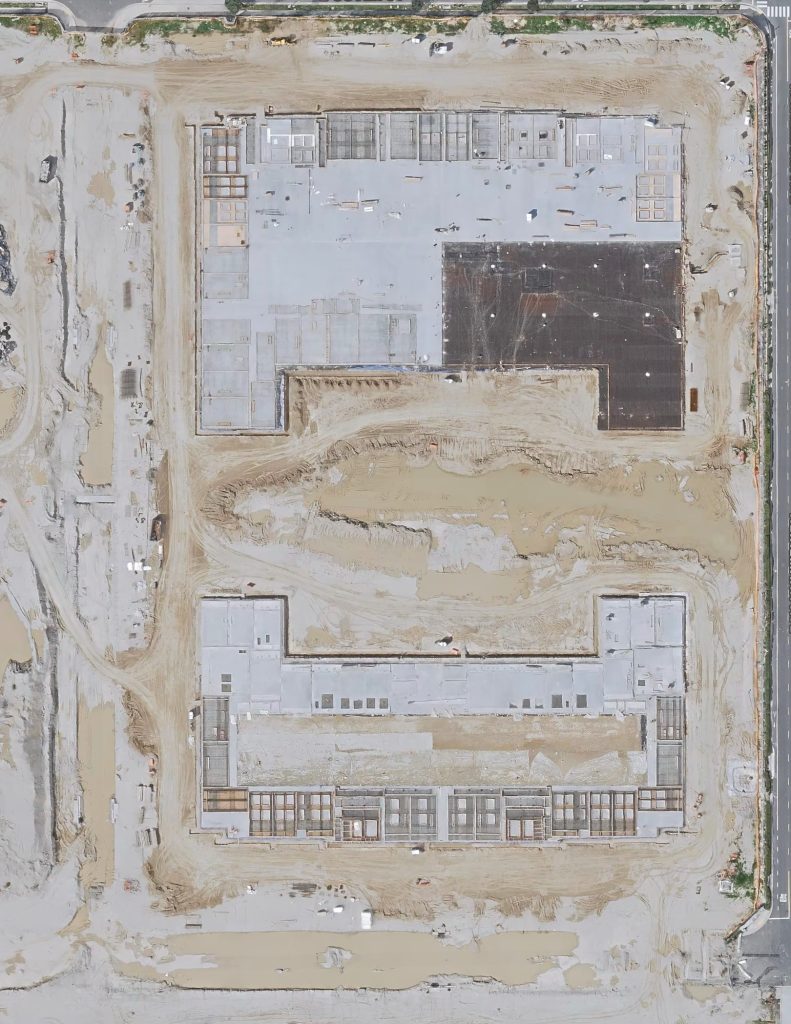
Despite its relatively recent establishment, the EVDC is already making strides in its operations. The center spans two buildings near Long Beach Airport, indicative of its burgeoning development. During a recent tour, Ford showcased various stages of the EV development process, emphasizing its strategy of integrating all aspects under one roof.
Inside the EV Design Center
The tour commenced at the visualization studio, where virtual reality aids in the design process by allowing engineers to visualize vehicles before physical models are constructed. Ford’s approach to manufacturing involves segmenting vehicles into three parts, facilitating parallel production and enhancing worker ergonomics.
In line with its “best part is no part” philosophy, Ford aims to minimize components, thereby reducing costs and improving repairability. This philosophy underpins their reinvention of vehicle assembly, as detailed on their website.
The design studio houses several clay models, though they remain under wraps to maintain secrecy. These models hint at Ford’s future offerings, including potential SUV and hot hatch designs.
Prototyping equipment, including 3D printers and gantry mills, are utilized in the fabrication rooms for creating vehicle components. Ford even employs plywood mockups to assess vehicle proportions before proceeding to full-scale models.
Battery development is a key focus at the center, with Ford opting for lithium iron phosphate (LFP) batteries due to their cost-effectiveness and overall benefits compared to nickel manganese cobalt (NMC) batteries.
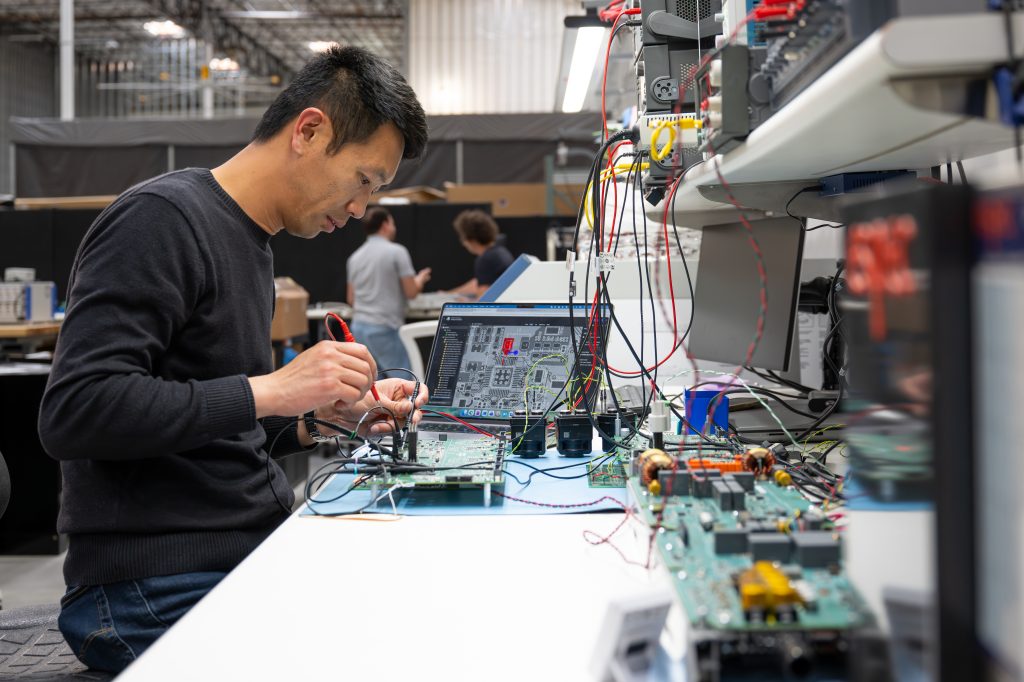
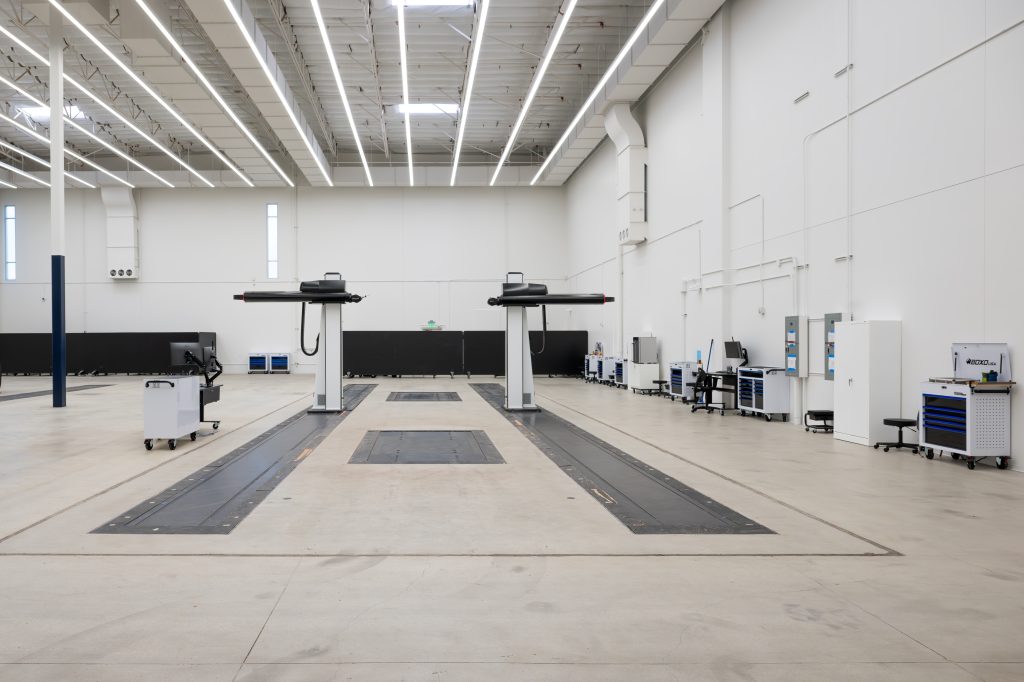
Ford’s zonal architecture simplifies the vehicle’s electronic components, reducing complexity and improving efficiency. Additionally, a state-of-the-art dynamometer allows for extensive testing under various environmental conditions.
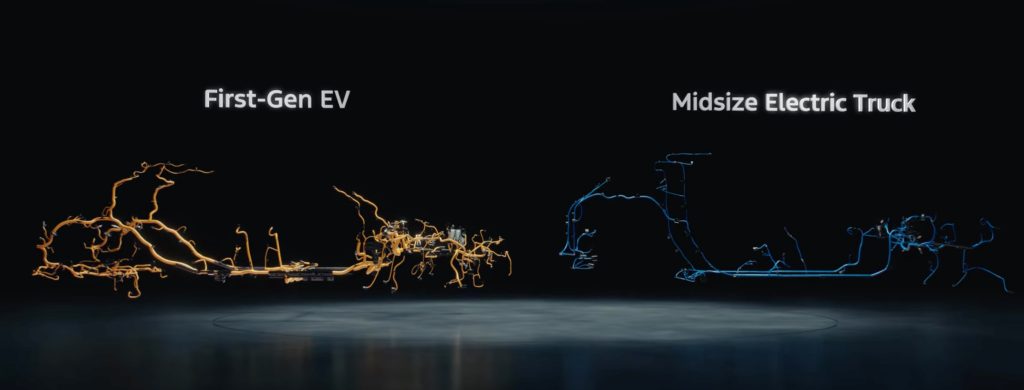
Ford’s “lab car” serves as a testing ground for the wiring harness, ensuring all components function correctly. The shift to a 48-volt architecture, first introduced by Tesla, further reduces wiring needs and enhances efficiency.

The fleet center, the largest room in the facility, houses a variety of Ford vehicles alongside competitors’ models, used for benchmarking and prototype testing.
Ford’s EVDC embodies a “fail fast” culture, encouraging rapid iteration and innovation. This approach mirrors China’s agile manufacturing model, where proximity to suppliers enables swift development cycles.
Despite its recent progress, Ford faces challenges at the corporate level, with several EV programs being canceled in favor of traditional vehicles. The company’s $19.5 billion writedown reflects ongoing efforts to pivot its strategy.
While the EVDC is poised to drive innovation, Ford’s corporate actions, including lobbying to delay EV adoption, suggest a complex relationship with its electric future. As global competitors continue to advance, Ford’s commitment to EV development remains under scrutiny.
Charge your electric vehicle at home using rooftop solar panels. Find a reliable and competitively priced solar installer near you on EnergySage, for free. They have pre-vetted installers competing for your business, ensuring high-quality solutions and 20-30% savings. It’s free, with no sales calls until you choose an installer. Compare personalized solar quotes online and receive guidance from unbiased Energy Advisers. Get started here. – ad*


FTC: We use income earning auto affiliate links. More.
Original Story at electrek.co