Richmond Hill, Ontario, Canada (29 April 2025) – As the global shift toward ‘green’ energy and digital infrastructure accelerates, the extraction of critical minerals like lithium and cobalt plays a pivotal role. However, according to a new report from the United Nations University Institute for Water, Environment and Health (UNU-INWEH), this progress comes with significant environmental and health repercussions that remain largely unaddressed.
The report highlights that the burdens of mining these minerals are unevenly distributed, impacting some of the world’s most vulnerable communities while the benefits are enjoyed elsewhere through advancements in electric vehicles, renewable energy, and AI technologies.
While the report does not challenge the necessity of clean energy systems, it questions the equity of their development. “Technological disruptions are needed and useful. But we should be aware of and proactively address their unintended consequences if we want the whole world to equally benefit from them,” states UNU-INWEH Director Kaveh Madani.
Entitled Critical Minerals, Water Insecurity and Injustice, the report underscores the extensive water demands of mineral extraction, which leave nearby communities grappling with water pollution, scarcity, and health issues. For instance, in 2024, global lithium production consumed an estimated 456 billion liters of water, equivalent to the annual needs of 62 million people in sub-Saharan Africa.
In Chile’s Salar de Atacama, lithium mining accounts for up to 65% of regional water use, exacerbating competition with agriculture and leading to significant groundwater depletion. Similarly, in Bolivia’s Uyuni region, lithium mining has hindered quinoa cultivation, a key economic and nutritional resource for local communities.
Globally, 16% of critical mineral reserves are located in areas of high water stress, and over half of energy transition minerals overlap with indigenous territories.
The 21st Century’s Oil
The urgency to extract these minerals is driven by commitments like the Paris Agreement, which aims to lower carbon emissions worldwide. However, the report warns of a new paradox: achieving climate goals might worsen water, health, and justice crises in communities least responsible for climate change.
Professor Madani, the newly named Stockholm Water Prize Laureate for 2026, cautions, “The world is rushing to build a cleaner energy future, and we support that urgency. But our investigation proves that the mining operations powering that transition are contaminating drinking water, destroying agricultural livelihoods, and exposing children to toxic heavy metals in some of the world’s most vulnerable communities.”
The report equates critical minerals to the ‘oil of the 21st century,’ drawing parallels to the fossil fuel era where the benefits of resource extraction rarely extended to the communities bearing its costs. Without policy changes, the energy transition risks perpetuating similar injustices.
Health Burdens on Vulnerable Populations
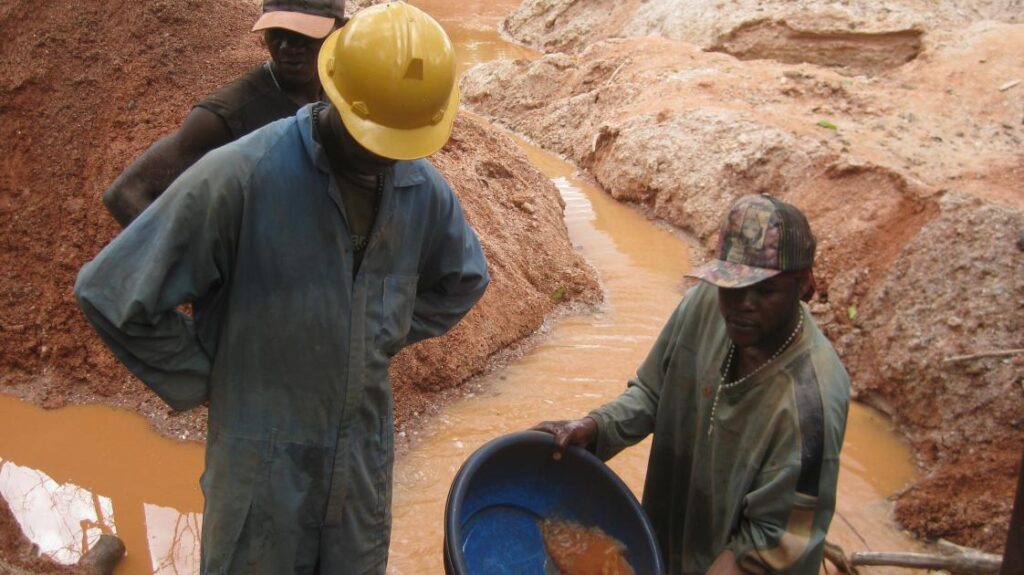
Mining-induced water contamination has led to public health crises. In the Democratic Republic of Congo (DRC), a key cobalt producer, high rates of skin diseases and gynecological problems are reported near mining sites. Birth defects are also significantly more common in these areas.
The social impact is severe, with communities in Chile and the DRC experiencing anxiety and a sense of being ‘sacrificed’ for wealthier regions’ advancements. Additionally, child labor is prevalent in the DRC’s mining sites, where children lack basic health and safety protections.
The report emphasizes that over 80% of the DRC’s mineral production is controlled by foreign entities, limiting local economic benefits. Despite its mineral wealth, more than 70% of the DRC’s population lives on less than $2.15 per day.
“The green energy transition is among the most important undertakings of our time. But the evidence we’ve gathered shows that the communities doing the actual digging, breathing the dust, and losing access to clean water are largely excluded from its benefits,” remarks Dr. Abraham Nunbogu, lead author of the report. “If we don’t correct the governance failures driving this, we will have built the clean energy economy of the future on the same extractive injustices as the fossil fuel economy of the past.”
Original Story at unu.edu