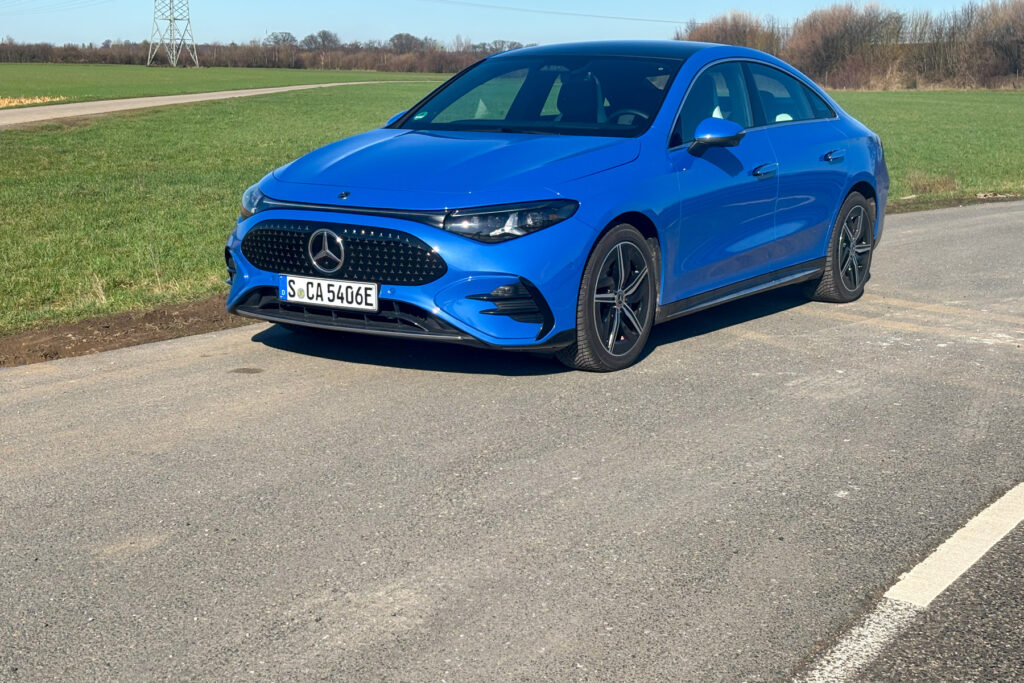
The Mercedes-Benz CLA with its EQ technology has set a new benchmark by scoring the highest ever in Auto, Motor und Sport‘s individual assessment. It has outperformed not only electric vehicles but also all petrol, diesel, and hybrid cars from premium or luxury brands. This CLA model scored an unprecedented 678 points, making it the best-rated car in the magazine’s history.
This accolade, however, doesn’t come without scrutiny. While the AMS team evaluated the all-wheel-drive CLA 350 4MATIC, my focus was on the CLA 250+, known for its extended range. The question remains whether this ‘best car ever tested’ truly excels in every aspect, from drivetrain to build quality and features. The answer appears to be more nuanced than expected.
Mercedes-Benz had high expectations for the CLA, not least due to their own claims made during a 2024 technology workshop in Sindelfingen. At this event, the company showcased the drivetrain and battery concept of the CLA, built on the Mercedes Modular Architecture (MMA) platform. Mercedes touted it as the ‘one-litre car for the electric age’, emphasizing efficiency without sacrificing the practicality typical of a CLA.
The paper specifications are certainly impressive. The vehicle boasts an 85 kWh battery made from NMC cells, providing a range of up to 792 kilometres according to the WLTP cycle, though this can vary with different equipment. The test model, equipped with 18-inch alloy wheels, lacked some optional features that could impact range, such as less aerodynamic wheel designs or added weight. The rear-axle drivetrain delivers 200 kW with a two-speed transmission designed for efficiency, contributing to its notable range.
Yet, actual driving tests unveiled some surprises. In conditions around ten degrees Celsius with winter tyres, a 210-kilometre drive mostly on the motorway in Eco mode at 120 km/h dropped the battery from 91% to 44%. This translated to a consumption of 19.0 kWh/100 km, not quite aligning with the ‘one-litre car’ expectation.
Good efficiency, but no standout performance
Subsequent tests on shorter routes and different conditions showed slightly better efficiency, but the CLA’s consumption hovered between 17-18 kWh/100 km. While decent, these figures don’t outshine competitors like the Hyundai Ioniq 6 or Tesla Model 3. It turns out, winter tyres might have skewed my results. A colleague, testing the CLA in warmer weather and with summer tyres, noted similar consumption at higher speeds.
Given these figures, the CLA offers a real-world range of about 485 kilometres on a full charge. On long trips, its impressive 320 kW charging capability is designed for efficiency. For a drive from Düsseldorf to Berlin, just one short eleven-minute charging stop is required, although arriving with a depleted battery prompts a second stop. This efficiency in charging is remarkable, allowing for a quick recharge and continued journey without long delays.
However, the CLA’s charging prowess is due to its charging curve. Rated for a peak of 320 kW, this power is only briefly available at low charge levels. During tests, the peak observed was 305 kW, declining steadily as the battery charged. Hence, the strategy of multiple short stops can be more time-efficient than fewer, longer ones.
Inside, Mercedes offers transparency with real-time charging power displays, showing how factors like temperature affect limits. Despite connecting to a 400 kW-capable charger, the peak remained at 305 kW, raising questions about the ‘best car ever tested’ claim.
The CLA earns praise for its suspension and charging performance, making it well-suited for long distances. However, issues like space and practicality linger. The hybrid platform limits the space advantages typically offered by dedicated EV platforms. The rear seats are cramped, and while the front seats are adequate, they aren’t spacious. For those needing more rear space, options like the CLA Shooting Brake or the Hyundai Ioniq 6 might be better suited.
Pure EVs offer more space
When it comes to practicality, the CLA offers a 405-litre boot, accessed via a small lid, with limited underfloor storage compared to rivals. It does feature a 101-litre frunk, but interior storage is less practical, with cupholders and a smartphone pad taking up space. The cupholders, meant to secure drinks, don’t accommodate larger bottles well, and the interior design choices may not suit all tastes.
The CLA’s interior quality is generally high, though some design decisions, like the touch-sensitive steering controls, attract fingerprints and dust. The window controls offer limited functionality, and cost-saving measures seem out of place in a premium vehicle. Additionally, Mercedes’ decision to omit traditional coat hooks seems impractical for a luxury car brand, as evidenced by difficulties in hanging a suit jacket during testing.
Original Story at www.electrive.com