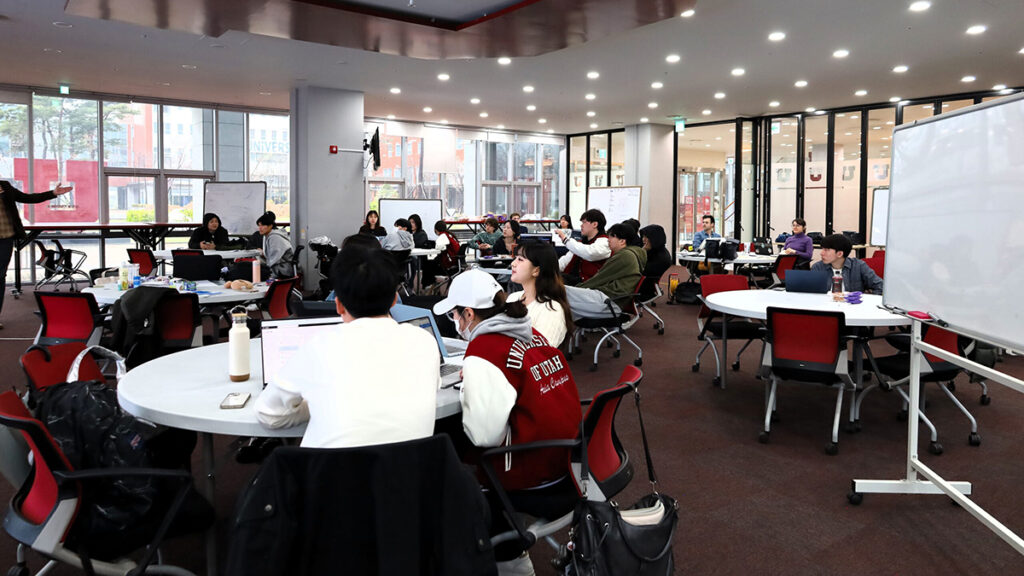
In a dynamic blend of innovation and collaboration, students at the University of Utah Asia Campus in Incheon, South Korea, recently participated in a groundbreaking event that shifted the focus from traditional classrooms to real-world problem-solving.
Innovative Solutions for Global Challenges
From April 9 to 10, the campus hosted its inaugural Energy & Climate Solutions Hackathon. This immersive event, organized by the Wilkes Center for Climate Science & Policy, encouraged students to step beyond theoretical knowledge to tackle urgent global issues related to energy and climate change.
Participants formed interdisciplinary teams comprising students from fields such as urban ecology, business, computer science, and games. Their mission was clear: identify a pressing real-world challenge, devise a feasible solution, and present it convincingly—all within just 24 hours.
Ross Chambless, the community engagement manager at the Wilkes Center, emphasized the event’s practical impact. “This kind of experience is about more than just ideas,” he noted. “It’s about helping students learn how to work together, think critically and communicate solutions to real-world problems. Climate change isn’t theoretical—it’s something we’re all facing, and students need opportunities like this to engage with it directly.”
Award-Winning Ideas
The event wrapped up with presentations and an awards ceremony on April 13, recognizing exceptional innovation and potential impact. In total, $1,000 in prizes was awarded, including distinctions for first, second, and third places, along with a separate best presentation award.
The team “Reuse to Reduce” clinched the top spot by proposing a creative and practical solution: utilizing waste heat from data centers to power smart farming systems. Team members Suhyun Bae, Seungwon Cha, and Eunchong Jin showcased how overlooked energy sources could be redirected into sustainable agricultural practices.
“We wanted to find a way to reuse energy that’s typically wasted. Even in a short amount of time, working with teammates from different backgrounds helped us turn a rough idea into something more concrete,” the team shared.

Bridging Academics and Real-World Impact
The hackathon offered faculty an opportunity to see academic theory translated into practical impact. “Energy and climate challenges are some of the most complex issues cities face today,” remarked Reazul Ahsan, urban ecology program lead.
Idil Ayral, another urban ecology professor, added, “What made this event especially valuable was seeing students from different disciplines come together to develop solutions that are not only creative but also grounded in real-world thinking.”
Looking ahead, organizers anticipate the hackathon’s evolution, hinting at expanded opportunities for students to refine their ideas, potentially connecting with entrepreneurship programs or even reaching international platforms.
As the University of Utah continues to extend its global reach, initiatives like this hackathon underscore a vital commitment: equipping students not just to understand global challenges, but to actively address them.
Original Story at attheu.utah.edu