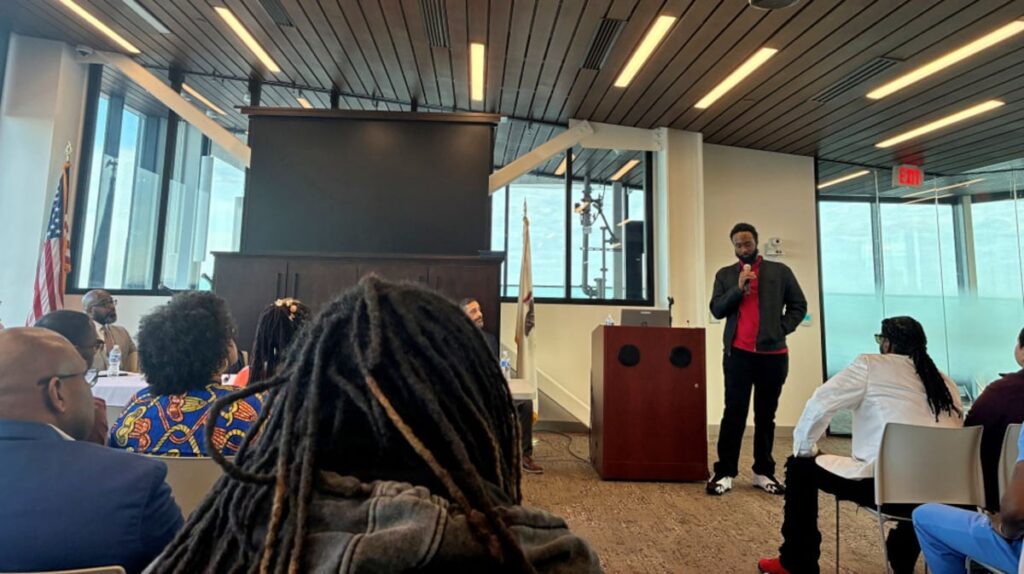
As sunlight poured through the glass walls of the College of Lake County’s auditorium, a lively crowd gathered to celebrate a significant milestone for graduates of the clean energy workforce hub. This ceremony marked the completion of a training phase envisioned by the 2021 Climate and Equitable Jobs Act (CEJA), showcasing the aspirations of its supporters.
The event in late February saw graduates sharing stories of hope, with one tearfully expressing, “I really wish my father was here today to see me,” as they addressed a packed audience of fellow graduates and families. Despite the celebratory atmosphere, data suggests challenges remain in translating this training into jobs within the clean energy sector.
“The hardest part about Friday was to see all those people there, and the tears were because they knew it was over; they go back to the life they had before,” remarked Yvette Ewing, executive director at The Community Works. Ewing highlighted the absence of specific clean energy job opportunities for graduates.
Of the 805 students completing the CEJA workforce hubs, only 124 secured employment in the renewable energy sector by March 2026, according to data from the Department of Commerce and Economic Opportunity (DCEO), reflecting a modest 15% placement rate.
DCEO’s Assistant Deputy Director of Communications, Eliza Glezer, defended the program’s progress, stating, “Current job placement figures reflect a program that is still ramping up.” She emphasized the long-term nature of the investment, expecting growth as the program matures and offers more comprehensive training and job placement services.
Glezer also pointed to state initiatives like the Equitable Energy Future Grant Program and the Community Solar Energy Sovereignty Grant as avenues to create new opportunities for CEJA graduates. Governor JB Pritzker’s office referred to DCEO’s statement when asked for further comment.
Climate and Equitable Jobs Act
Illinois’ landmark 2021 climate legislation, CEJA, aims for 100% renewable energy by 2050. A key component is integrating individuals from communities facing economic and environmental challenges into the clean energy workforce, spanning jobs in renewable energy manufacturing, electric vehicle technology, and more.
“Waukegan represents exactly what we are trying to do with CEJA,” stated Hannah Flath, communications director for the Illinois Environmental Council. She emphasized the need to support communities long impacted by industrial pollution in transitioning to cleaner energy sources.
State Sen. Adriane Johnson, D-Buffalo Grove, highlighted the health disparities linked to environmental toxins in Waukegan, noting the region’s history of being overlooked. A 2018 Union of Concerned Scientists case study linked toxic coal ash from the now-decommissioned Waukegan power plant to health issues, including premature deaths and asthma.
Despite CEJA’s enactment in 2021, the state did not award grants for workforce hubs until mid-2024, with programming commencing later that year. The state allocates nearly $23 million annually to support 14 hubs aimed at training individuals for entry-level clean energy jobs.
The bridge program, a 120-hour curriculum focusing on employability and technical skills, accounted for 63% of enrollments at the College of Lake County’s CEJA programs. Ewing noted that while the program inspires some participants, it may not fully prepare them for immediate employment.
CEJA prioritizes training for individuals facing employment barriers, like those with criminal records or housing instability. Ewing’s nonprofit seeks more state funding to support graduates in overcoming these challenges and securing employment.
Linda Larsen from the University of Illinois Urbana-Champaign’s Climate Jobs Institute attributed the 15% employment rate to the program’s infancy but expressed optimism for improvement over time.
Federal Headwinds
The One Big Beautiful Bill Act’s cuts to clean energy tax credits have introduced uncertainty for Illinois’ clean energy businesses. A 2025 report from Larsen’s institute linked these cuts to layoffs and hiring slowdowns, affecting recent CEJA graduates.
Despite federal challenges, Illinois has bolstered its incentive programs to mitigate the impact. A September 2025 E2 report ranked Illinois fifth in clean energy jobs nationwide but 34th in growth rate. Tariffs contributing to construction cost increases further complicate hiring.
Still, CEJA graduates like Will Gist, who completed the bridge program, remain optimistic. “It gives you options. I didn’t think I had many,” Gist said, now advancing in electric vehicle technology training. “It’ll give you a career if you do the work and stick to it.”
Original Story at www.shawlocal.com