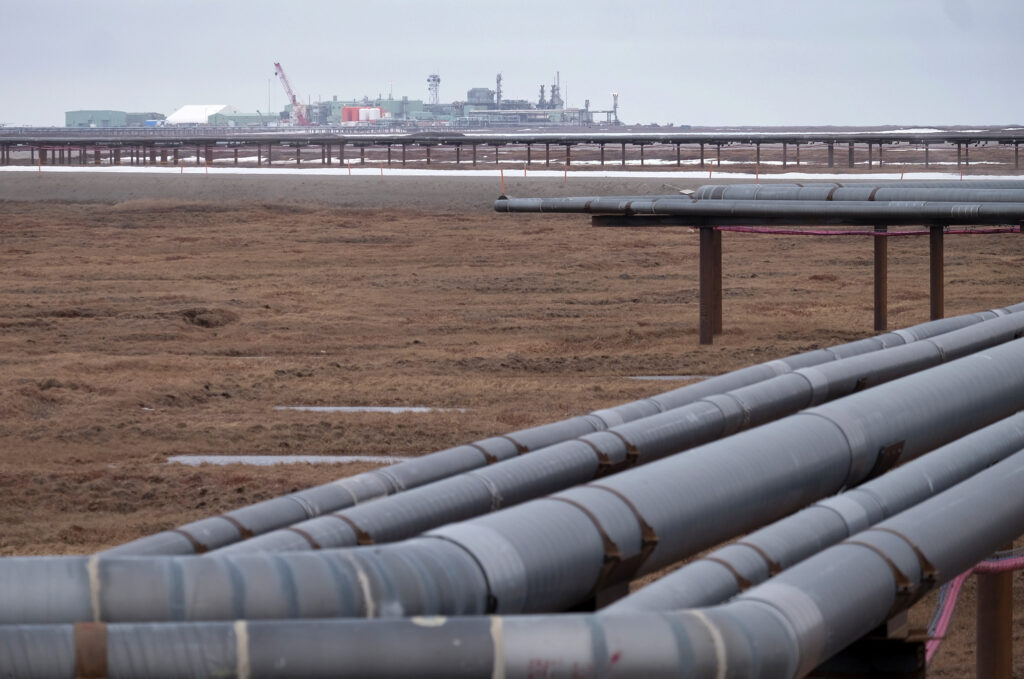
Oil companies have secured the right to drill on over 1.3 million acres in the Alaskan Arctic, including areas critical to wildlife and subsistence hunting, and lands previously designated for conservation. This marks the first lease sale in the region since 2019, continuing an effort by industry and former Trump administration policies to expand fossil fuel extraction in the warming North Slope.
The leases are located within the National Petroleum Reserve in Alaska, the largest public land unit in the U.S. Although Congress designated it as an emergency oil reserve for the Navy, the area remains largely undeveloped, providing habitat for migratory birds, caribou, polar bears, and other species.
Oil companies obtained leases in a million-acre area that the Bureau of Land Management had previously granted as a conservation right of way to local Alaska Native leaders. The Trump administration canceled this right of way in December, but a federal judge reinstated it pending a lawsuit.
Environmentalists and some Iñuit groups have opposed the expanded drilling, initiating legal action to block the lease sale.
The U.S. Department of the Interior praised the lease sale as a milestone, generating a record $164 million in revenue, with half allocated to the state of Alaska. The sale coincides with global oil price spikes due to geopolitical tensions, though the impact on the lease sale is uncertain, as lease development takes years.
“This sale aligns responsible development with the Reserve’s original purpose,” stated Interior Secretary Doug Burgum. “Revenues will support local communities, create jobs, and reinforce Alaska’s role in domestic energy production.”
Some Alaska Native leaders support the development due to economic benefits. A pro-drilling group noted the region’s reliance on oil and gas jobs and revenues.
Nagruk Harcharek, president of Voice of the Arctic Iñupiat, stated, “This proves that meaningful policy supporting onshore development attracts industry interest.”
However, leaders in Nuiqsut, the Alaska Native community closest to the drilling, worry about potential threats to subsistence resources, particularly the caribou herd.
The conservation right of way was linked to the 2023 approval of ConocoPhillips’ Willow oil project, located within the caribou herd’s migratory path. It aimed to minimize drilling harm, ensuring calving grounds remained undisturbed.
ConocoPhillips agreed to reduce the Willow project’s footprint and relinquished leases on its edges, but recently reacquired them.
The right of way prohibits leasing without the Trilateral’s approval, raising concerns about the lease sale’s compliance with the judicial order.
The Interior Department asserted that lease issuance will comply with the court order.
Three companies, including ExxonMobil and SE Partners, obtained leases within the easement’s boundaries. ExxonMobil and Narwhal Exploration did not respond to requests for comment.
Rosemary Ahtuangaruak, a former mayor and drilling critic, urged companies to return the easement leases. She emphasized community concerns about leases near Teshekpuk Lake.
Drilling for the Willow project has shifted some caribou migration patterns. ConocoPhillips’ explorations led to an oil rig accident this winter, spilling fuel.
Ahtuangaruak criticized the administration’s focus on business over environment and community welfare, calling for broader support against drilling expansions.
The leases will likely face legal challenges, with ongoing lawsuits involving Ahtuangaruak’s group.
Kristen Miller of Alaska Wilderness League stated, “The Western Arctic is a sanctuary for wildlife and Indigenous communities. We will work tirelessly to prevent these leases from becoming drill sites.”
Original Story at insideclimatenews.org