The fascination with electric vehicles seems like a modern phenomenon, but the roots of EV technology stretch back to the 19th century. While the 20th century saw a love affair with internal combustion engines, electric cars have been making a comeback since Tesla’s groundbreaking launch of the Roadster in 2008 (one of the EVs on track to be a future classic, in our books). This was followed by the Model S in 2012, which some herald as the most important car of the 21st century.
Fast forward to early 2025, and electric vehicles (EVs) make up only a small portion of the U.S. car market at 7.9% (or roughly 9.7% including plug-in hybrids). Contrast this with the late 1800s, when electric cars were the vehicle of choice for the affluent urban elite.
Before the invention of the electric starter by Charles Kettering, gasoline cars were seen as dirty and difficult to operate. In contrast, electric cars were cleaner and quieter. Though the earliest models resembled oversized baby carriages, they paved the way for modern EVs.
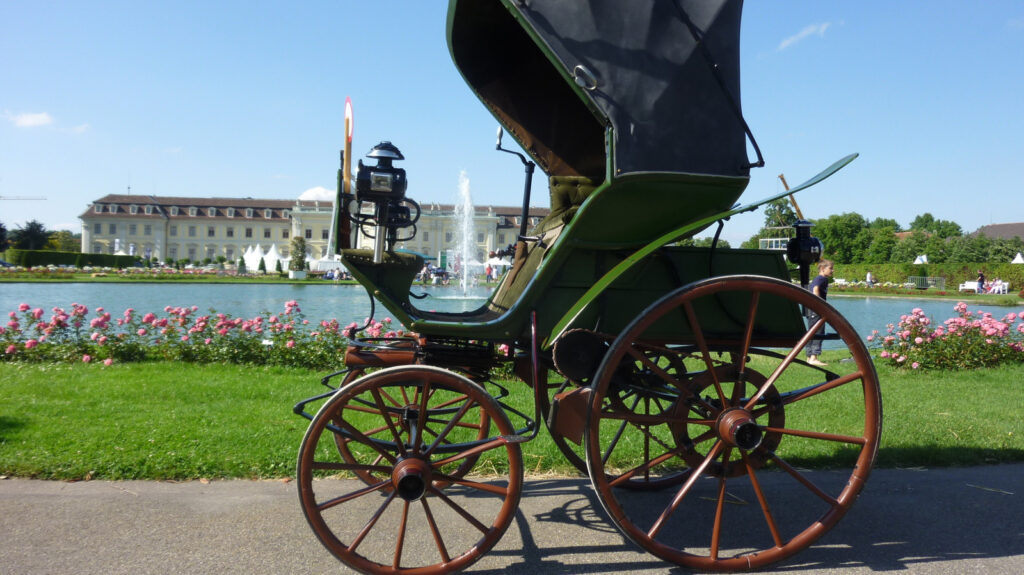
The Flocken Elektrowagen, credited as the first electric car available to the public, was designed by German entrepreneur Andreas Flocken in 1888. Unlike experimental models, the Elektrowagen featured a four-wheel design, moving away from the tricycle layouts common at the time.
If it looks like a carriage, it’s because it was
The Flocken Elektrowagen’s design was far from modern, resembling an open carriage with four wheels. It housed a one-horsepower electric motor and a rechargeable lead-acid battery. Built primarily of wood and iron, it adopted the form of a chaise, a two-wheeled horse-drawn carriage, with some practical updates.
With a top speed of 9 mph (15 kph) and a battery life of about 2.5 hours, the Elektrowagen wasn’t fast but was functional. Flocken’s 1903 updates included pneumatic tires and improved steering, replacing the hazardous acetate headlights with safer electric lighting. Despite challenges in material supply and battery tech, Flocken’s venture proved electric vehicles viable for everyday use.
The Detroit Electric: A more car-like body
Many early electric vehicles mirrored the horse-drawn carriage aesthetic, including the Electrobat by Pedro Salom and Henry G. Morris, and Andrew Riker’s 1884 electric tricycle. By the late 19th century, Riker’s vehicles were outpacing gasoline cars in races, though they still retained a carriage-like appearance.
The Detroit Electric car, introduced by William C. Anderson’s Anderson Carriage Company, marked a departure from this tradition. Originally a carriage manufacturer, Anderson transitioned to auto bodies in 1895. By 1907, the Detroit Electric car emerged, featuring a closed-cabin design in 1908 that resembled a modern car more than a carriage.
Original Story at www.jalopnik.com