This article is contributed by Bruno Geschier, Chairman of WFO’s Floating Offshore Wind Committee and Chairman of FOWT’s Scientific and Technical Committee.
Floating offshore wind is at a critical point in its development, evolving from a concept to a key component of global energy transition strategies in just over ten years. Governments are incorporating it into national plans, investors are funding large-scale projects, and the industry is expanding to meet expected demand. The sector is promising, with untapped wind resources, technological innovation, industrial revitalization, and significant decarbonization potential.
The scale of this promise highlights a crucial truth: floating offshore wind must be built with professionalism and technical rigor. In a capital-intensive industry operating in challenging environments, there is no room for amateurism.
The rationale for floating offshore wind is transformative. Many of the world’s strongest wind resources are in waters too deep for fixed-bottom foundations. Traditional offshore wind has thrived in shallow seas, but deeper waters represent a new frontier. Floating platforms such as semi-submersible, barge-type, spar-buoy, or TLP designs enable turbines to operate in these areas, expanding offshore wind’s reach and unlocking high-capacity factors.
This shift has major implications for countries with steep continental shelves. Japan views floating wind as vital for its renewable energy portfolio, given its limited land and energy import reliance. Norway uses its offshore oil and gas expertise to pioneer advanced floating structures. The United States sees floating wind as critical for harnessing powerful Pacific Coast winds. France, Scotland, and others are planning to integrate floating projects into their offshore wind strategies, leveraging maritime expertise and port infrastructure.
Floating Wind Is No Longer Experimental
The trajectory across these regions is clear: floating offshore wind is no longer experimental. Demonstration units have validated engineering principles. Turbine ratings have increased, improving output and economies of scale. Digital monitoring enables real-time performance tracking and predictive maintenance. Fabrication processes are standardizing, and supply chains are maturing. Despite higher costs than fixed-bottom installations, a downward trend is evident as experience grows.
However, progress has been challenging. Floating projects face unique technical hurdles. Platforms must endure extreme conditions, including high waves and strong currents, over 25-year lifespans. Structural fatigue, corrosion, and dynamic loading require meticulous modeling. Mooring systems must balance flexibility and strength, ensuring stability without over-engineering. Dynamic export cables must remain functional despite constant movement. Operations demand specialized vessels, precise planning, and upgraded port facilities.
Complexity demands a culture of excellence. Floating offshore wind is multidisciplinary, requiring collaboration among naval architects, engineers, environmental scientists, and financial analysts. Each project involves billions in investment and long-term commitments. Investors and policymakers expect realistic cost projections, robust risk assessments, and transparent governance frameworks.
Professionalism is essential. Overly optimistic assumptions or poor execution can undermine confidence. As the industry builds competitiveness and capacity, credibility must be safeguarded. Success strengthens trust; missteps risk slowing momentum.
Policy frameworks are crucial. Governments worldwide are embedding offshore wind targets within broader decarbonization agendas. Institutions like the European Union have ambitious renewable energy strategies, with offshore wind as a central element. Floating wind extends offshore capability into deeper waters, expanding policymakers’ strategic toolkit.
However, ambition does not automatically translate to turbines in the water. Auction designs must reflect technological maturity and cost. Permitting must balance environmental protection with timely approvals. Grid infrastructure must be planned to accommodate new capacity. Ports need upgrades to handle large floating structures. Workforce training must prepare for new demands.
Structured dialogue between industry and government is necessary. It requires forums where technical realities inform policy decisions. Such dialogue has become sophisticated, reflecting the sector’s maturation.
FOWT: Substance Over Spectacle
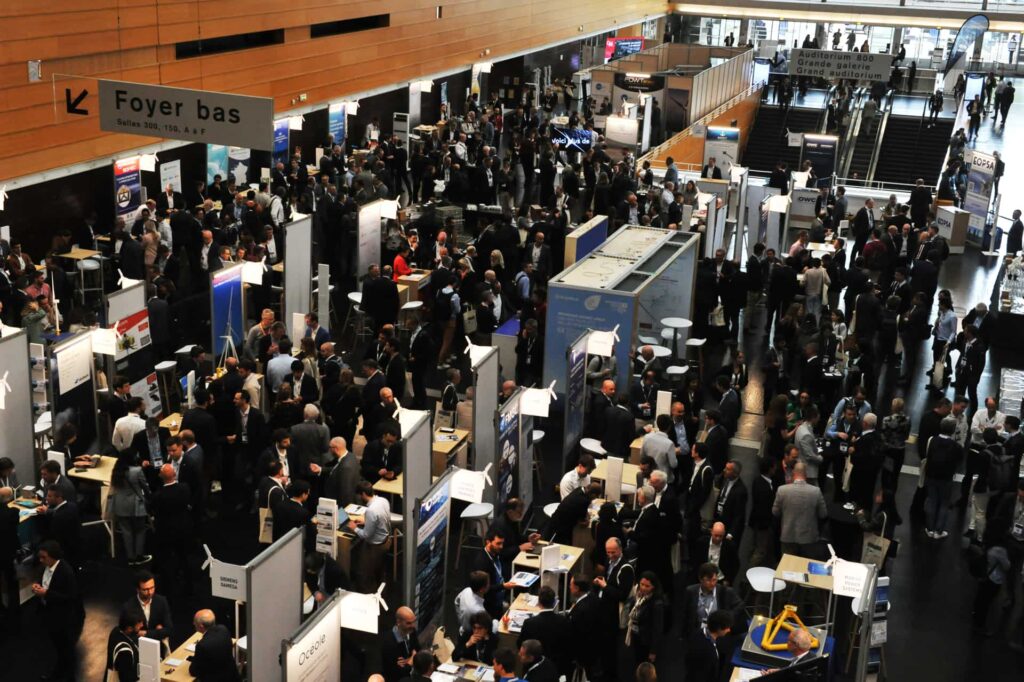
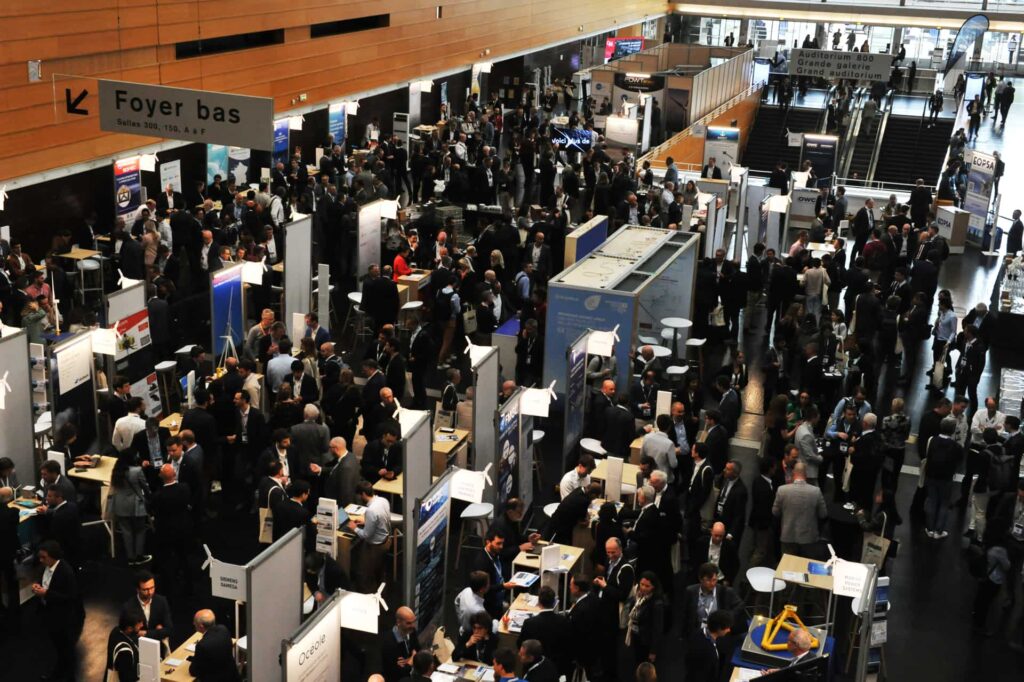
Within this context, FOWT plays a constructive role. Celebrating its 10th anniversary, the event has grown with the industry it serves. It convenes over 1,200 participants from more than 30 countries annually, fostering exchange in the floating wind ecosystem.
Its significance is in substance, not spectacle. Engineers present case studies on platform stability and mooring optimization. Developers share insights on financing and logistics. Policymakers outline regulatory strategies. Financial institutions assess risk models. Suppliers demonstrate innovations in fabrication and maintenance.
By gathering diverse perspectives, the event promotes alignment and transparency. Technical claims are scrutinized. Lessons from pilot projects are shared. Regulatory proposals are debated in light of realities. These exchanges reinforce a culture of accountability, essential for investor confidence and public trust.
The supply chain dimension is critical. Floating wind is transforming maritime sectors. Shipyards adapt to fabricate large platforms. Engineering leaders innovate with concrete hulls. Cable suppliers advance dynamic solutions. Ports invest in assembly and logistics.
FOWT provides a platform for these actors to connect. Developers find capable suppliers. Emerging technology providers gain exposure. Financial institutions evaluate supply chain robustness. This network-building accelerates industrial readiness and reduces market fragmentation.
Continuity is important. A decade of consistent gatherings signals stability in a fast-evolving industry. It shows floating offshore wind has moved from speculative interest to sustained engagement. For investors and policymakers, this continuity reassures that the sector is consolidating, not fluctuating.
Optimism Is Justified
As floating offshore wind enters its second decade, ambition is expanding. Multi-gigawatt project pipelines are in development globally. Larger turbines promise cost efficiencies. Hybrid configurations, integrating wind with energy storage or green hydrogen, are explored. Digitalization enhances efficiency and maintenance.
Optimism about the sector’s future is justified. The resource base is vast, the climate imperative urgent, and technology promising. Floating offshore wind could become a cornerstone of global electricity supply.
But optimism must be disciplined. Scaling requires rigorous standards, transparent financing, robust environmental stewardship, and workforce development. It needs ongoing cross-border collaboration and professionalism.
The 10th anniversary of FOWT reflects achievement and responsibility. It marks ten years of learning, technical refinement, and industrial coordination. It underscores the importance of sustained engagement in a complex, capital-intensive sector.
Floating offshore wind holds great promise. Winds across deep waters represent energy and opportunity—economic, environmental, and technological. Achieving this opportunity requires high standards and informed collaboration.
As the industry advances toward larger projects, expertise, transparency, and international exchange will be decisive. With professionalism guiding innovation and dialogue reinforcing trust, floating offshore wind is poised to transform its promise into reality, powering coastlines and supporting global energy transition.
Bruno Geschier is Chairman of WFO’s Floating Offshore Wind Committee and formerly Chief Sales & Marketing Officer of BW IDEOL for 10 years. He provides advisory services and advocates for floating offshore wind globally. He is a regular speaker at offshore wind events and co-organizer of FOWT. Geschier initiated WindEurope’s Floating Offshore Wind Work Group and sits on various advisory boards.
Original Story at www.offshorewind.biz