Renewable Energy Shifts: Texas Overtakes California in Utility-Scale Solar Production
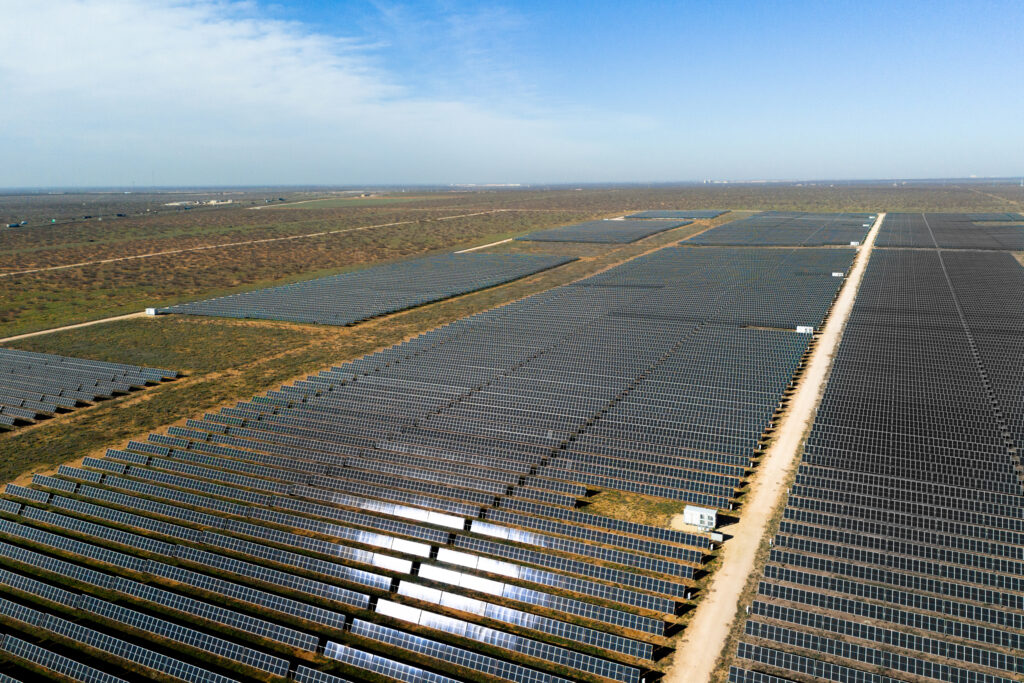
In a significant milestone for renewable energy, Texas has surpassed California to become the leading state in utility-scale solar power generation. This development marks a new chapter in the energy sector’s evolution in the United States.
According to recent data from the U.S. Energy Information Administration (EIA) for 2025, Texas generated 58,634 gigawatt-hours from utility-scale solar, eclipsing California’s 53,713 gigawatt-hours. Despite this shift, California retains its lead in small-scale solar projects, which are defined by the EIA as having a capacity of less than 1 megawatt. When both utility-scale and small-scale solar are combined, California remains in the lead.
Utility-scale solar experienced the fastest growth of any electricity source in the U.S. last year, with production increasing by 35 percent. However, it still trails far behind natural gas, which remains the dominant energy source despite a 3.3 percent decline, largely attributed to high prices.
Renewable energy sources, including wind, hydropower, and utility-scale solar, collectively ranked second after natural gas, showing a 9.5 percent increase. Other major energy sources like nuclear showed minimal growth, and coal saw a resurgence, increasing by 13 percent due to competitive pricing against natural gas and high demand.
Pie chart data from EIA reveals natural gas accounted for 40.8 percent of energy production, followed by renewables at 24.1 percent, nuclear at 17.7 percent, and coal at 16.6 percent. The remaining 1 percent comprises less-utilized fossil fuels.
EIA’s data, while preliminary, is expected to see minor revisions. Kevin Kircher, a mechanical engineering professor at Purdue University, described the growth of utility-scale solar as “an amazing success story,” highlighting solar’s transition from a niche technology to mainstream energy production.
Texas’ rise in utility-scale solar is attributed to its favorable regulatory environment for construction, though it also facilitates fossil fuel infrastructure. Texas surpassed California in installed capacity in 2024, and 2025 marked its first full year of higher electricity generation from solar.
Associate professor Catie Hausman from the University of Michigan noted the 2.8 percent increase in total electricity generation from all utility-scale sources in 2025, emphasizing its significance as a consistent upward trend aligned with growing demand from data centers and electrification.
Economist Bryan Hubbell from Resources for the Future examined the increase in coal power, attributing it to high demand, Trump’s policies favoring coal, and elevated gas prices. The administration’s stance on coal subsidies may impact future trends.
Indiana notably increased its coal power usage by 21.7 percent, driven by higher output from large coal plants. Despite this, the state is also investing in solar projects, such as the Mammoth Solar project, which aims to reach a capacity of 1,300 megawatts upon completion.
The shift in energy production underscores a broader trend toward renewable energy, with solar projects growing rapidly. Energy experts like Kircher affirm that solar’s progress is outpacing expectations and continues to gain momentum.
Original Story at insideclimatenews.org