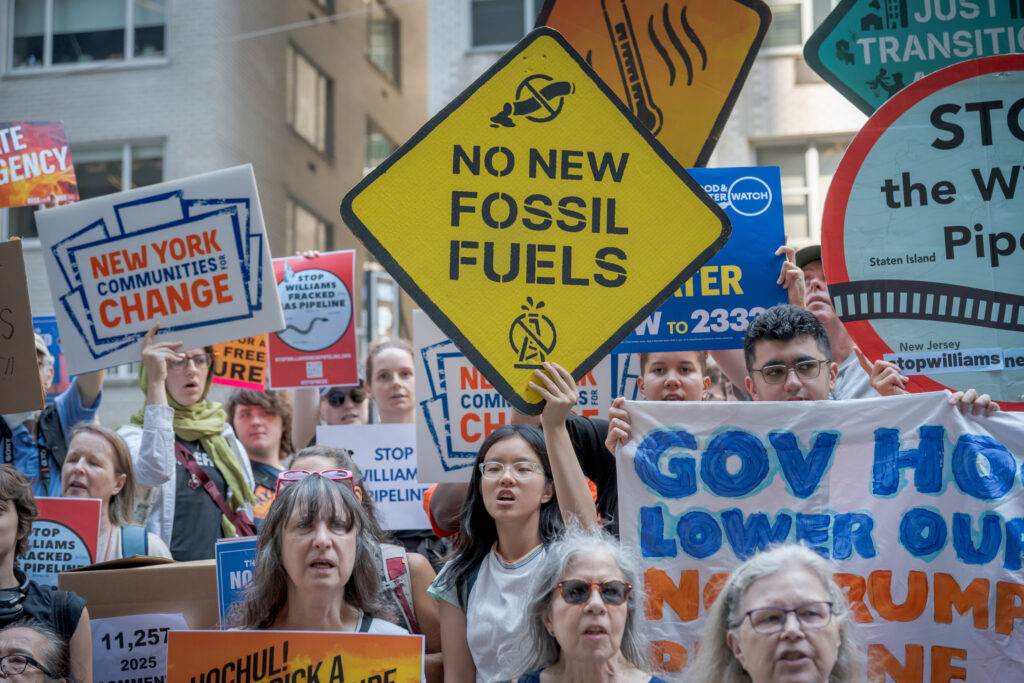
Tanja Konwinski believed the Constitution pipeline was defunct.
In 2023, her husband acquired 82 acres in Schoharie County, New York, aware that Williams Cos. had an easement on the property for the proposed natural gas pipeline. New York had rejected the project’s water quality permit application in 2016, and courts upheld that decision. She assumed it was a dead project.
However, the 125-mile pipeline, reaching from Pennsylvania to upstate New York, has re-entered the federal regulatory process, supported by the Trump administration’s push for domestic energy expansion. The U.S. Department of Energy has announced plans to allocate up to $42 million to the project under the Defense Production Act.
For New Yorkers, the pipeline’s revival affects more than just one project. It’s a key issue in balancing energy costs and supply with climate commitments, now central in the state’s governor’s race.
Democratic Gov. Kathy Hochul is attempting to reconcile the state’s climate goals with concerns about rising energy prices.
Republican challenger Bruce Blakeman argues that expanding natural gas infrastructure would boost energy supplies and reduce bills. Blakeman has proposed repealing New York’s 2014 fracking ban.
Hochul has stated she will not permit fracking, though her administration has approved a previously rejected pipeline and delayed a major climate goal. Environmental advocates question if New York will maintain protections they have long fought for.
A recent poll by Quinnipiac University shows Hochul leading Blakeman by 14 percentage points.
Pipeline Problems
There is no current proposal for the Constitution pipeline in New York, according to Ken Lovett, a spokesperson for Hochul.
Late last year, Williams withdrew its state permit applications after the Department of Environmental Conservation found three were incomplete.
Williams is still seeking state permits and has requested the Federal Energy Regulatory Commission to reinstate the project’s 2014 construction approval, waiving the New York permit requirement.
While the Department of Energy has pledged to assist with permitting costs, environmental groups and state regulators challenge the project’s legality without New York’s consent.
Joshua Sewell, policy director at Taxpayers for Common Sense, noted using the law for energy development is not new. President Joe Biden invoked it for renewable energy supply chains.
Sewell sees the Trump administration’s actions as an effort to bypass safeguards.
The Constitution pipeline is one of two projects Williams is pursuing in the region. The other, the Northeast Supply Enhancement (NESE) pipeline, runs through New Jersey to New York Harbor.
Williams states the projects would address regional gas supply issues and provide reliable, affordable energy.
New York rejected NESE’s permits twice due to water-quality concerns. The project resurfaced after the Trump administration halted Empire Wind construction. NESE later received permits, though an appeals court rescinded New Jersey’s approval.
President Trump claimed Hochul agreed to allow pipelines in exchange for federal offshore wind support. Hochul’s office denies any such deal, stating the governor is open to gas projects if they comply with state regulations.
The dispute highlights tensions in Hochul’s energy policy, which seeks to integrate natural gas and nuclear power with renewable energy investments. Hochul has directed the development of nuclear power and pledged funding for clean energy.
Hochul has also delayed the state’s emissions reduction deadline to 40 percent below 1990 levels by a decade, increasing the target to 60 percent.
Environmental groups argue that pipeline approvals and delayed climate goals threaten the state’s environmental progress.
Gas pipeline construction can damage wetlands, and leaks release methane, a potent greenhouse gas.
“We have to be in a new kind of social contract that includes nature … we don’t want this land to be collateral damage,” said Karenna Gore of the Center for Earth Ethics.
Gore joined environmentalists and Indigenous women walking part of the pipeline’s route last month to highlight its potential impacts.
The Fracking Divide
The Republican push to expand gas infrastructure goes beyond pipelines. Blakeman has campaigned on repealing New York’s fracking ban to lower utility bills. Lee Zeldin, head of the EPA, has also called for lifting the ban.
New York banned fracking in 2014 due to concerns about contaminated water and drilling effects. Sandra Steingraber of the Science and Environmental Health Network has compiled research on fracking’s potential health effects.
Studies link fracking pollution to respiratory illnesses and birth defects. Hydraulic fracking can expose people to carcinogens like benzene.
“Any Republican candidate claiming we’re going to reopen New York to fracking… is underestimating the depth and breadth of the public opposition,” Steingraber said.
The ban faces a legal challenge. In April, Thomas and Madison Woodward, who intended to frack land purchased in 2011, challenged the state’s prohibition.
Their attorney, Tyler Fry, argues they made a reasonable investment in a valuable resource and now bear the ban’s costs. The lawsuit seeks to declare the ban unconstitutional.
While Hochul opposes fracking, environmental groups worry her stance on gas development might undermine protections.
“New York state has been a leader in protecting land, water, and health,” said Julia Walsh of FrackAction. “We’re really hoping the governor stays the course.”
Back in Schoharie County, Konwinski fears Williams will gain approval to build the pipeline across her family’s land. Plans to develop community agriculture programs are stalled.
“I’ve shifted completely and focused on opposition to the pipeline,” she said.
Original Story at insideclimatenews.org