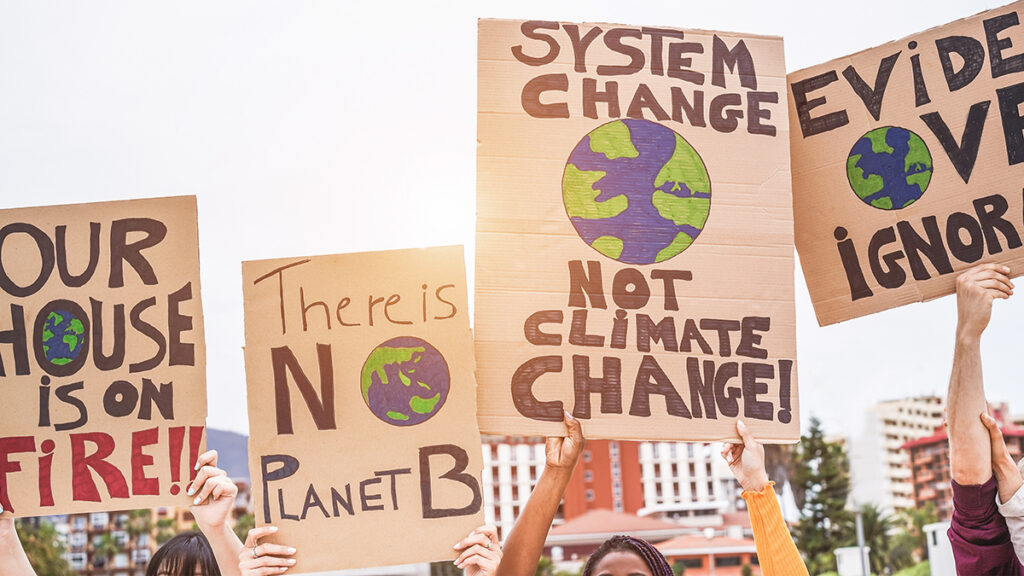
As climate change continues to pose significant challenges, a new study reveals that many University of Utah undergraduates experience anxiety and frustration about the planet’s future. The research highlights a gap in resources available to help students manage these feelings.
Widespread Climate Anxiety Among Students
According to a survey led by Jennifer Follstad Shah, an associate professor at the University of Utah, over half of the 547 students surveyed frequently feel powerless or frustrated about climate change. These feelings are not limited to environmental studies majors but are prevalent across various disciplines.
“They’re not alone,” Follstad Shah remarked, emphasizing that these emotions resonate with both students and adults. The findings were published in the journal Sustainability.
Exploring Coping Mechanisms
In a companion study, Monika Lohani, an associate professor of psychology, found that students often turn to nature, social interactions, and self-care to cope with climate anxiety. Engaging in eco-friendly activities and learning more about climate change also provided a sense of empowerment.
Lohani noted, “The knowledge is empowering them to understand the intricacies. That makes them not feel hopeless.” This sentiment is echoed by the positive outlook students gain from technological advancements in reducing carbon footprints.
Interdisciplinary Efforts to Address Emotional Burdens
The research team, comprising members from multiple departments, advocates for universities to enhance support services that address the emotional impacts of environmental changes. Follstad Shah and Lohani suggest incorporating climate concerns into existing anxiety support groups at the university’s counseling center.
The study also found that students with a deep personal concern for climate change and liberal political views reported higher anxiety levels. Exposure to climate change discussions in academic settings was linked to increased anxiety, particularly among non-environmental studies majors.
Promoting Student Engagement and Resilience
Efforts to support students include encouraging involvement in climate-related research and advocacy. Follstad Shah emphasizes the importance of building connections, stating, “Don’t be afraid to talk about it and let people know that you feel this way. There’s power in those bonds.”
The researchers also highlighted the Good Grief Network as a model for peer-supported discussions on climate impacts, suggesting that students could serve as ambassadors to facilitate such dialogues on campus.
The study’s findings are based on a specific undergraduate experience at the University of Utah, with future recommendations to broaden research across diverse academic and demographic groups to better understand climate anxiety.
The recent study, titled “Climate Anxiety Among Undergraduates at an R1 University in the United States,” was published on August 5 in the journal Sustainability. Funding for this research came from the University of Utah and the Wilkes Center for Climate Science and Policy. Another related paper by Lohani, “Student responses to the climate crisis: managing distress and exploring support systems,” appeared last year in the International Journal of Sustainability in Higher Education.
Banner photo: Stock photo via Adobe Stock.
MEDIA & PR CONTACTS
-
Lisa Potter
Research communications specialist, University of Utah Communications949-533-7899
lisa.potter@utah.edu
Original Story at attheu.utah.edu