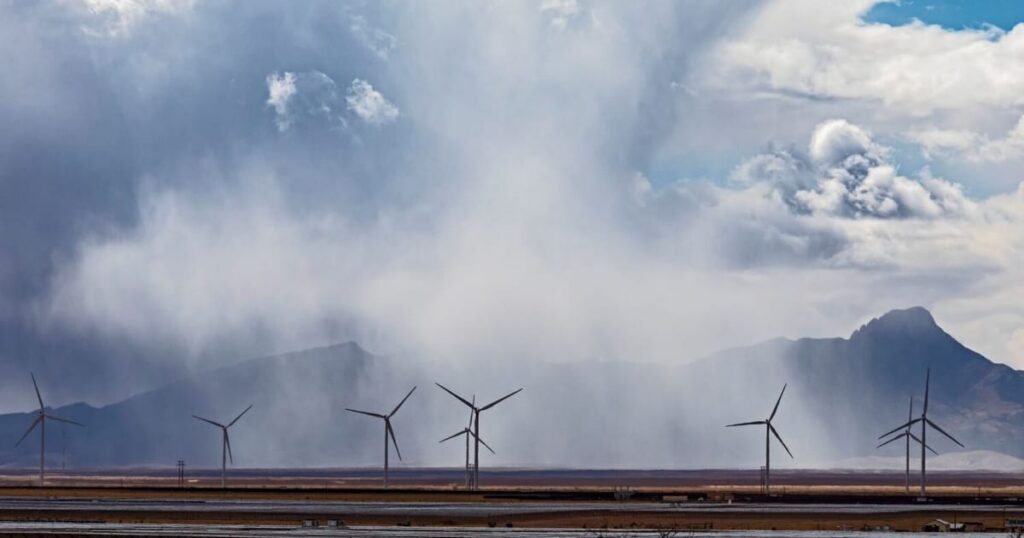
New Mexico’s Accelerated Path to Clean Energy
Known for its unique stark landscapes and fiery Hatch chile cuisine, New Mexico also stands out for its rapid strides toward a clean electricity system. Unlike many states that struggle with this transition, New Mexico is advancing faster than expected.
In 2019, the state enacted the Energy Transition Act, mandating investor-owned utilities to achieve a 50% renewable energy portfolio by 2030, 80% by 2040, and 100% carbon-free by 2045. Surpassing expectations, New Mexico reached the 50% renewable mark by 2024. Public Service Company of New Mexico (PNM) reported producing 80% carbon-free electricity last year.
“We wanted to set very ambitious, important targets, because we knew that this was going to help create economic opportunities and protect our environment,” said Rep. Nathan Small, who sponsored the legislation. “We’re ahead of that [2030 goal]. That’s showing us that we can actually move more quickly.”
With a record peak demand of 2.3 gigawatts, PNM has installed 5 GW of nameplate capacity. To continue its progress, the utility sought regulatory approval in May for a nearly 1.7-GW mix of new wind, solar, and battery projects, supported by a modest 40-megawatt gas peaker plant. This initiative could enable PNM to exit its 200-MW stake in the Four Corners coal plant by July 2031.
As other states grapple with current energy demands, New Mexico is expanding its clean energy infrastructure to accommodate a projected 40% increase in consumption by 2032.
“New Mexico is unique in that it has set these ambitious targets, like some of its neighbor states, but that’s only half the job,” said Dan West from the climate nonprofit Clean Air Task Force. “They’ve also built the institutions, the infrastructure, … and the investment environment to deliver on them.”
Despite its momentum, the state faces challenges. Some environmental groups oppose PNM’s proposal for a new gas plant, citing concerns over the legal commitment to phase out fossil fuels. Additionally, there are concerns about PNM’s potential acquisition by Blackstone, the largest private equity firm globally, which could impact its clean energy trajectory. Transitioning fossil fuel workers to the clean energy sector remains a complex issue.
Pushing to the Next Level of Clean Power
New Mexico’s early decarbonization efforts involved substantial investments in wind and solar energy, leveraging its arid, windy terrain. However, reliance solely on these sources reaches a limit as they cannot provide power on demand.
“We still have thermal resources in the fleet, and we have to have that,” said Laurie Williams, PNM’s senior vice president for integrated planning and transmission development.
PNM supplements its renewable resources with a small allotment of nuclear power from Arizona, providing round-the-clock carbon-free energy. The state lacks other firm, clean energy sources like long-duration storage, advanced geothermal, or green hydrogen, which remain economically unviable, according to Williams.
Williams’ team conducts a detailed statistical analysis to determine the optimal mix of power plants over the next 20 years. This analysis accounts for days when renewable output is low, ensuring cities like Albuquerque and Santa Fe still receive energy.
The proposed energy portfolio includes an 800-megawatt wind farm in eastern New Mexico, 240 megawatts of solar, and 610 megawatts of battery storage. The crucial component is the 40-MW peaker plant known as La Luz II.
“The whole thing is interdependent, and I can only meet the reliability and resource adequacy metrics with the whole package,” Williams stated.
Environmental groups contest PNM’s plan to build additional fossil-fueled plants before the 2045 clean energy deadline. This debate is ongoing at the regulatory commission, with hearings scheduled for January to specifically address the gas plant proposal.
Original Story at www.canarymedia.com