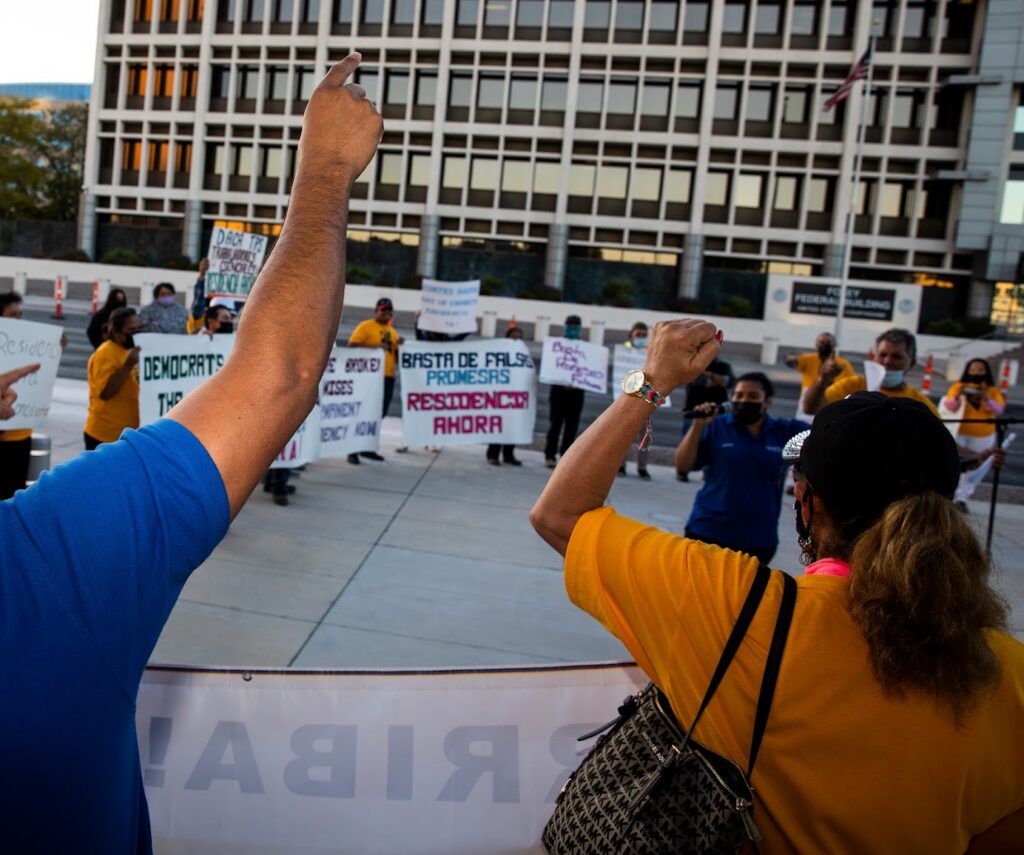
Across Nevada, immigrants who hold a form of legal protection known as Temporary Protected Status are being detained by federal agents — even when their paperwork is in order. The cases raise pointed questions about whether the government is correctly applying its own immigration rules.
Temporary Protected Status, or TPS, is a federal program that has shielded more than a million immigrants from deportation by granting them lawful status and work authorization for renewable periods of up to 18 months. Congress established the program in 1990 to protect people from countries experiencing war, natural disasters, or other extreme dangers — including El Salvador, Venezuela, and Ukraine. But under the Trump administration, TPS has been revoked for 13 of the 17 countries previously designated, and immigration enforcement has increasingly swept up people who still have active protections or are waiting on pending renewal applications.
A Las Vegas Man’s Case
One of those cases involves Lucio Alexander Bernal Munoz, a man who migrated from El Salvador to Las Vegas in the 1990s and had lived there for decades. After he was charged with drug possession in April, U.S. Immigration and Customs Enforcement (ICE) detained him, claiming he lacked a valid visa and had not been properly admitted to the country. At the time of his arrest, Bernal Munoz was waiting for his TPS status to be renewed.
His attorney, Melissa Corral, disputed the government’s reasoning.
“That was the basis for his removal proceedings, and that’s not true,”
Corral said.
Bernal Munoz’s situation is not unique. In June, ICE agents in Reno detained a TPS holder from Haiti — just one month before the Department of Homeland Security terminated Haiti’s TPS designation, a move that affected nearly 350,000 Haitians nationwide. Months earlier, a TPS recipient from Utah was detained at the Nevada Southern Detention Center after agents confused him with his brother.
Advocates Say the Law Is Being Misread
Francis Garcia, a member of the National TPS Alliance, said the enforcement actions reflect a fundamental misreading of who can legally be deported.
“They’re misinterpreting the law,”
Garcia said.
“What’s happening is that the rights of people going through this process aren’t being respected.”
Michael Kagan, director of the UNLV Immigration Clinic, described a troubling enforcement pattern. When ICE encounters people with what he called “provisional statuses” — including TPS holders — the operating approach tends to be
“arrest first, ask questions later.”
He noted that prior administrations did not target people who were actively renewing their TPS status, and said current enforcement is effectively punishing immigrants for slow government processing times.
“People end up in a window where they have sort of done everything correctly, but the government hasn’t acted on their application, so ICE treats them like they can be deported,”
Kagan said.
Nevada’s TPS Community at Risk
Nevada has an especially large TPS-eligible population. The state is home to approximately 5,000 El Salvadoran TPS recipients, many of whom work in the hospitality industry. The Trump administration has not yet announced whether El Salvador’s TPS designation — whose status remains unresolved — will be extended.
Ted Pappageorge, secretary-treasurer of the Culinary Workers Union Local 226, said union members who hold TPS have faced detention and been
“harassed”
by ICE over the past year. The union represents thousands of El Salvadoran TPS holders and has been a vocal supporter of extending their protections.
“TPS are workers that have suffered incredible trauma,”
Pappageorge said.
“They’ve been given legal status to work and be productive and support their families here in the U.S.”
President Trump has been vocal in his opposition to TPS. He previously argued that large numbers of TPS recipients in places like Springfield, Ohio,
“just doesn’t work”
and that
“we cannot destroy our country.”
Courts Pull Back on Oversight
The legal landscape for TPS holders seeking relief has also narrowed significantly. Earlier this summer, the Supreme Court issued a ruling that stripped federal courts of the ability to review most challenges to TPS decisions — including claims that DHS acted unlawfully when it granted, renewed, or ended a country’s designation. The only remaining avenue for judicial review is constitutional challenges, a significantly higher bar that limits options for TPS holders trying to fight deportation in court.
Attorney Corral, who is representing Bernal Munoz, is urging anyone with legal immigration status to proactively resolve outstanding legal matters — no matter how minor. An unpaid traffic ticket or a minor local violation, she warned, could be enough to trigger an ICE alert if it results in a local jail stay.
“Anything little that you think somehow you might end up in local jail, take care of it,”
Corral said.
“If you end up putting a foot in that jail, ICE will be alerted.”