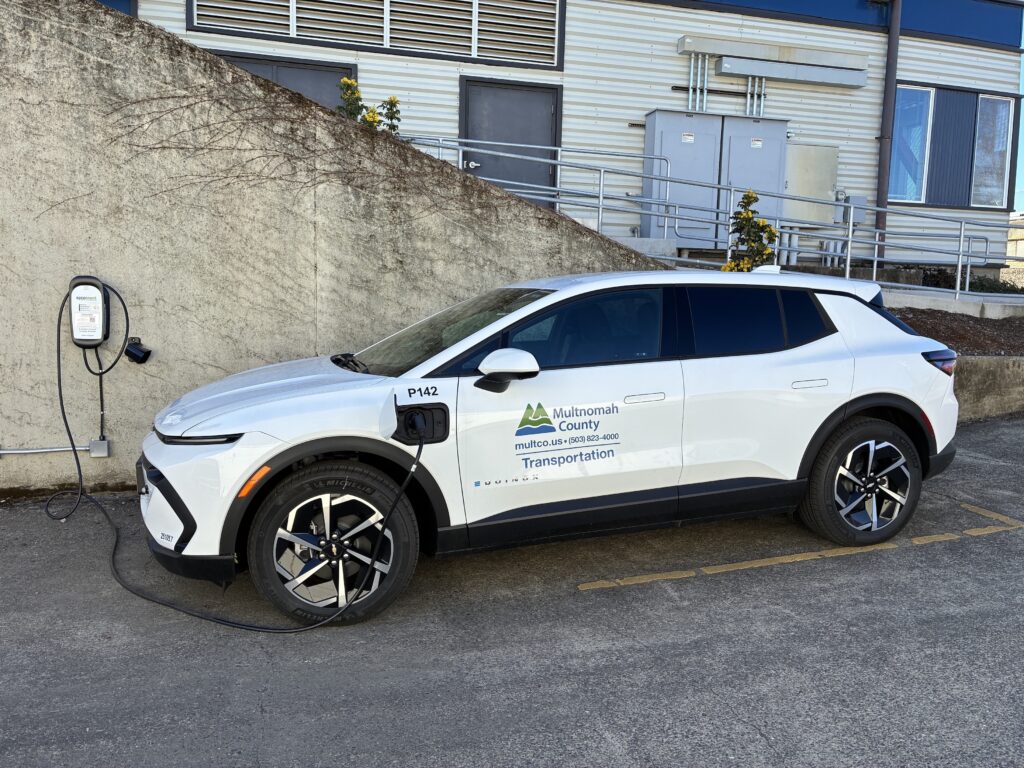
Multnomah County Commits to Full Fleet Electrification by 2050
The Multnomah County Board of Commissioners has unanimously endorsed an ambitious plan to transition the county’s entire vehicle fleet to electric power by 2050. This strategic move, solidified through the recently passed Fleet Decarbonization Strategy, is part of a broader effort to minimize the county’s environmental impact and operational costs.
Commissioner Julia Brim-Edwards highlighted the financial advantages, stating, “Electric vehicles cost significantly less to fuel and maintain, and those savings add up for taxpayers. With difficult budget decisions ahead, this is an action we can take to reduce our long-term operating costs.” Brim-Edwards co-sponsored the resolution alongside Commissioner Shannon Singleton, who emphasized the urgency of addressing climate change, noting, “Climate change is real… We see the impacts daily.”
Currently, Multnomah County operates a fleet of over 650 vehicles for diverse functions, including emergency management and health services. Transitioning to electric vehicles is projected to reduce emissions and local air pollution, with John Wasiutynski, director of the Office of Sustainability, affirming, “We’re seeing evidence that even the small increase in registered electric vehicles helps to improve local air quality.”
The resolution builds on previous commitments, including a 2017 pledge to meet all community-wide energy needs with renewable sources by 2050, and the adoption of the 2026 Climate Justice Plan, which outlines strategies for protecting residents from climate impacts and lowering carbon emissions. The decarbonization strategy outlines four key recommendations:
- Implementing an “EV First” rule prioritizing electric vehicles in procurement
- Forming a BEV Task Force to address implementation challenges
- Setting emissions reduction targets for 2035 and 2040
- Centralizing funding for electric vehicle charging infrastructure
Commissioner Singleton also put forward an amendment, which passed unanimously, setting interim greenhouse gas reduction targets — a 50% reduction from 2007 levels by 2035 and a 75% reduction by 2040. Singleton stressed the importance of these goals, explaining, “We should be able to see substantial progress in this time frame.”
The amendment further commits to supporting a skilled local workforce through project procurement, ensuring contractors participate in apprenticeship programs and offer competitive wages and benefits. The county will now initiate the formation of the Fleet Decarbonization Task Force and advance the “EV First” rule, aiming to significantly advance climate action and sustainability in its operations.
“This work is so important as we continue to advance climate action, energy efficiency, resource conservation and sustainability internally in our own operations,” said Chair Jessica Vega Pederson.
Original Story at multco.us