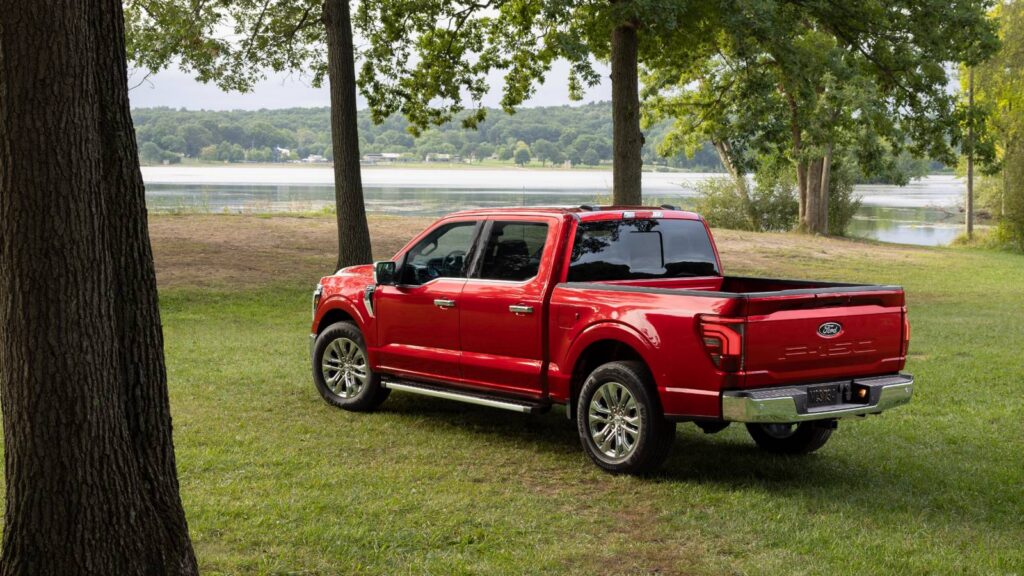
As Ford navigates the evolving automotive landscape, the company’s recent financial results reveal key insights into its strategic direction. While the automaker reported a $2 billion net income for the third quarter of 2026, attention focuses on the $1.1 billion loss from its electric vehicle (EV) division, Model e. Meanwhile, the Ford Pro commercial truck division’s impressive $1.7 billion in earnings before interest and taxes (EBIT) underscores the role of traditional vehicles in supporting Ford’s broader EV ambitions.
Adapting to Market Dynamics: Ford’s Focus on Trucks
For potential buyers considering the F-150 or Super Duty, Ford’s strategy suggests a commitment to enhancing hybrid models and refining combustion engines, as opposed to an aggressive push toward electrification. This approach highlights Ford’s reliance on its truck sales to fund EV development, ensuring a steady pace rather than a dramatic shift.
Robust Demand for F-150 Despite Rising Gas Prices
Even with high gas prices, the demand for Ford’s F-Series trucks remains robust. The F-Series secured the highest retail market share among truck brands, with the F-150 maintaining a 49-day supply at dealerships, below the target range. This indicates strong consumer confidence and demand, which is crucial as Ford prepares for production updates and a new F-150 model slated for 2028.
Commercial Success Fuels EV Ambitions
The $1.7 billion EBIT from Ford Pro is pivotal in offsetting the EV division’s losses. While Model e faced a $1.1 billion loss due to declining revenue and EV deliveries, the situation reflects a 25% reduction in losses compared to the previous year. Ford anticipates $4 billion in losses for Model e this year, yet remains focused on a long-term strategy for profitability.
Strategic Shift Towards Hybrids and Future EV Profitability
Ford is not abandoning its EV goals but is instead refining its approach. By developing a new Universal EV platform aimed at reducing production costs, Ford plans to introduce the $28,350 Fathom pickup, with profitability for Model e expected by 2029. This timeline allows Ford’s truck division to continue supporting EV advancements without immediate financial pressure.
Consumers can expect more hybrid options within the F-Series and Super Duty lineup. Meanwhile, Ford’s commitment to refining combustion engines and ensuring a gradual introduction of EVs reflects a strategic balance between sustaining current strengths and pioneering future innovations.
Original Story at www.topspeed.com